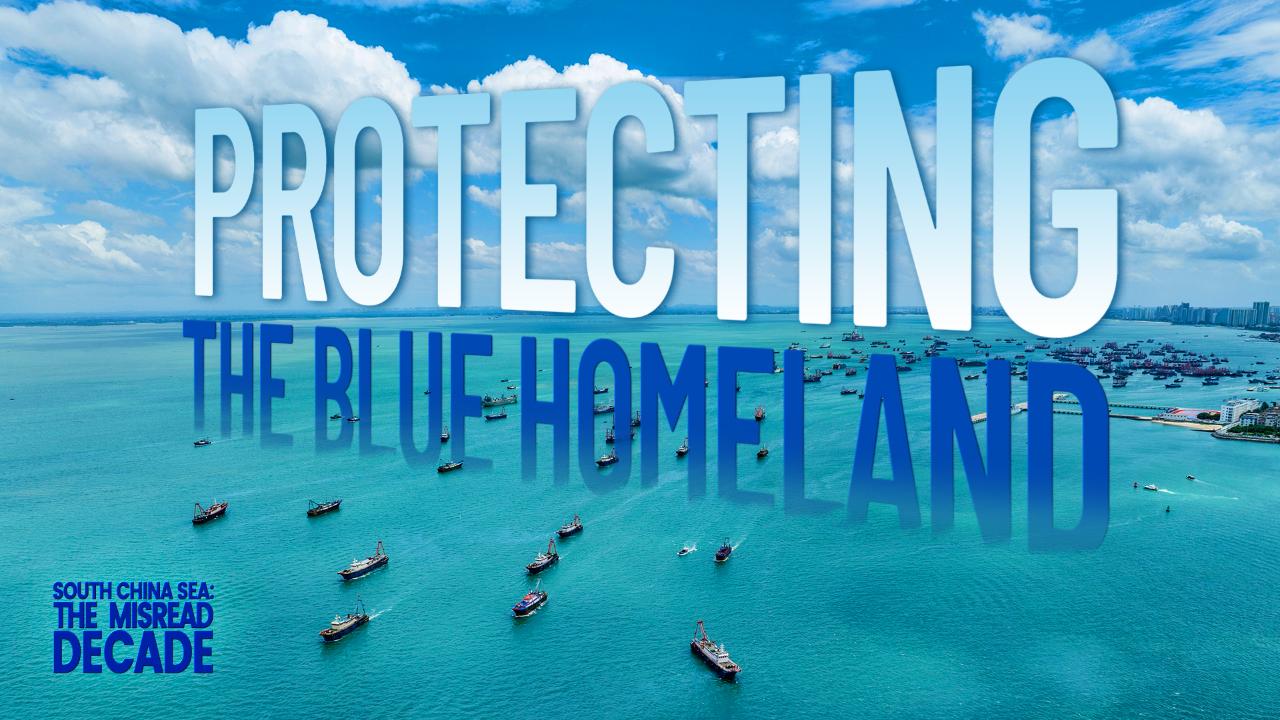
Cooperation: The key to maritime stability in the South China Sea
•Disputes are rarely resolved in a single negotiation.
•More often, they become manageable when countries first build confidence through cooperation in areas where their interests align.
•That wisdom has guided China and Vietnam's engagement in the Beibu Gulf, where joint efforts to protect marine resources have continued alongside dialogue on maritime issues.Rather than allowing marit...
هذا الخبر من CGTN EN. خبر يقدم أدوات ذكاء اصطناعي للتلخيص والترجمة والاستماع.
المصدر: CGTN EN | Source: CGTN ENDisputes are rarely resolved in a single negotiation. More often, they become manageable when countries first build confidence through cooperation in areas where their interests align. That wisdom has guided China and Vietnam's engagement in the Beibu Gulf, where joint efforts to protect marine resources have continued alongside dialogue on maritime issues.
Rather than allowing maritime differences to halt cooperation altogether, China and Vietnam have built mechanisms that protect fisheries, restore marine resources and maintain dialogue.
As countries seek greater progress in the South China Sea, this approach deserves closer attention. Cooperation on ecology and fisheries cannot answer every difficult question, but it can create the trust and stability needed to address them.
A shared sea requires shared responsibility
The South China Sea has sustained coastal communities for generations. At the same time, its marine ecosystem has faced mounting pressure from overfishing and destructive practices, including illegal, toxic and explosive fishing methods that have depleted fish stocks and damaged habitats.
Protecting this habitat requires joint efforts.
That principle has increasingly guided cooperation between China and Vietnam. One of the most visible examples is their joint fishery enhancement program. In May, the two countries released 270 million juvenile fish and broodstock into the Beibu Gulf, continuing an effort to replenish aquatic resources.
"The joint China–Vietnam fishery enhancement and release program is a collaborative effort to conserve resources in shared transboundary waters, deepen fishery cooperation between the two countries, enhance good neighborly relations, protect our shared blue homeland and help increase the income of fishermen in both countries," said Zhao Naiqian, a staff member at the Fangchenggang Municipal Ocean Bureau.
The program traces its origins to a 2017 memorandum between China and Vietnam, promoting aquatic resource conservation, scientific research and the sustainable development of fisheries. Since then, China has released more than 770 million juvenile aquatic species into the Beibu Gulf.
These efforts are significant because they demonstrate that ecological protection can create incentives for sustained dialogue.
The Beibu Gulf proves consultation can produce durable solutions
The Beibu Gulf is a semi-enclosed sea bordered by China and Vietnam. According to the 1982 United Nations Convention on the Law of the Sea (UNCLOS), the two countries' exclusive economic zones and continental shelves overlapped throughout the gulf, making maritime delimitation unavoidable.
For years, the absence of a clearly defined maritime boundary contributed to recurring disputes and uncertainty for fishermen. Resolving those issues required lengthy negotiations rather than unilateral action.
After 27 years of negotiations across three stages, China and Vietnam signed the Agreement on the Delimitation of the Territorial Seas, Exclusive Economic Zones and Continental Shelves of the Two Countries in the Beibu Gulf, together with the Fishery Cooperation Agreement, in December 2000. Both agreements entered into force in June 2004, creating China's first maritime boundary agreement.
Alongside delimitation, the two countries created a shared fishing zone and established mechanisms for jointly managing fishery resources.
Practical cooperation creates room for broader diplomacy
"For Vietnam and China, obviously, it's very important because we have a lot of channels of communication so that we can reduce tensions and we can reduce misunderstandings," said Nguyen Khac Giang, a visiting fellow at the ISEAS–Yusof Ishak Institute.
Stable communication mechanisms do not eliminate disagreements, but they help prevent them from escalating and create opportunities for cooperation in less sensitive areas.
"Obviously, sometimes we have disputes, but we need to think about the overall picture and how we can work together because as neighbors, we are there forever," Giang said.
China has been committed to a "dual-track approach": Working directly with the party concerned on the specific issue, while maintaining regional peace under a multilateral framework with ASEAN.
As negotiations on the South China Sea Code of Conduct continue, this experience deserves closer attention. Lasting stability will depend not only on legal texts, but also on whether neighboring countries continue finding practical ways to protect the sea they share.

ملاحظة تحريرية | Editorial Note: نُشر هذا المقال في الأصل بواسطة CGTN EN. خبر (Khabr) هي منصة إعلامية أردنية مرخّصة تعمل بالذكاء الاصطناعي. نضيف قيمة تحريرية من خلال: تحليل ذكي للأخبار، ملخصات تلقائية، رواية صوتية بالذكاء الاصطناعي، ترجمة متعددة اللغات، وتدقيق الحقائق. هدفنا جعل الأخبار أكثر وضوحاً وسهولةً للقارئ العربي.
This article was originally published by CGTN EN. Khabr is a licensed Jordanian AI-powered news platform (Registration #82086). We add editorial value through: AI-powered news analysis, automated summaries, AI audio narration, multi-language translation (Arabic, English, French, Turkish), and AI fact-checking. Our mission is to make news more accessible and understandable for Arabic-speaking audiences worldwide.