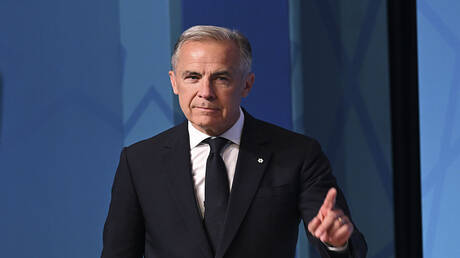
By QUENTIN LETTS, PARLIAMENTARY SKETCHWRITER Published: 09:37, 22 June 2026 | Updated: 09:45, 22 June 2026 To be prime minister is a chance to impose one’s character and beliefs on the nation - to mould the era. But what if the holder of this great office has no distinctive personality? What if he is a turgid proceduralist, frightened of new ideas, and prone to deceit? With Sir Keir Starmer we found the answer. As our head of government he was an over-watered, wobbly jelly. Ever the prisoner of cliché, he raised a few accidental laughs but inspired only ennui and, finally, contempt. Having won a freakish majority, Sir Keir made little use of it. He left scant impression on our kingdom and is likely to be filed among history’s feeblest non-entity PMs. Sir Keir often boasted that he ‘came late to politics’. It is true he arrived relatively late to parliament, entering the Commons in 2015 when 52. Yet in his previous life as a lawyer he was intensely political. At 16, when many lads are chasing girls or obsessing about motorbikes, he had eyes only for the Young Socialists, Labour’s youth wing. In his mid-20s he edited a Trotskyist magazine, Socialist alternatives, which was linked to the International Revolutionary Marxist Tendency. When he joined the bar he became secretary of the Haldane Society of Socialist Lawyers, travelled to the Soviet Union, networked with human-rights zealots and joined the Left-wing Doughty Street chambers. Late to politics? No. Keir Rodney Starmer was a socialist careerist almost from the start. The early years have been well chronicled, not least by the man himself. He recounted, ad nauseam, that he was the son of a toolmaker and a disabled nurse. So often did he produce these recollections that audiences groaned. The tin-eared Starmer would press on, repeating, word for word, accounts of how his mother battled Still’s disease and his parents once had to forego their telephone owing to shortage of funds. Courtroom agility was never his thing. He was a process man, a proceduralist, one to be led rather than lead. Human rights lawyers do not probe and doubt witnesses When he joined the bar he became secretary of the Haldane Society of Socialist Lawyers, travelled to the Soviet Union, networked with human-rights zealots and joined the Left-wing Doughty Street chambers Young Keir, named in honour of Labour founder Keir Hardie, was reared at Oxted, Surrey, in a middle-class household. His parents were not so leftwing as to turn down the school place that their second child won at Reigate grammar. The school turned private while he was there but a scholarship covered the fees. Despite that cut-off telephone it was a happy, stable childhood. If he later milked it for pathos, that was perhaps because the Labour movement likes to wallow in past adversity. Good-looking Keir, an earnest lad, achieved solid if unexceptional marks in science and maths. Literature never appealed much but he was a competent flautist. Interesting choice of instrument: ornate, light, inoffensive, needs plenty of wind. Boys often prefer the electric guitar or something brassy. It was the era of Thatcherism when 1970s socialist stagnation was replaced initially by high unemployment and social unrest. Then came prosperity and a rediscovery of national pride. Some, Keir Starmer among them, never got past the first phase. He recoiled from the throbbing brashness of those liberated times. The City became an engine of wealth and fashion. Mrs Thatcher’s free-market politics destroyed class barriers and old presumptions about electoral loyalty. Labour could no longer rely on its traditional flat-cap vote. With the trade unions in disarray, Labour was becoming a party of liberal brahmins and the bourgeoisie. For a Home Counties grammar schoolboy, going Left was the easy option. Starmer’s legal career progressed. Human rights law is a safe option. Flamboyant barristers head for criminal law and the ones interested in money head for the corporate sector. Human rights is for worthies. Starmer, as he had done at school, chewed through the homework. He took unexciting public-sector briefs and became human rights adviser to the Northern Ireland Policing Board. Belfast left no stamp of the Blarney on him. He adopted formulaic leftwing London opinions, scorning the Tories and opposing the monarchy. He was suspicious of big business and sympathised with protestors, almost regardless of the cause. He tucked himself into the Leftwing peloton and pedalled. At Doughty Chambers came two encounters. The first was with an elegant solicitor, Victoria Alexander, whom he married. They have two children. The second encounter was with a young colleague, Richard Hermer. Starmer marvelled at his intellectual abilities. In 2007 Starmer fell into the orbit of a solicitor, Phil Shiner, who was championing Iraqi legal claims against British soldiers. Dutiful Keir acted pro bono for clients of Shiner, taking his arguments all the way to the House of Lords and using the European Convention on Human Rights to argue that some deaths in the Iraq War were less than lawful. Hermer beetled away as his junior. The Lords dismissed the case but the European Court on Human Rights was more amenable. The stress caused to some British service personnel was considerable and Phil Shiner would later be struck off for dishonesty. Hermer was more fortunate, rising to become attorney general in Sir Keir’s government. Still awed by Hermer’s legal prowess, the new prime minister gave him unprecedented powers. This led, among other things, to Hermer’s naïve Chagos Isles ‘surrender deal’ and to the Starmer government’s refusal to let Donald Trump use British air bases for his attacks on Iran. As our head of government he was an over-watered, wobbly jelly. Ever the prisoner of cliché, he raised a few accidental laughs but inspired only ennui and, finally, contempt How had it all come to this? Back in 2008 a new director of public prosecutions had been needed. Gordon Brown’s government appointed Starmer. He was at that time an angular, lean figure, blinking before the media flashbulbs as he spoke of the importance of computerising legal records and focusing on human rights. Less noble matters soon detained him. Parliamentarians were found to have fiddled their expenses and it fell to Starmer to initiate prosecutions. Tabloid journalists also fell foul of this new Torquemada. It was rumoured that Labour-supporter Starmer was encouraged to pursue Fleet Street because red-top titles owned by Rupert Murdoch had switched their support from Brown to David Cameron, helping the latter become prime minister in 2010. Claims of such pressure are unproved but they may indicate how political a figure Keir Starmer had become. Political, yet politically tone-deaf, sometimes to the point of charmlessness. In 2015 he went the whole hog and became a MP, succeeding the veteran Frank Dobson as MP for the central London Labour stronghold of Holborn and St Pancras. A friend of mine, senior in Labour, attended a reception for the party’s new MPs and, on seeing the man from Holborn, amiably greeted him saying ‘you must be Keir Starmer’. Back came the mirthless correction: ‘Sir Keir Starmer.’ He never spoke to my friend again. David Cameron had won an unexpected majority for the Conservatives and Labour was in disarray. Sir Keir’s patron, Ed Miliband, was succeeded as party leader by Jeremy Corbyn. Sir Keir supported another candidate for the leadership – a certain Andy Burnham – but was soon on the Corbyn front bench. Given Sir Keir’s Trotskyist background, the Corbynites probably thought him a solid comrade. Cue the Brexit years, when the British public’s vote to leave the EU was nearly overturned by the Europhile political class. Again the revolutionary spirit of the age was on the Right and among the working-class. Again the grammar school boy from Oxted supported the status quo. Sir Keir became a prominent opponent of Britain’s independence from Brussels. As shadow Brexit secretary, in league with Speaker Bercow, he used every legalistic ruse to block the people’s will. It was a close-run thing. Watching him in those days from the Commons press gallery one was struck by his ability to say the same thing, day after day, with almost no alteration in text or tone. He had something of the woodpecker to him: the same arguments, the same slight rise of the chin, the oddly nasal voice, the humourlessness. The more the Remainers weakened the government, the stronger they made Brussels. Phil Shiner must have been delighted. Corbynism peaked and fell. Sir Keir, who had faithfully served the old man, even when anti-Semitism accusations flew (Lady Starmer, it should be noted, is Jewish), won the succession by promising to retain many Corbynite positions. Once the leadership was secured, these promises were abandoned. Corbyn was axed from the party. For a dull man, Sir Keir was not without ruthlessness. Maybe the Law inures you, teaching you to ignore sentiment in pursuit of a win. Maybe it’s what Trots do. The Left, after all, has always been the nasty party. Even so, there was something chilly about Keir Starmer. An antiseptic fellow. He recovered from a terrible start as Labour leader – a low point was when he and his deputy Angela Rayner ‘took the knee’ to Black Lives Matter – and after the downfall of Boris Johnson, followed by the Truss fiasco, the Conservatives imploded. Nigel Farage returned during the 2024 election campaign just in time to split the Rightwing vote. Sir Keir led Labour to a ‘loveless landslide’. Suddenly the nasal knight was lord of all he surveyed. And he did not know what to do. Sir Keir often boasted that he ‘came late to politics’. It is true he arrived relatively late to parliament, entering the Commons in 2015 when 52 And now Sir Keir has gone. The only people who may miss him are the parliamentary sketchwriters. For us this gutless PM was a delicious target The new government talked down the economy, took winter fuel payments from pensioners, raised taxes on individuals and businesses, and initially tried to court Donald Trump. Then came U-turns and the policing disparities that led to the taunt of ‘two-tier Keir’ The winter fuel policy was dropped, as was a bid to trim welfare spending. Sir Keir was twisting in the wind. Insulted by Mr Trump, he went wailing back to Brussels and pleaded, to a large degree, to be allowed back into Europe’s gang. Electors, many of whom had taken the little-known Starmer on trust, started to feel buyers’ remorse. With Sir Keir now exposed to public attention, people noticed his infelicity with language, his lack of imagination, his atonal, lumpen rhetoric, his lack of economic understanding, his readiness to cave in to foreign powers, his lack of hinterland and his greed for freebies. The signs had been there. In the election’s TV debates Rishi Sunak had repeatedly bettered him, making Sir Keir pout. Rishi had predicted that a Starmer government would raise taxes, lose control of spending and go running back to Europe. Rishi was not wrong. If our new PM was poor at thinking on his feet, this should hardly have been a surprise. He was a human rights lawyer, not a criminal silk to caress and tickle the jury. Courtroom agility was never his thing. He was a process man, a proceduralist, one to be led rather than lead. Human rights lawyers do not probe and doubt witnesses. They are credulous. They swallow claims hook, line and, in the case of Peter Mandelson, stinker. And now Sir Keir has gone. The only people who may miss him are the parliamentary sketchwriters. For us this gutless PM was a delicious target. With his sticky-uppy hair, that dreadful voice, the blinky blurtiness and the priggish moues, Sir Keir was heaven: indecision on two flat feet, mediocrity in a suit. He was chippy, but not in the class sense. He resented others their flair. He despised Boris’s jaunty humour. He was irked by Nigel Farage’s directness. He looked at Kemi Badenoch and seemed outraged that a young black woman should question an ageing white man. The bourgeois Left had not campaigned for racial equality only for a British-Nigerian to acquire airs above her station, thank you very much. Sir Keir Starmer, far from being a revolutionary, was the quintessential blockage in the works, an Establishment man who lacked imagination. A disappointing old pudding. A dud. No comments have so far been submitted. Why not be the first to send us your thoughts, or debate this issue live on our message boards. By posting your comment you agree to our house rules. Do you want to automatically post your MailOnline comments to your Facebook Timeline? Your comment will be posted to MailOnline as usual. Do you want to automatically post your MailOnline comments to your Facebook Timeline? Your comment will be posted to MailOnline as usual We will automatically post your comment and a link to the news story to your Facebook timeline at the same time it is posted on MailOnline. To do this we will link your MailOnline account with your Facebook account. We’ll ask you to confirm this for your first post to Facebook. You can choose on each post whether you would like it to be posted to Facebook. Your details from Facebook will be used to provide you with tailored content, marketing and ads in line with our Privacy Policy.
المصدر: Daily Mail
| Source: Daily Mail