Church of England apologises for role in forced adoptions
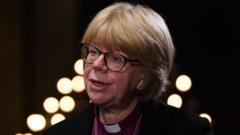
Church of England apologises for role in forced adoptionsJust nowShareSaveAdd as preferred on GoogleDuncan Kennedy,correspondentandAmy WalkerPA MediaThe Church of England has told birth mothers and children affected by historical forced adoptions that it is "profoundly sorry" for its role in the practice.It follows the government confirming on Wednesday that it will make a full apology on behalf of the state over the practice, which saw thousands of mothers pressured into giving up babies for adoption because they were unmarried.Between 1949 and 1976, the Church of England helped run, or was responsible for, about 100 mother and baby homes where women were sent to give birth. In a formal apology, the Archbishop of Canterbury Dame Sarah Mullaly said victims experienced "pain and trauma and suffering and fear when you should have received care and compassion". She added: "You have nothing to be ashamed of. The shame is ours and we're profoundly sorry."Under the practice, unmarried pregnant women would be sent to mother and baby homes, in effect, to hide them from society.The apology comes after two years of research by the Church into its archives and other records. It also spoke to birth mothers and adoptees.A new report published by the Church found that documents from 1970 offered an insight into attitudes at the time, with staff describing the homes as places "from which the adoption agencies get their raw material".The report also found that some mothers were described as "dim, feckless [and] inadequate" and the Church was aware that the quality of the homes "did not always meet acceptable standards".Women who were sent to the mother and baby homes have spoken of the terrible conditions they were subjected to. The Church's apology recognises that many of them were given menial and manual tasks as a form of punishment, even though they were heavily pregnant.Dame Sarah said the Church was "p...المصدر: BBC News | Source: BBC News
ملاحظة تحريرية | Editorial Note: نُشر هذا المقال في الأصل بواسطة BBC News. خبر (Khabr) هي منصة إعلامية أردنية مرخّصة تعمل بالذكاء الاصطناعي. نضيف قيمة تحريرية من خلال: تحليل ذكي للأخبار، ملخصات تلقائية، رواية صوتية بالذكاء الاصطناعي، ترجمة متعددة اللغات، وتدقيق الحقائق. هدفنا جعل الأخبار أكثر وضوحاً وسهولةً للقارئ العربي.
This article was originally published by BBC News. Khabr is a licensed Jordanian AI-powered news platform (Registration #82086). We add editorial value through: AI-powered news analysis, automated summaries, AI audio narration, multi-language translation (Arabic, English, French, Turkish), and AI fact-checking. Our mission is to make news more accessible and understandable for Arabic-speaking audiences worldwide.