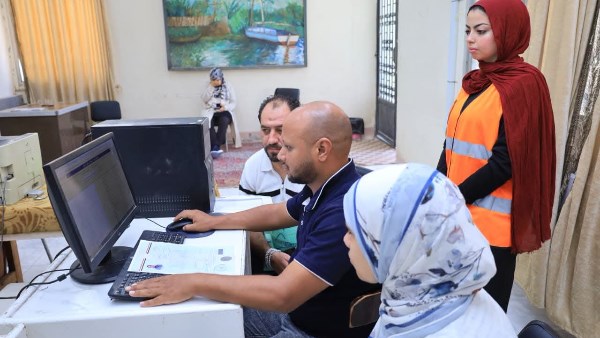
Carpentry and plumbing college courses are struggling to keep up with demand as more white-collar workers ditch office jobs to learn a trade
Published: 11:06, 18 May 2026 | Updated: 11:15, 18 May 2026 Colleges offering courses in construction are struggling to keep up with demand as increasing numbers of white collar workers ditch their desk jobs to learn a trade. As AI capabilities continue to grow more workers are turning to manual labour jobs that cannot be replaced by a computer. The Association of Colleges says 86% of colleges now have waiting lists for construction courses. At Leeds College of Building - the UK's only further education college dedicated to construction - 600 applicants were turned away last September because of lack of space. It currently has more than 300 students on its waiting lists for subjects including plastering, electricals and plumbing. Evening courses are also full, with adult learners on another waiting list to learn a new skill as they look to move out of their day job. Bankers, physios, accountants and logistics workers are among those who have applied for a trade course at Barnet and Southgate College. Arbnor Isufaj, a plumbing lecturer, said the learners have been enticed towards plumbing due to the earnings potential and its relative immunity to AI. Courses for plumbing and carpentry are struggling to keep up with demand as white collar workers look for a stable job which is safe from AI Sophane Grey spent 30 years working as an accountant at Nike and Cisco, before she decided to make the move into construction. The 52-year-old became weary of her old routine and in October 2024, quit her job to train up in a trade. However she soon discovered that the demand for places was high and she was forced to wait nine months before starting a course. She told The Times: 'I tried five different campuses, but everything was full. I’d initially wanted to get onto electrical or plumbing, but the waiting lists were even longer' Ms Grey is now part-way through a qualification in construction skills at Capital City College in Holloway, north London. She is learning carpentry, painting and decorating, and bricklaying in a class where she is the only woman alongside 14 male teenagers. She is hoping to get a place on a course in solar energy and domestic retrofitting in September. Colleges are struggling to cope with the demand for places. At Barnet and Southgate College, the waiting list for places has reached 306. Hardeep Singh, head of the construction department, said he had never seen a waiting list in his 17-year career before demand suddenly exploded. Most colleges have already been forced to close enrolments for courses this September. Your browser does not support iframes. A lack of funding, teacher shortages and caps on pupil numbers have led to the places becoming oversubscribed. Further education colleges are provided with a 'base subsidy' for a capped number of training courses, but this rarely covers the full cost of training. As a result, colleges are relying on fees from private students and employer-funded apprenticeships to make up the money. The Labour government has a target to build 1.5 million new homes by 2029, meaning construction workers should be kept busy for the next five years. In March 2025, Rachel Reeves announced plans to invest more than £600 million into training new construction workers. The colleges have said that the government's lag system for funding is preventing them from offering more places. The current system means that colleges and further education courses receive funding for the number of students they taught in the previous year. In September 2025, this meant colleges had to absorb the extra £220 million cost of taking on an additional 32,000 students, in anticipation of the government covering it this year. The government had pledged investment to ensure 'real-terms per-pupil funding in the next academic year in a white paper. However, it then later said it would only pay out a third of the cost of these courses. Newcastle College Group (NCG), which operates seven colleges, said this meant it was left with a £3.6 million hole in its finances for 500 unfunded extra pupils. More than 170 college chiefs warned the Prime Minister that the government’s budget squeeze will force them to turn away 20,000 students this September, 15,000 of those on construction courses. The comments below have not been moderated. The views expressed in the contents above are those of our users and do not necessarily reflect the views of MailOnline. By posting your comment you agree to our house rules. Do you want to automatically post your MailOnline comments to your Facebook Timeline? Your comment will be posted to MailOnline as usual. Do you want to automatically post your MailOnline comments to your Facebook Timeline? Your comment will be posted to MailOnline as usual We will automatically post your comment and a link to the news story to your Facebook timeline at the same time it is posted on MailOnline. To do this we will link your MailOnline account with your Facebook account. We’ll ask you to confirm this for your first post to Facebook. You can choose on each post whether you would like it to be posted to Facebook. Your details from Facebook will be used to provide you with tailored content, marketing and ads in line with our Privacy Policy.المصدر: Daily Mail | Source: Daily Mail
ملاحظة تحريرية | Editorial Note: نُشر هذا المقال في الأصل بواسطة Daily Mail. خبر (Khabr) هي منصة إعلامية أردنية مرخّصة تعمل بالذكاء الاصطناعي. نضيف قيمة تحريرية من خلال: تحليل ذكي للأخبار، ملخصات تلقائية، رواية صوتية بالذكاء الاصطناعي، ترجمة متعددة اللغات، وتدقيق الحقائق. هدفنا جعل الأخبار أكثر وضوحاً وسهولةً للقارئ العربي.
This article was originally published by Daily Mail. Khabr is a licensed Jordanian AI-powered news platform (Registration #82086). We add editorial value through: AI-powered news analysis, automated summaries, AI audio narration, multi-language translation (Arabic, English, French, Turkish), and AI fact-checking. Our mission is to make news more accessible and understandable for Arabic-speaking audiences worldwide.