Can China repeat its EV success with robotaxis?
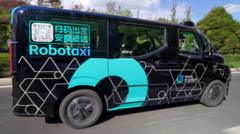
•Can China repeat its EV success with robotaxis?Image caption, Chinese companies are testing out robotaxis in several Chinese citiesBySuranjana TewariAsia Business Correspondent, Reporting fromBeijing,...
•Robotaxis weave through traffic alongside ordinary cars, while autonomous delivery vans glide along the inside lane as they carry packages to collection points.The district has become one of China's t...
•Within minutes, a robotaxi pulls up with nobody behind the wheel.
هذا الخبر من BBC Business. خبر يقدم أدوات ذكاء اصطناعي للتلخيص والترجمة والاستماع.
Can China repeat its EV success with robotaxis?Image caption, Chinese companies are testing out robotaxis in several Chinese citiesBySuranjana TewariAsia Business Correspondent, Reporting fromBeijing, ChinaPublished1 hour agoIn Beijing's Yizhuang district, driverless vehicles have become a common sight. Robotaxis weave through traffic alongside ordinary cars, while autonomous delivery vans glide along the inside lane as they carry packages to collection points.The district has become one of China's testing grounds for autonomous driving, with companies including Baidu, WeRide and Pony.ai operating commercial robotaxi services within designated areas.Booking a ride requires little more than opening an app. Within minutes, a robotaxi pulls up with nobody behind the wheel. After confirming the journey on a touchscreen, the vehicle merges into Beijing's dense traffic, navigating buses, cyclists, scooters and pedestrians with little hesitation.The technology is still evolving. But a bigger question now looms: can Chinese companies turn robotaxis into another sector they dominate globally, as they have with electric vehicles (EVs)?Riding China's EV boomChina's autonomous driving companies already have a powerful advantage - the industrial ecosystem that helped turn the country into the world's largest EV market.Unlike Tesla, which designs much of its technology in-house, China's self-driving industry is built around a network of companies.Established carmakers including BYD, Chery, Geely, and SAIC build the cars, while specialist firms develop the software.Autonomous vehicles rely on many of the same batteries, sensors, chips and onboard computers as electric cars. Because those supply chains already exist at enormous scale, companies can develop technology faster and at a lower cost."What you see is a pace of innovation and adaptation in the Chinese EV industry that I don't think is matched anywhere else around the world,"...المصدر: BBC Business | Source: BBC Business
ملاحظة تحريرية | Editorial Note: نُشر هذا المقال في الأصل بواسطة BBC Business. خبر (Khabr) هي منصة إعلامية أردنية مرخّصة تعمل بالذكاء الاصطناعي. نضيف قيمة تحريرية من خلال: تحليل ذكي للأخبار، ملخصات تلقائية، رواية صوتية بالذكاء الاصطناعي، ترجمة متعددة اللغات، وتدقيق الحقائق. هدفنا جعل الأخبار أكثر وضوحاً وسهولةً للقارئ العربي.
This article was originally published by BBC Business. Khabr is a licensed Jordanian AI-powered news platform (Registration #82086). We add editorial value through: AI-powered news analysis, automated summaries, AI audio narration, multi-language translation (Arabic, English, French, Turkish), and AI fact-checking. Our mission is to make news more accessible and understandable for Arabic-speaking audiences worldwide.