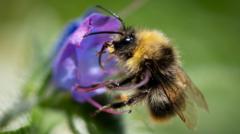
Bumblebees are struggling in UK heatwaves - but you can help them
•UK bumblebee populations are declining due to increasing frequency and intensity of heatwaves.
•Higher temperatures hinder bumblebees' ability to fly and forage, leading to potential overheating and death.
•The Bumblebee Conservation Trust reports significant drops in common species following the extreme heat of 2022.
Bumblebees are struggling in UK heatwaves - but you can help themImage source, Tony Jolliffe/BBCByJustin RowlattClimate EditorPublished4 minutes agoUK bumblebees could suffer sharp falls in their numbers as heatwaves become more frequent and intense, new analysis suggests.The findings - shared exclusively with the BBC - draw on data from the Bumblebee Conservation Trust's long-running national monitoring scheme, which shows a decline in populations after the record-breaking heat of 2022.The warning comes as Britain emerges from a third heatwave in as many months, with temperatures in the range where bumblebees can struggle to fly without overheating.Bumblebees are not just one of the best-loved sights of the British summer, they are also vital pollinators, helping sustain wildflowers and some of the crops we rely on.The impact of heatwaves is two-fold for bumblebees.UK species are adapted to our historically cooler climate - with fat, furry bodies that help them retain heat and powerful flight muscles that warm them as they fly.But in a heatwave their muscles generate more heat, while their thick coats and round bodies make it harder to cool down.Dr Richard Comont, the Trust's science manager, says that once air temperatures reach around 28C to 32C, UK bumblebees can start to struggle to fly without overheating. If they cannot fly, they cannot forage."They actually cook themselves from the inside out," says Comont. "Once their internal body temperature is much above 40C, they literally start dying, they start keeling over."The BeeWalk data shows in 2022, when the UK had three official summer heatwaves and temperatures reached 40.3C, population numbers dropped significantly. Red-tailed, buff-tailed and common carder bumblebees - three of the country's most common species - peaked well below normal levels - down 20%, 25% and 35% respectively - before dropping further into autumn as colonies struggled.The effects appeared to last beyo...المصدر: BBC News | Source: BBC News
→UK bumblebee populations are declining due to increasing frequency and intensity of heatwaves.
→Higher temperatures hinder bumblebees' ability to fly and forage, leading to potential overheating and death.
ملاحظة تحريرية | Editorial Note: نُشر هذا المقال في الأصل بواسطة BBC News. خبر (Khabr) هي منصة إعلامية أردنية مرخّصة تعمل بالذكاء الاصطناعي. نضيف قيمة تحريرية من خلال: تحليل ذكي للأخبار، ملخصات تلقائية، رواية صوتية بالذكاء الاصطناعي، ترجمة متعددة اللغات، وتدقيق الحقائق. هدفنا جعل الأخبار أكثر وضوحاً وسهولةً للقارئ العربي.
This article was originally published by BBC News. Khabr is a licensed Jordanian AI-powered news platform (Registration #82086). We add editorial value through: AI-powered news analysis, automated summaries, AI audio narration, multi-language translation (Arabic, English, French, Turkish), and AI fact-checking. Our mission is to make news more accessible and understandable for Arabic-speaking audiences worldwide.