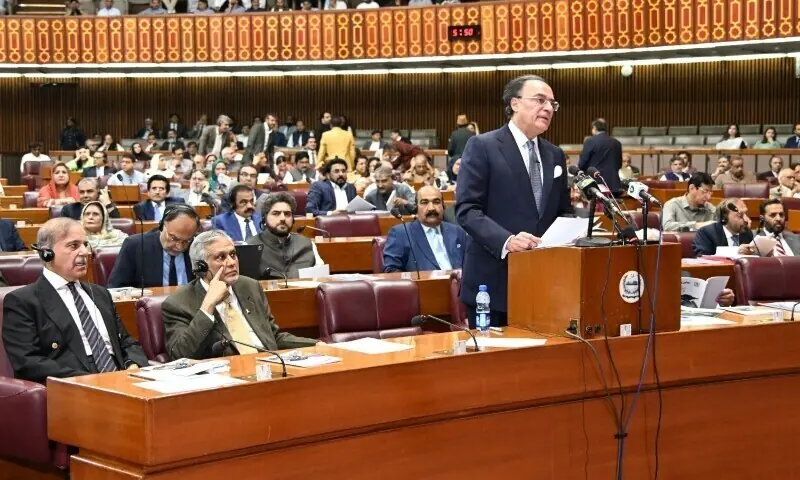
THE government has postponed the announcement of the FY27 budget without offering any explanation for the decision. In the absence of an official announcement, speculation has been rife in the media about the reasons behind the delay. The most plausible explanation appears to be unresolved issues with the IMF, particularly with regard to fiscal space for relief and the transfer of some provincial resources to support federal spending.
According to unnamed officials quoted in media reports, Pakistan and the IMF have yet to agree on revenue mobilisation steps and the expenditure cuts required under the programme. The government is reportedly seeking room for tax relief, higher development spending and increased defence allocations, while the IMF wants continued fiscal discipline to secure a primary surplus equivalent to 2pc of GDP in the next fiscal year.
Indeed, the government is facing mounting pressure from businesses, households and other segments of society to provide economic relief and revive growth. As time passes, the pressure will intensify. With economic stabilisation yet to translate into tangible improvement in living standards, the country’s leaders are finding it increasingly difficult to ignore demands for relief.
However, tensions with the IMF are not the only plausible explanation for the postponement of the budget announcement. Differences between the ruling PML-N and its principal coalition partner, the PPP, over federal development allocations for projects in Sindh are also believed to have contributed to the delay.
There is also speculation that the PPP is resisting alleged attempts by the federal government to use the budget to reduce the provinces’ effective share of resources from the divisible tax pool under the NFC Award by fully or partly assigning certain federal expenditures to the federating units. The federal goal is to obtain more space and restore a fiscal balance in favour of the centre without formally altering the NFC formula through rigorous negotiations for a new award.
Briefly, the budget’s postponement exposes the extent to which the government is unable to finalise its fiscal framework without the IMF’s concurrence. It is a reminder of our continued dependence on multilateral financing and the limited policy autonomy that accompanies such reliance. It also signifies Pakistan’s continuing struggle to reconcile the IMF’s demand for fiscal discipline with domestic political and economic realities.
Whether, and to what extent, the administration succeeds in bridging these gaps with both the IMF and its coalition partner will become clear in the next few days as the budget is finalised. The government might have been in a stronger position today to tackle competing demands had it pursued the deep reforms needed to place the economy on a firmer footing for enduring growth in the last three years, instead of just suppressing the economy to show performance.
Published in Dawn, June 4th, 2026