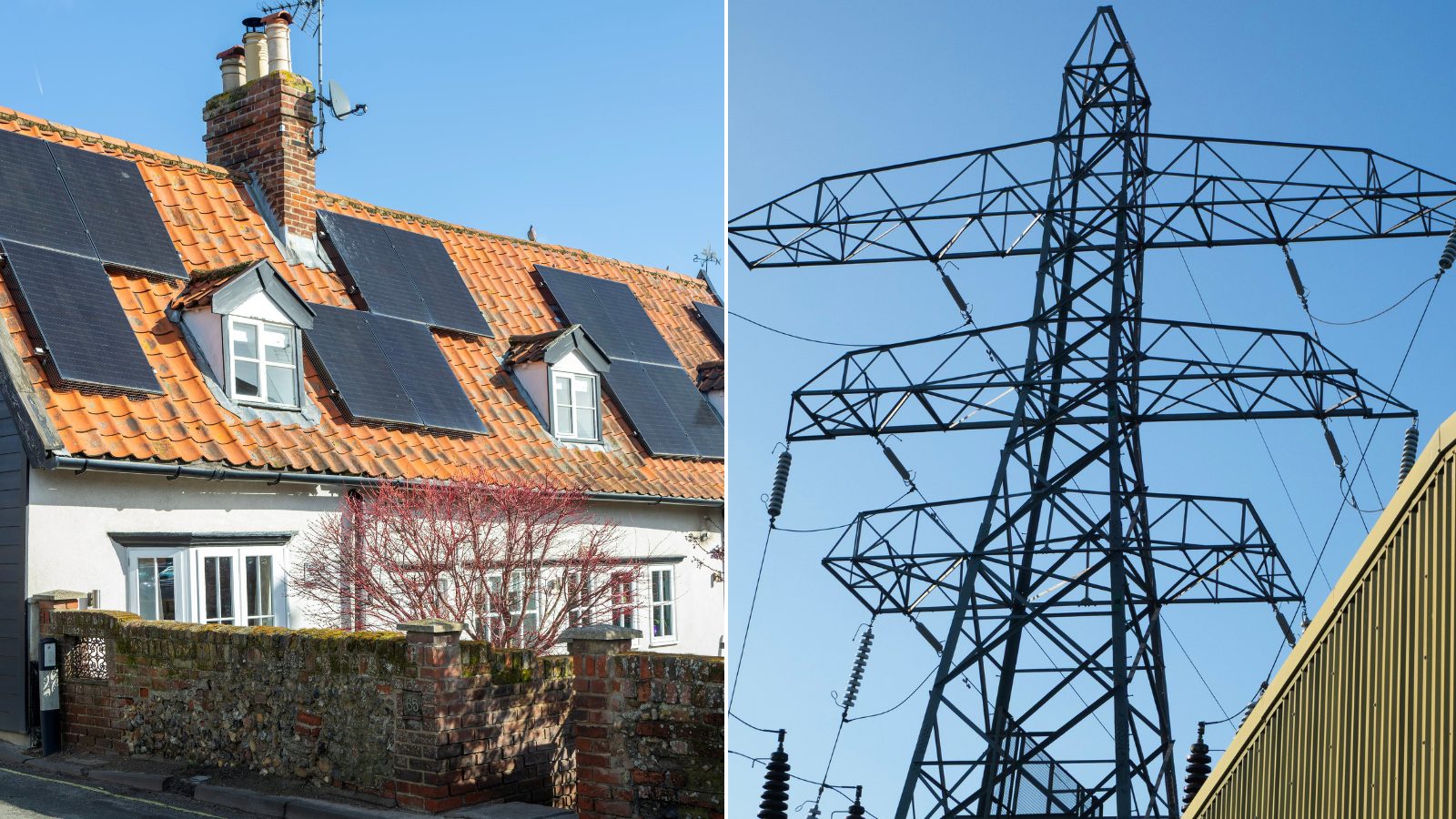
Households have been paid almost £100million for spare solar power over the past year, Britain’s largest domestic energy supplier says.
As the country swelters in the latest heatwave, domestic solar has been exporting energy to the grid, earning Octopus Energy customers the equivalent of £244 per home since last August.
The customers were on Octopus’s export tariff. Collectively, they supplied 825 GWh of power to the grid, equivalent to a year’s supply from a gas plant.
The blistering weather has seen a surge of demand for solar, says Octopus, which has received 73,000 enquiries over May, June and July.
This was up more than a third on the previous year. On June 26 – the hottest day so far – interest in solar was 50 per cent above the monthly average.
In total, eligible households earned £99.2million from solar.
Rebecca Dibb-Simkin, Chief Product and Marketing Officer at Octopus, said: “Over 400,000 UK households on Octopus tariffs are already generating their own clean energy, and that number just keeps climbing.
“The more we make use of our homegrown green energy sources, the less we rely on fossil fuels, and the more secure our energy system becomes."

Batteries-only installations, which store cheap electricity and sell surplus power back to the grid when prices rise, also saw a surge in demand.
Over the same period, the installations saw a 630 per cent increase on the previous year.
Solar is seen by the Government as playing a key part in Britain’s drive for Net Zero.
Rooftop and ground-mounted solar generated 14.4 per cent of the country’s electricity in July.
LATEST DEVELOPMENTS
- Solar eclipse could cause power cuts as electricity warning issued
- Octopus Energy offers FREE electricity to customers who cut usage during this week's solar eclipse
- ‘Absolutely nothing is sacred’: Meet the rural communities fighting the surge of giant solar farms

This compares to 22.9 per cent from wind. But, despite the glut of renewable energy, gas still supplied the electricity 22.3 per cent of the time.
This is because renewables are intermittent – they can only generate power when the wind is blowing or the sun is shining.
In order to guarantee supply, a back-up is needed, and this is usually gas.
The issue was highlighted by Wednesday’s eclipse. Solar power was hit, with the moon blocking out 90 per cent of the sunlight.
An estimated 1.2 GW of energy was lost, or one per cent of the solar total, although there was no disruption to supply.
An increase in the number of giant solar farms has also caused dispute, with farmers warning they are being placed on arable land.
Other residents have complained that the projects – some bigger than 1000 football pitches – are changing the shape of the countryside.
But trade body, Solar Energy UK, insists the farms are no threat to energy security and says they are vital to providing clean power.
The hot weather is set to continue, with temperatures predicted to reach 38C on Thursday during the fifth heatwave of the year.
This summer is expected to be the hottest on record.
Our Standards: The GB News Editorial Charter