British academic discovers diverse 'rich' communities of algae while on Antarctic mission
•A glacial microbiologist has uncovered "surprisingly rich" communities of microscopic algae in one of Earth's most isolated regions.
•Dr Emily Broadwell spent three months on Signy Island in Antarctica investigating rare snow and glacier algae as part of her doctoral research at the University of Bristol.Her analysis revealed "uniqu...
•TRENDING Stories Videos Your Say The expedition to reach Signy Island, situated 370 miles from the Antarctic peninsula and 800 miles from the Falkland Islands, took a fortnight.Dr Broadwell's tea...
هذا الخبر من GB News. خبر يقدم أدوات ذكاء اصطناعي للتلخيص والترجمة والاستماع.
المصدر: GB News | Source: GB NewsA glacial microbiologist has uncovered "surprisingly rich" communities of microscopic algae in one of Earth's most isolated regions.
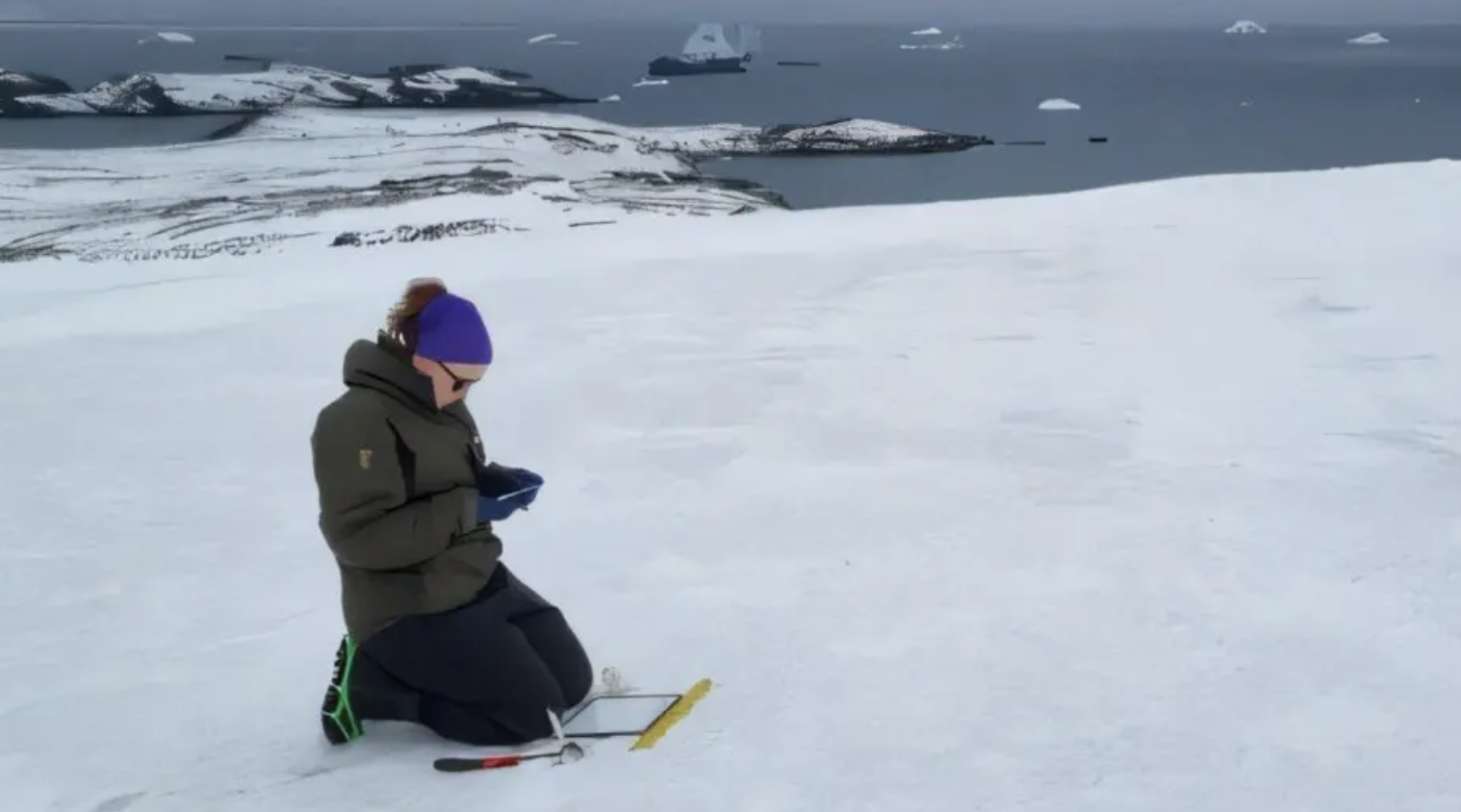
Dr Emily Broadwell spent three months on Signy Island in Antarctica investigating rare snow and glacier algae as part of her doctoral research at the University of Bristol.
Her analysis revealed "unique algal communities" across various ice and snow surfaces, upending the assumption that Antarctic glacier ecosystems will react uniformly to rising global temperatures.
The findings, now published in the journal ISME Communications, "highlight how much there is still to learn about life in these cold, remote environments," according to the researcher.
TRENDINGStoriesVideosYour SayThe expedition to reach Signy Island, situated 370 miles from the Antarctic peninsula and 800 miles from the Falkland Islands, took a fortnight.
Dr Broadwell's team had to traverse the "daunting" Drake's Passage, notorious for ocean swells that can tower up to 18 metres.
Once on the island, she and five colleagues operated from a former whaling station that has served as a British Antarctic Survey research base since 1947.
Conditions were harsh, with temperatures hovering around freezing.
During her voyage home aboard the RRS Sir David Attenborough, the researcher encountered iceberg A23a, which until recently held the distinction of being the world's largest and oldest iceberg.
The samples were transported back to the University of Bristol's Cabot Institute for the Environment, where DNA analysis was conducted alongside specimens from Arctic and Alpine regions.
"The research uncovered a surprisingly rich and habitat-specific diversity of both snow and glacier algal species," Dr Broadwell explained.
"Notably, we found red snow algae dominating the ice cap, where Ancylonema glacier algae would normally be expected to prevail."
LATEST DEVELOPMENTS
- China caught releasing 'unidentified object' into orbit from secretive space plane
- Message from ancient Rome emerges from ash after nearly 2,000 years
- Astronomers pinpoint two giant ‘superpuff’ planets - bigger than Jupiter but lighter than candyfloss
The results suggest that as temperatures climb, algal blooms in this Antarctic region may develop along a different path compared to those observed on the Greenland Ice Sheet, which frequently experiences extensive glacier algal blooms.
Dr Broadwell, now a postdoctoral researcher at Aarhus University in Denmark, noted that Signy Island hosts "rarely observed ecological niches."
Although these algal blooms capture carbon dioxide through photosynthesis, they simultaneously threaten the region's fragile equilibrium.
As plant life spreads across frozen surfaces, it darkens the snow and ice, diminishing reflectivity and causing localised warming that accelerates melting.
"These landscapes are changing fast, and arctic and alpine glaciers might be some of the first habitats lost completely to climate change," Dr Broadwell warned.
Study co-author Dr Chris Williamson, an associate professor in polar microbiology, stressed that this "hidden diversity" demonstrates the necessity for additional sampling.
"These findings are exciting and there is much more potential to expand our knowledge on the diversity and distribution of these unique microbes," he added.
Our Standards: The GB News Editorial Charter


ملاحظة تحريرية | Editorial Note: نُشر هذا المقال في الأصل بواسطة GB News. خبر (Khabr) هي منصة إعلامية أردنية مرخّصة تعمل بالذكاء الاصطناعي. نضيف قيمة تحريرية من خلال: تحليل ذكي للأخبار، ملخصات تلقائية، رواية صوتية بالذكاء الاصطناعي، ترجمة متعددة اللغات، وتدقيق الحقائق. هدفنا جعل الأخبار أكثر وضوحاً وسهولةً للقارئ العربي.
This article was originally published by GB News. Khabr is a licensed Jordanian AI-powered news platform (Registration #82086). We add editorial value through: AI-powered news analysis, automated summaries, AI audio narration, multi-language translation (Arabic, English, French, Turkish), and AI fact-checking. Our mission is to make news more accessible and understandable for Arabic-speaking audiences worldwide.