Britain’s plan for Putin’s drone and missile attack on us has one fatal flaw
•Are we ready for war?
•Welcome to The i Paper’s opinion series in which our writers tackle a question that, until recently, few had thought to consider.
•• Britain is closer to nuclear war than you think.
هذا الخبر من i News. خبر يقدم أدوات ذكاء اصطناعي للتلخيص والترجمة والاستماع.
المصدر: i News | Source: i NewsAre we ready for war? Welcome to The i Paper’s opinion series in which our writers tackle a question that, until recently, few had thought to consider.
• Britain is closer to nuclear war than you think. This is how it will unfold
• This generation of Britons couldn’t handle the death toll of a modern war
• Russia is aiming to control the UK. It would tear society apart
• Britain’s tanks would be eviscerated in a war with Russia. Here’s how to fix them
• The UK’s plan for civilians in a war is terrifying – you’re on your own
• World War 3 is closer than you think. And still Britain is half asleep
• Britain’s most important spies are uniquely vulnerable to TrumpIn the 80s, Soviet marshal Nikolai Ogarkov predicted a “Military Technical Revolution”. He argued that long-range precision weapons would soon achieve strategic effects once reserved for nuclear strikes. Today, the Russian military has turned Ogarkov’s vision into a high-capacity industrial reality, producing roughly 1,400 cruise and ballistic missiles annually.
You might be thinking, “What about these drones I have been hearing about?” The Shahed and Geran attack drones used by Russia and Iran are certainly a problem, but from an air-defence perspective they are manageable. Ukraine has downed many thousands with heavy machine guns and air-defence cannons, which are far cheaper than missiles.
However, a typical Geran drone carries at most 90kg of high explosive. By comparison, one of Russia’s preferred cruise missiles for attacking Ukraine, the Kh-101, carries 450kg, is faster than a Geran and harder to find with radar. So, the primary threat to the UK and Europe remains Russia’s cruise and ballistic missile arsenal, the latter of which Putin has begun using to deadly effect in Ukraine.
As the UK considers its place in this volatile world, we must understand how this weaponry would be used against us. In a conflict with Nato, Russian doctrine dictates a co-ordinated attempt to knock countries out of the fight before it truly begins. This could mean a focused missile strike on the UK.
For a Russian strategist, the UK offers several critically important targets. RAF Lossiemouth in Scotland is a primary candidate, where P-8 Poseidon submarine hunters sit on the runway. The naval base at Clyde, home to our nuclear deterrent, is another. Even our aircraft carriers – symbols of British prestige – could be targeted early to deter Nato intervention, or at least limit our ability to help in a war.
Unlike the opening of the invasion of Ukraine, which was restrained by political assumptions, an attack on the UK would likely be much more unrestrained. Russia would most likely want waves of missiles launched from the land, sea and air, as well as drones designed to overwhelm our defences and disorganise our command centres.
Britain has world-leading technology to meet this threat, but the number of missiles we have in stock is a glaring vulnerability.
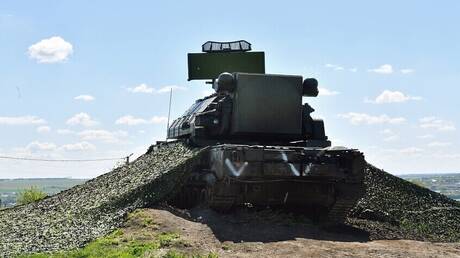
In the air, we have fighter jets like the Typhoon which can intercept the drones and cruise missiles. At sea, we have destroyer warships with sophisticated radar systems and missiles. A new missile, the Aster 30, is due to come online soon that can intercept ballistic missiles more reliably.
But it’s the ballistic missiles that are the most difficult threat to defend against. Ukraine rarely intercepts more than 25 per cent of the ballistic missiles fired at it, while it will frequently intercept 80-90 per cent of the cruise missiles and drones that Russia launches.
Israel fares better against ballistic missiles, but it is defending a much smaller area from a predictable direction of attack. It also benefits from US-aided co-ordination and support. But the point is, ballistic missile defence is hard. And until our warships get their upgraded missiles, Britain has nothing that could stop Russia’s ballistic missiles.
We do have other weapons though, like Sea Ceptor missiles and the Army’s Sky Sabre air-defence system. There is the Short-Range Air Defence programme, and a project to procure a cannon that can be used to shoot down various types of drones. These two programmes are essential and waiting upon funding for them to be realised.
When all the UK’s capabilities – planned and in service – are written down, it can sound quite encouraging. But there are two realities that we must prepare for.
Firstly, a bloody nose. It is not in Russia’s interests to wait for a declaration of war. It would try to either deter Nato from acting or knock a major player out early. That means that a strike against something like an aircraft carrier is quite likely if war is the only option available to the Kremlin.
Secondly, endurance is king. Ukraine and Israel have one thing in common, and that is endurance. Both states have built the endurance to withstand long barrages of missiles. They can only do this because they have a lot of air-defence systems and a lot of missiles and ammunition. It is not clear that Britain has the same level of endurance.
Missile stockpiles stand out as the defining feature of effective air defence. There is no point having the best air-defence systems in the world if you have no missiles to fire.
According to Ukraine’s intelligence analysis, and as mentioned above, Russia is producing around 1,400 ballistic and cruise missiles every year. Its production of the Geran attack drone is likely in the tens of thousands.
That means that Russia could sustain an aerial campaign against the UK and Europe for some time. And it would have to do it at a higher intensity than it does against Ukraine. For the UK to be capable of deterring and defeating Russia should a war start, it needs enough missiles and guns to deflect Russian strikes. And it needs the airpower to fight back, targeting Russia’s missile launchers and the industry that produces them.
While steps have been taken to toughen our defences, the costs of toughening as much is required to run deep.
This means that the ultimate hurdle is not technology, but the famous magic money tree. Defending against a sustained barrage is staggeringly expensive. During the 12-Day War in 2025, Israel reportedly spent over $2.5bn in munitions alone. Defending Ukraine has likely cost tens of billions in interceptors alone.
This creates a difficult choice for the British Government. The Ministry of Defence’s requirements compete with a £13.8bn NHS maintenance backlog and a £7bn requirement to repair crumbling schools. With public sector unions for doctors, nurses and police all seeking billions in pay restoration, every pound spent on a missile is a pound taken from a hospital ward or a classroom.
The Labour Government has some difficult choices ahead of it. Unfortunately, it is not as clear cut as “buy more missiles”. The likelihood is that the Government will follow in the footsteps of those that have come before it: not making the trade-offs or increasing spending to allow the Armed Forces to properly do their job. As a result, we must hope – as many analysts tend to point out when we discuss the UK’s air defence – that our allies in Europe will provide most of the defence.
ملاحظة تحريرية | Editorial Note: نُشر هذا المقال في الأصل بواسطة i News. خبر (Khabr) هي منصة إعلامية أردنية مرخّصة تعمل بالذكاء الاصطناعي. نضيف قيمة تحريرية من خلال: تحليل ذكي للأخبار، ملخصات تلقائية، رواية صوتية بالذكاء الاصطناعي، ترجمة متعددة اللغات، وتدقيق الحقائق. هدفنا جعل الأخبار أكثر وضوحاً وسهولةً للقارئ العربي.
This article was originally published by i News. Khabr is a licensed Jordanian AI-powered news platform (Registration #82086). We add editorial value through: AI-powered news analysis, automated summaries, AI audio narration, multi-language translation (Arabic, English, French, Turkish), and AI fact-checking. Our mission is to make news more accessible and understandable for Arabic-speaking audiences worldwide.