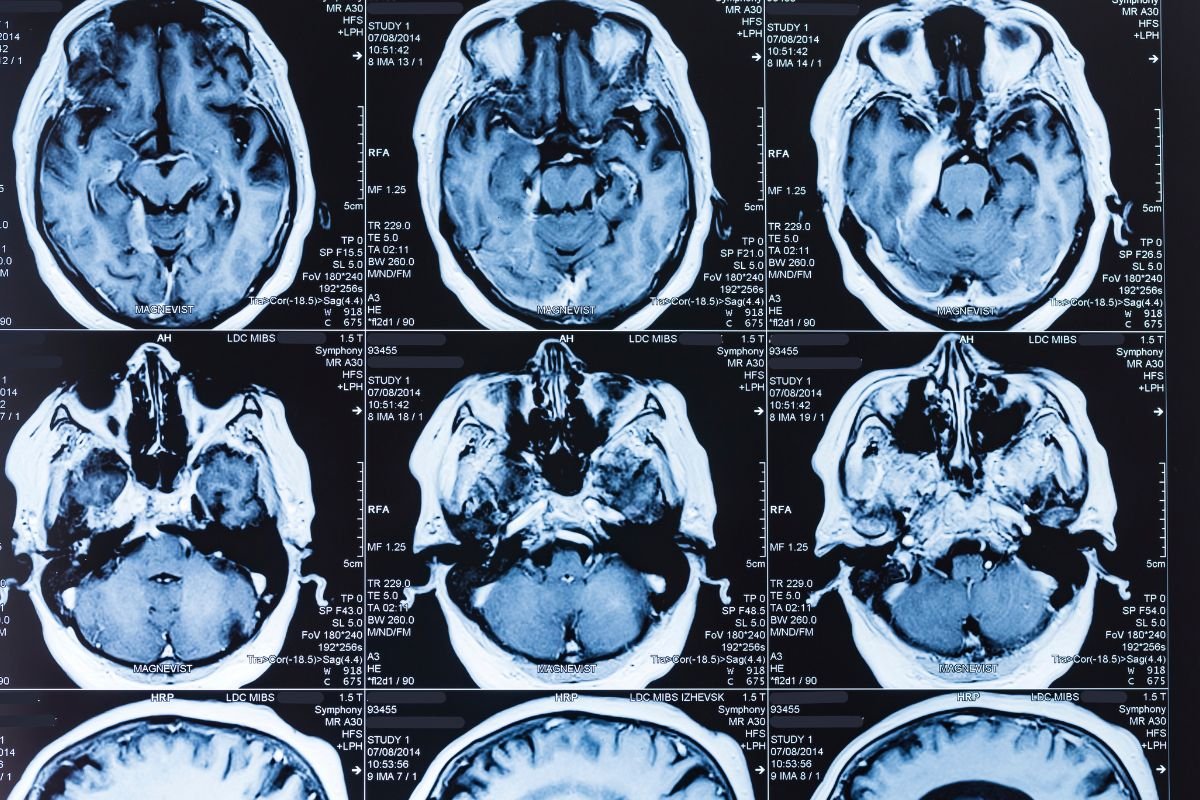
Scientists have discovered a brain cancer breakthrough after finding a "window" to attack tumours after surgery.
A landmark study from The University of Manchester, published today in Science Translational Medicine, has revealed that chemotherapy could prove far more potent against glioblastoma if delivered during two brief post-operative windows rather than after the conventional weeks-long wait.
The research team discovered that the blood-brain barrier — a protective cellular layer that ordinarily blocks drugs from reaching the brain — becomes temporarily permeable at two distinct points following tumour removal surgery.
These critical openings occur at 15 minutes and between 48 and 72 hours after the operation, offering fleeting but potentially transformative opportunities to attack residual cancer cells.

The findings, though still at a preliminary stage, could fundamentally alter how clinicians approach the treatment of the deadliest form of brain cancer.
Under current clinical protocols, patients typically wait four to six weeks after surgery before beginning chemotherapy and radiotherapy, a gap deemed necessary for recovery.
The Manchester researchers argue this delay may squander the most effective moments for drug delivery.
Dr Thomas Kisby, co-lead on the study, said: "For the first time, we've shown that glioblastoma surgery briefly exposes a vulnerability we can exploit.
"If treatment is timed during specific windows we identified, it is able to halt the disease significantly before it regrows."
He added that the discovery also opens the door to redeploying existing medicines in more strategic ways.
Professor Kostas Kostarelos, co-lead from Manchester and the Catalan Institute of Nanoscience and Nanotechnology in Barcelona, said: "This research has the potential to open a new frontier in post-operative cancer care."
He proposed deploying nanoparticle-based medicines, immunotherapy and gene therapies to target the high-risk tissue surrounding the surgical site.
LATEST DEVELOPMENTS
- Nutritionist shares worst time to eat salty food if you have high blood pressure
- Doctor warns of Wegovy tablet 30-minute rule you can't skip - or risk 'less effective' treatment
- Three health habits in midlife linked to 13 extra years without dementia in landmark study
Scottish Commonwealth Games swimmer Archie Goodburn has meanwhile made a tearful appeal to Prime Minister Andy Burnham, urging him to create a national brain cancer lead and boost research funding.
The 25-year-old, who received his brain cancer diagnosis at the age of 22, told BBC Breakfast that clinical trials available elsewhere in the world are not reaching the UK, calling the situation "unfair and unjust".
Fighting back tears, Goodburn said: "Please invest and make the difference. I'm on my knees begging for not just my own life but those who are affected and the families all around the country. This has to change, it has been going on for too long, and the suffering is unbearable."
Mr Burnham responded by extending an invitation for Mr Goodburn to meet him.
Dr Gerben Borst, honorary consultant oncologist at The Christie NHS Foundation Trust, said: "One of the greatest challenges in treating glioblastoma is eliminating the microscopic cancer cells that remain after surgery."
He noted the research suggests understanding the body's natural post-surgical response could improve drug delivery without relying solely on expensive new treatments.
Professor Robert Bristow, director of the Manchester Cancer Research Centre, described the results as "incredibly exciting", calling them a potential breakthrough in preventing tumour regrowth.
Dr Simon Newman, chief scientific officer at The Brain Tumour Charity, stressed the importance of moving from laboratory findings to clinical trials.
He highlighted the charity's support for translational research, including the EPIC-GB clinical study examining which drugs can successfully cross the blood-brain barrier in patients.
Glioblastoma is the most aggressive and rapidly progressing type of brain tumour.
Approximately 3,200 people receive a diagnosis each year in the UK, yet just 160 survive beyond five years.

The disease spreads swiftly, with tumours infiltrating multiple areas of the brain.
Patients commonly experience pressure-related headaches, changes in personality, memory difficulties, speech problems, severe fatigue and depression.
Seizures and visual disturbances are also frequent symptoms.
The blood-brain barrier remains the central obstacle in treatment.
Because this protective layer restricts most drugs from entering the brain, delivering effective chemotherapy to the tumour site has long frustrated oncologists.
The study's identification of moments when this barrier naturally weakens could offer a practical route to overcoming that longstanding hurdle.
Our Standards: The GB News Editorial Charter