Treasury yields are on the march with some analysts suggesting Fed chairman Kevin Warsh is being “tested” by the bond market. But those who know the boomerang central banker well told Fortune that while Warsh will note market “teething” problems, a reaction shouldn’t be expected.
Yields have climbed higher as softer inflation and labor data have dampened the picture for Fed rate hikes, which the market has already priced in. Thirty-year Treasuries sit near 5.3%, heights which haven’t been seen since 2007. The 20-year is around the same mark.
Yields have been elevated since the conclusion of Warsh’s latest press conference following the meeting of the Federal Open Market Committee. In July, markets got the impression that they were perhaps doing some of the legwork for the Fed by tightening financial conditions with higher yields. Warsh also declined, as is his policy, to provide forward guidance, leaving analysts questioning whether the central bank would follow through with hikes.
“It is too early to draw firm conclusions, but the rise in the term premium and bear steepening of the curve following Warsh’s first two [Federal Open Market Committee] FOMC meetings could indicate that the Fed’s credibility is being tested,” said Bassam Nawfal, chief asset allocation strategist at Alpine Macro in a report yesterday.
Warsh’s defenders point out that he has been clear in his intention to bring inflation to heel at 2%. At his first post-FOMC conference in June, Warsh stated: “I’ve said for years inflation is a choice. You bet it is. And today I’m announcing that this Committee, unambiguously and unanimously, have decided we are going to deliver on that.”
The declaration was notable given that President Trump had insisted his nominee would have to be willing to cut the base rate.
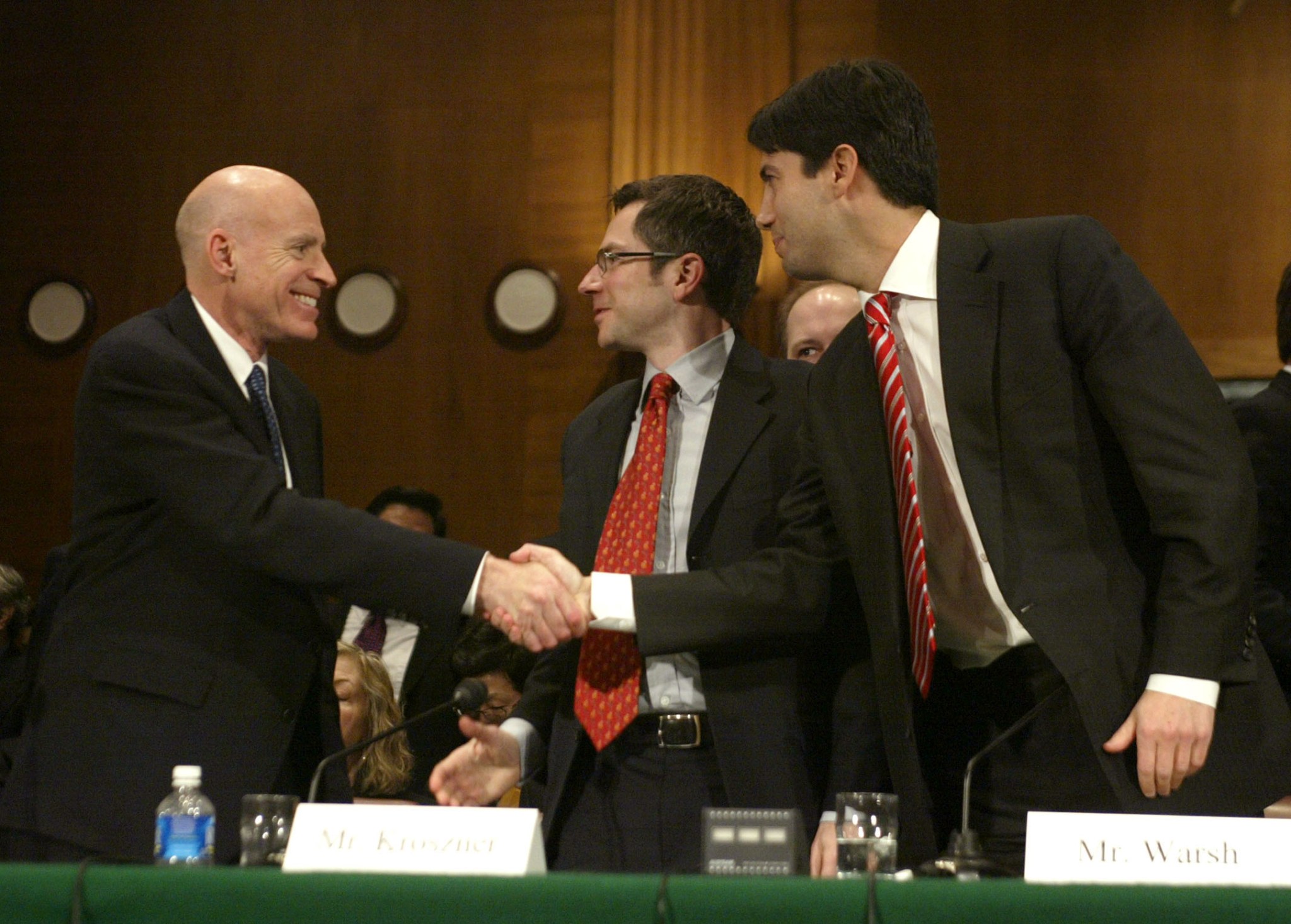
Warsh’s credibility at the Fed is clear, Randall Kroszner, a professor of economics at the University of Chicago Booth School of Business, tells Fortune. Professor Kroszner has worked closely with Warsh in the past: He was confirmed to the Fed’s Board of Governors in the same year—at the same hearing—as Warsh, and the pair sat side by side during FOMC meetings until Kroszner left the central bank in 2009.
“There’s a teething process whenever there is a new Fed chair … there were concerns about Jay Powell when he first came in,” Prof. Kroszner told Fortune—speaking last week, ahead of the latest yield jump. “Kevin is very clear that he wants to change the communication strategy, and people … in the press as well as in the markets don’t like change, [they think]: ‘I’m used to this, I know how everything works, and now I don’t know how everything works and I’m frustrated.‘”
“But that’s part of the changeover process … I don’t think Kevin could be clearer about how he really doesn’t want to give forward guidance, he doesn’t want the focus to be on every bump and wiggle in the data. He wants the Fed to think in terms of the bigger picture … and people are finding that frustrating, but I think he’s been very, very clear.”
A market watcher
Prof. Kroszner, like Warsh, worked closely on the Fed’s response to the 2008 financial crisis, chairing the Committee on Supervision and Regulation of Banking Institutions and the Committee on Consumer and Community Affairs. The pair worked closely with private sector stakeholders: Warsh, a former Morgan Stanley executive, with Wall Street, and Prof. Kroszner speaking daily with credit card companies to evaluate the health of consumers.
Wall Street may now be wondering why one of its own is proving so surprisingly unhelpful. Prof. Kroszner suspects—unsurprisingly—that Warsh will still be keeping a watchful eye on markets.
“You certainly don’t want to dismiss what’s happening in the markets, that’s not appropriate,” Prof. Kroszner said. “You want to be aware of what’s happening in markets, but you certainly don’t want to be a slave to what’s happening in the markets … Kevin will be aware of and sensitive to that.”
Economists are divided on Warsh’s approach thus far, with current unease in the bond market just one symptom of that split. Federal Reserve alum Claudia Sahm has suggested Warsh is “long on symptoms and short on solutions.” Jeremy Siegel, emeritus professor of finance at the Wharton School of the University of Pennsylvania, wrote for WisdomTree, where he serves as senior economist, that central bankers have an “obligation to explain the economic framework behind their decisions” and that last month Warsh had fallen short.
Prof. Kroszner suggests that whether or not experts agree or disagree with the approach, Warsh is nevertheless asking “very important questions.” Prof Kroszner added of Warsh’s task forces to examine current practice at the Fed: “Getting outsiders to have input and then have a good discussion at the Fed—as he said, family fights at the table, and he may well get that—because the answers may be controversial, but I think the questions are good ones.”
This story was originally featured on Fortune.com