Black Hills drilling project canceled after backlash from tribes
•34||h=1&&(this.target=t[0]),t.length>=2&&(this.opts=t[1]);var n,r=this.opts||{},i=this.target;if("string"==typeof i?n=i:"object"==typeof i&&i instanceof y?n=i.url:window.URL&&"object"==typeof i&&i ins...
•(Angel White Eyes via AP)The Associated PressA South Dakota mining company has canceled a drilling project in the Black Hills after opposition from Native American tribes and local groups.
•In a letter provided Friday by Indigenous advocacy group NDN Collective, Rapid City-based Pete Lien & Sons told the United States Forest Service on Thursday it is withdrawing its plan of operations fo...
هذا الخبر من ABC News. خبر يقدم أدوات ذكاء اصطناعي للتلخيص والترجمة والاستماع.
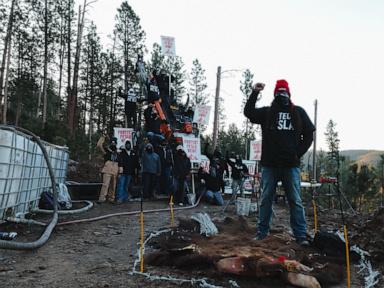
34||h=1&&(this.target=t[0]),t.length>=2&&(this.opts=t[1]);var n,r=this.opts||{},i=this.target;if("string"==typeof i?n=i:"object"==typeof i&&i instanceof y?n=i.url:window.URL&&"object"==typeof i&&i instanceof URL&&(n=i.href),o(this,n),"data"!==this.params.protocol){var s=(""+(i&&i instanceof y&&i.method||r.method||"GET")).toUpperCase();this.params.method=s,this.txSize=m(r.body)||0}}),u.on("fetch-done",function(t,e){if(this.endTime=a.now(),this.params||(this.params={}),"data"===this.params.protocol)return void g("Ajax/DataUrl/Excluded");this.params.status=e?e.status:0;var n;"string"==typeof this.rxSize&&this.rxSize.length>0&&(n=+this.rxSize);var r={txSize:this.txSize,rxSize:n,duration:a.now()-this.startTime};s("xhr",[this.params,r,this.startTime,this.endTime,"fetch"],this)})}},{}],18:[function(t,e,n){var r={};e.exports=function(t){if(t in r)return r[t];if(0===(t||"").indexOf("data:"))return{protocol:"data"};var e=document.createElement("a"),n=window.location,o={};e.href=t,o.port=e.port;var i=e.href.split("://");!o.port&&i[1]&&(o.port=i[1].split("/")[0].split("@").pop().split(":")[1]),o.port&&"0"!==o.port||(o.port="https"===i[0]?"443":"80"),o.hostname=e.hostname||n.hostname,o.pathname=e.pathname,o.protocol=i[0],"/"!==o.pathname.charAt(0)&&(o.pathname="/"+o.pathname);var a=!e.protocol||":"===e.protocol||e.protocol===n.protocol,s=e.hostname===document.domain&&e.port===n.port;return o.sameOrigin=a&&(!e.hostname||s),"/"===o.pathname&&(r[t]=o),o}},{}],19:[function(t,e,n){function r(t,e){var n=t.responseType;return"json"===n&&null!==e?e:"arraybuffer"===n||"blob"===n||"json"===n?o(t.response):"text"===n||""===n||void 0===n?o(t.responseText):void 0}var o=t(22);e.exports=r},{}],20:[function(t,e,n){function r(){}function o(t,e,n,r){return function(){return u.recordSupportability("API/"+e+"/called"),i(t+e,[f.now()].concat(s(arguments)),n?null:this,r),n?void 0:this}}var i=t("handle"),a=t(31),s=t(32),c=t("ee").get("tracer"),f=t("loader"),u=t(25),d=NREUM;"undefined"==typeof window.newrelic&&(newrelic=d);var p=["setPageViewName","setCustomAttribute","setErrorHandler","finished","addToTrace","inlineHit","addRelease"],l="api-",h=l+"ixn-";a(p,function(t,e){d[e]=o(l,e,!0,"api")}),d.addPageAction=o(l,"addPageAction",!0),d.setCurrentRouteName=o(l,"routeName",!0),e.exports=newrelic,d.interaction=function(){return(new r).get()};var m=r.prototype={createTracer:function(t,e){var n={},r=this,o="function"==typeof e;return i(h+"tracer",[f.now(),t,n],r),function(){if(c.emit((o?"":"no-")+"fn-start",[f.now(),r,o],n),o)try{return e.apply(this,arguments)}catch(t){throw c.emit("fn-err",[arguments,this,t],n),t}finally{c.emit("fn-end",[f.now()],n)}}}};a("actionText,setName,setAttribute,save,ignore,onEnd,getContext,end,get".split(","),function(t,e){m[e]=o(h,e)}),newrelic.noticeError=function(t,e){"string"==typeof t&&(t=new Error(t)),u.recordSupportability("API/noticeError/called"),i("err",[t,f.now(),!1,e])}},{}],21:[function(t,e,n){function r(t){if(NREUM.init){for(var e=NREUM.init,n=t.split("."),r=0;r0){var r=n[n.length-1];if(f&&f 1:39A masked demonstrator stands with their fist in the air, wearing a Land Back beanie in front of signs reading Protect Pe'Sla Now on April 30, 2026, in Pennington County, S.D. (Angel White Eyes via AP)The Associated PressA South Dakota mining company has canceled a drilling project in the Black Hills after opposition from Native American tribes and local groups. In a letter provided Friday by Indigenous advocacy group NDN Collective, Rapid City-based Pete Lien & Sons told the United States Forest Service on Thursday it is withdrawing its plan of operations for a graphite drilling project. It doesn't intend to file another plan for this project, the letter said. Groups opposed the project because of its proximity to a sacred site called Pe'Sla, a meadow in the Black Hills where Sioux tribes hold ceremonies and pray throughout the year. The land is also used for buffalo grazing. The Forest Service and Pete Lien & Sons did not immediately return requests for comment Friday afternoon. Nine tribes in South Dakota, North Dakota and Nebraska filed a lawsuit against the Forest Service over the project alleging violations of the National Historical Preservation Act and National Environmental Protection Act for granting permits without an environmental review. There also was a lawsuit filed by NDN Collective and environmental groups that argued the Forest Service should not have exempted the project from an environmental review because it did not meet the requirements for a categorical exclusion. In that case, a temporary restraining order granted against Pete Lien & Sons on Monday prohibited the drilling operation for two weeks. In a statement, NDN Collective said “today’s win is multi-faceted and offers a blueprint for future land defense fights.” The Black Hills, named for the appearance of the pine and spruce-covered rolling hills, is home to attractions like Mount Rushmore and state parks, but it has long been the site of tension between mining interests and tribes, who consider the area unceded territory. The 1868 Treaty of Fort Laramie established that the Black Hills belong to Sioux tribes, but the U.S. government seized the land years later after the discovery of gold. The Supreme Court later ruled the tribes were owed compensation, but they have not accepted it and maintain their claim to the land. 24/7 coverage of breaking news and live events A South Dakota mining company has canceled a drilling project in the Black Hills after opposition from Native American tribes and local groups. In a letter provided Friday by Indigenous advocacy group NDN Collective, Rapid City-based Pete Lien & Sons told the United States Forest Service on Thursday it is withdrawing its plan of operations for a graphite drilling project. It doesn't intend to file another plan for this project, the letter said. Groups opposed the project because of its proximity to a sacred site called Pe'Sla, a meadow in the Black Hills where Sioux tribes hold ceremonies and pray throughout the year. The land is also used for buffalo grazing. The Forest Service and Pete Lien & Sons did not immediately return requests for comment Friday afternoon. Nine tribes in South Dakota, North Dakota and Nebraska filed a lawsuit against the Forest Service over the project alleging violations of the National Historical Preservation Act and National Environmental Protection Act for granting permits without an environmental review. There also was a lawsuit filed by NDN Collective and environmental groups that argued the Forest Service should not have exempted the project from an environmental review because it did not meet the requirements for a categorical exclusion. In that case, a temporary restraining order granted against Pete Lien & Sons on Monday prohibited the drilling operation for two weeks. In a statement, NDN Collective said “today’s win is multi-faceted and offers a blueprint for future land defense fights.” The Black Hills, named for the appearance of the pine and spruce-covered rolling hills, is home to attractions like Mount Rushmore and state parks, but it has long been the site of tension between mining interests and tribes, who consider the area unceded territory. The 1868 Treaty of Fort Laramie established that the Black Hills belong to Sioux tribes, but the U.S. government seized the land years later after the discovery of gold. The Supreme Court later ruled the tribes were owed compensation, but they have not accepted it and maintain their claim to the land.المصدر: ABC News | Source: ABC News
ملاحظة تحريرية | Editorial Note: نُشر هذا المقال في الأصل بواسطة ABC News. خبر (Khabr) هي منصة إعلامية أردنية مرخّصة تعمل بالذكاء الاصطناعي. نضيف قيمة تحريرية من خلال: تحليل ذكي للأخبار، ملخصات تلقائية، رواية صوتية بالذكاء الاصطناعي، ترجمة متعددة اللغات، وتدقيق الحقائق. هدفنا جعل الأخبار أكثر وضوحاً وسهولةً للقارئ العربي.
This article was originally published by ABC News. Khabr is a licensed Jordanian AI-powered news platform (Registration #82086). We add editorial value through: AI-powered news analysis, automated summaries, AI audio narration, multi-language translation (Arabic, English, French, Turkish), and AI fact-checking. Our mission is to make news more accessible and understandable for Arabic-speaking audiences worldwide.