Before Noida, workers protested in Barauni, Surat, Panipat
•Weather ePaper Today’s Paper Journalism of Courage Home ePaper India Cities UPSC Premium Entertainment Politics Sports World Explained Opinion Business Lifestyle Tech Subscribe Sign In TrendingUPSC Of...
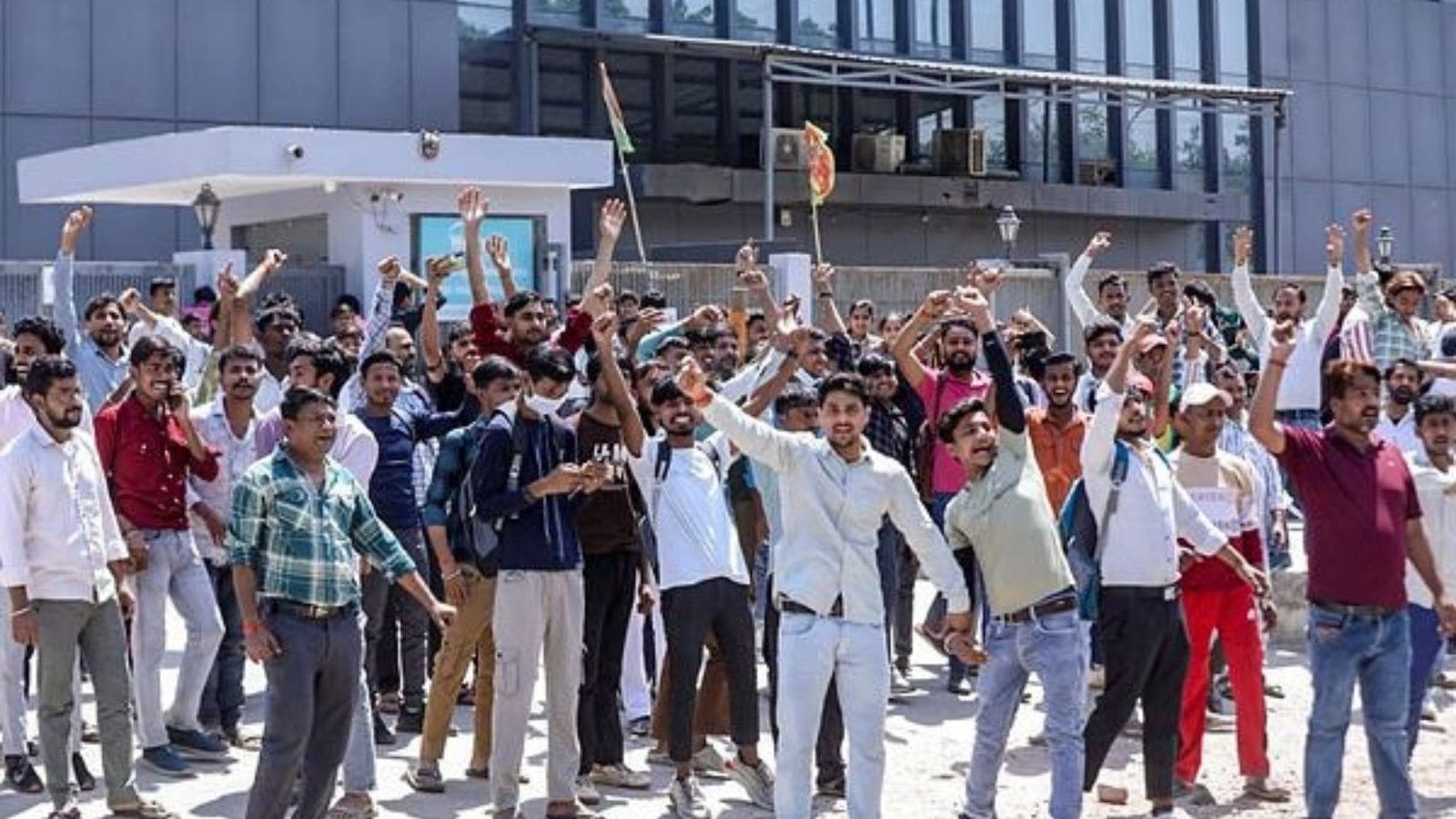
•The protest carried incidents of arson, vandalism and stone-pelting reported from Phase-2 and Sector 60 areas, police said.
•(PTI Photo) Make us preferred source on Google Whatsapp twitter Facebook Reddit PRINT Before Noida on Monday, industrial workers had protested in Barauni in Bihar, Surat in Gujarat, and Manesar and Pa...
هذا الخبر من Indian Express. خبر يقدم أدوات ذكاء اصطناعي للتلخيص والترجمة والاستماع.
Weather ePaper Today’s Paper Journalism of Courage Home ePaper India Cities UPSC Premium Entertainment Politics Sports World Explained Opinion Business Lifestyle Tech Subscribe Sign In TrendingUPSC OfferIPL 2026US NewsPuzzles & GamesLegal NewsFresh TakeHealthResearch🎙️ Podcast Advertisement function checkAndLoadWindowSizeScript() { if (window.jQuery) { // jQuery is loaded, include your script jQuery(document).ready(function($) { // Your existing script for checking window width if (window.innerWidth) var page_w = window.innerWidth; else if (document.all) var page_w = document.body.clientWidth; if (page_w > 1024) { $(".add-left, .add-right").show(); } else { $(".add-left, .add-right").hide(); } }); } else { // jQuery is not loaded, check again after 0.2 seconds setTimeout(checkAndLoadWindowSizeScript, 200); } } // Initial call to the function checkAndLoadWindowSizeScript(); NewsCitiesDelhiBefore Noida, workers protested in Barauni, Surat, Panipat Before Noida, workers protested in Barauni, Surat, Panipat As distress deepens, workers seek higher wages, release of dues Written by: Pratyush Deep, Ravi Dutta Mishra, Aanchal Magazine, Asad Rehman4 min readNew DelhiApr 14, 2026 08:00 AM IST Factory workers during a protest demanding a hike in wages, in Noida, Gautam Buddh Nagar district, Uttar Pradesh, Monday, April 13, 2026. The protest carried incidents of arson, vandalism and stone-pelting reported from Phase-2 and Sector 60 areas, police said. (PTI Photo) Make us preferred source on Google Whatsapp twitter Facebook Reddit PRINT Before Noida on Monday, industrial workers had protested in Barauni in Bihar, Surat in Gujarat, and Manesar and Panipat in Haryana, demanding better working conditions, higher minimum wages, and better overtime payments. Workers have been disappointed at the less-than-expected increases in wages after the implementation of the Labour Codes in November 2025, and their distress has been worsened by the increase in the black-market price of cooking gas cylinders due to the war in the Middle East. The protest in Noida came after the Haryana government on April 9 revised the minimum wages with effect from April 1, 2026. The last revision happened on October 21, 2015. The first workers’ protest was seen in Barauni, an industrial town in Bihar, on February 2 over the revision of minimum wages and setting of working hours at eight hours a day, along with demands for social security provisions such as provident fund and coverage under the Employees’ State Insurance Corporation (ESIC). Similar protests also took place across other refineries, including at Indian Oil Corporation Ltd’s Panipat refinery on February 23, where at least 30,000 contractual workers staged protests demanding better wages and working conditions. The protest turned violent with angry workers throwing stones at security personnel and vandalising vehicles. Days later, on February 27, a protest by 5,000 contract workers of Larsen & Toubro (L&T) working at the AM/NS (ArcelorMittal Nippon Steel) project site at Hazira, Surat, turned violent. Several policemen sustained injuries and vehicles were set on fire. With the shortages of LPG cylinders that have sent the cost of living higher, protests since March have been reported in industrial areas of Surat, Manesar and Noida. Workers have been asking for additional support for the purchase of LPG cylinders, the cost of which has risen 3-4 times in the black market. This has increased the existing clamour for an increase in minimum wages. Workers in Noida have been demanding a 35% increase in their minimum wages, in line with last week’s minimum wage hike by the Haryana government. Several trade union leaders alleged the authorities have not been paying adequate attention to the demands of the contract workers who have been protesting in Noida since Friday. Instead, they have put leaders of trade unions under house arrest. “Jab workers ke saath vaarta nahin hogi toh woh baat kaise samjhenge (When there is no conversation between workers and the authorities, how will they understand)? The protests are happening across industries – garments, IT, and call centres. The workers are aware of the new Labour Codes and are demanding worker rights in line with those. The minimum wage was last revised in 2012, and they are demanding a hike now,” Naeem, AITUC district secretary, Noida, said. Siddhanth Raj, a trade union activist, said the protest in Noida was mainly influenced by the similar protest in Manesar by workers of the automotive sector. “There was an expectation of better wages from April 1 due to the new labour codes. However, that did not happen. This has led to the present protest in industrial hubs in Noida,” Raj told The Indian Express. Textile unit owners said they had sought police protection. “Workers have turned violent… We have suspended factory operations and have asked workers to leave. If police are not deployed, we will remain closed indefinitely. This kind of protest is happening after 10-12 years,” Anil Peshawari, managing director of Noida-based Meenu Creation, told The Indian Express. Stay updated with the latest - Click here to follow us on Instagramالمصدر: Indian Express | Source: Indian Express
ملاحظة تحريرية | Editorial Note: نُشر هذا المقال في الأصل بواسطة Indian Express. خبر (Khabr) هي منصة إعلامية أردنية مرخّصة تعمل بالذكاء الاصطناعي. نضيف قيمة تحريرية من خلال: تحليل ذكي للأخبار، ملخصات تلقائية، رواية صوتية بالذكاء الاصطناعي، ترجمة متعددة اللغات، وتدقيق الحقائق. هدفنا جعل الأخبار أكثر وضوحاً وسهولةً للقارئ العربي.
This article was originally published by Indian Express. Khabr is a licensed Jordanian AI-powered news platform (Registration #82086). We add editorial value through: AI-powered news analysis, automated summaries, AI audio narration, multi-language translation (Arabic, English, French, Turkish), and AI fact-checking. Our mission is to make news more accessible and understandable for Arabic-speaking audiences worldwide.