In a stairwell in the old Truman Brewery, two men and a humanoid robot are waiting for the lift. The robot is tottering slightly, emitting a soft whirring noise; one of the men places a steadying hand on its slim plastic shoulder. A wall has been painted luminous pink and stencilled with massive black letters that say: Leave Your Algorithm Behind. On another wall, it is declared: Don’t Fear the Change Reimagine It. In a nearby hotel, Hugh Bonneville – the adoptive father of Paddington, the nation’s favourite imaginary bear – is preparing to tell a government minister how to cope with the future. None of this makes any sense, nor is it supposed to.
Much of the world is deliberately unintelligible: the Turner Prize, haute couture, HS2. You can ask for an explanation, but you will only end up more confused. Observe: SXSW London is a technology show that is also a music festival and a conference about politics and business. It is called SXSW (or South by South West) because it normally happens in Texas, but it has been happening for the past week in London. The list of acts veers from Ant and Dec to Michelle Obama to Piers Morgan to the Queen of Jordan. The programme also includes an unusual amount of Zumba – there are three separate sessions before 9.30am. It is a very expensive festival to attend but most people are here on expenses, partly because it’s a business event, but mostly because zoning out while Chelsea Clinton airs her opinions about AI is easier than doing actual work.
It is a situation the fictional BBC head of values, Ian Fletcher – as played by Bonneville in the sitcom W1A – would understand perfectly, in that he would understand the need to go along with it without understanding anything else about it. Perhaps that’s why Bonneville is here, being interviewed by the trade minister, Chris Bryant, about the “soft power” that Britain somehow enjoys because people in other countries have seen Bonneville pretending to be a nice aristocrat. Bryant calls Bonneville “one of the UK’s biggest exports”; the Office for National Statistics doesn’t publicly report how much Bonneville is exported, but I’d be very surprised if it compares materially to the £600m in fuels we sell to the EU each month. Nevertheless, Bryant says the Earl of Grantham, whom Bonneville plays in Downton Abbey, embodies a British “generosity of spirit” that is projected around the world. Bonneville nods. He is the ambassador of idealised Brititude; he notes he was once recognised in rural Rajasthan as the dad from Paddington.
Bryant and Bonneville are both graduates of the National Youth Theatre and they are worried about the prospects of young British creatives. This is a reasonable concern but it’s also an odd one to express at SXSW, where almost all of the other conversations (and sponsorship) are related to the AI industry, which is dedicated to stealing all human creativity and then drowning it in an endless torrent of derivative slop. Bonneville worries about young actors being denied the opportunities he had, but also wonders about having himself digitised, licensed as a property: “I’m nervous, but obviously I’m excited,” he says. No further actors will be needed: we will have Bonneville ad infinitum, the eternal Englishman.
Outside another event – at which the main performer is Jeremy Corbyn – there are two queues: one for Platinum Pass (£1,560) holders and another, much longer queue for Festival Pass (£1,200) peasants. Presumably Corbyn – who famously sat in a train corridor rather than upgrade his ticket – is unaware of this, or he’d run into the street and speak his truth to the people for free. Before Corbyn arrives onstage, the TV screens play an AI-generated advert for a company that makes AI-generated adverts.
Corbyn is here to talk about the Epstein files.
He’s introduced as a fearless crusader for truth on this issue, and promptly begins holding forth on Jeffrey Epstein’s “endless connections” in British politics. “His influence is now being felt even today,” he says, ignoring the fact that Epstein has been dead for almost seven years. He claims Peter Mandelson was “not approved” by security vetting to become ambassador to the US (he was approved by the Foreign Office) and that “the Prime Minister overrode that decision and appointed him anyway” (which would be front-page news, if he wasn’t making it up). He compares Keir Starmer to Andrew Mountbatten-Windsor (which seems unfair).
Corbyn and his fellow panellists agree that while Epstein’s crimes were of course very bad, they’re also not happy about the way the mainstream media’s reporting of these crimes “moves away”, as Corbyn puts it, attention from Epstein’s “financial arrangements across the world and use of the media”. He nods as a fellow panellist says it “was really a story about oligarchy”. (It was really a story about the sex trafficking and rape of hundreds of women and children.) But Corbyn insists it was a story about how “the influence on British politics, Palantir, money and media all came together in the relationship between Epstein and Mandelson” – the man he says was behind “the lies that were spread about me”.
Of course, the real victim in this story is Jeremy Corbyn.
Back at the brewery, a queue is forming to see the Culture Secretary, Lisa Nandy, interview Steven Knight, who wrote Peaky Blinders and is responsible for leading a generation of young men to experiment with hats. As with the morning’s Bryant-Bonneville summit, this is a weird set-up, in that a prominent politician is conducting the interview rather than being made to answer questions.
Nandy certainly seems chuffed – and is, she says, “a little bit intimidated” – to be on stage with Knight, whom she describes as “one of the greatest storytellers in the world”. They talk about how brilliant the UK is at storytelling, and also at giving tax breaks to other countries who want to come here to do some storytelling. Knight is writing the next Bond film, which is an interesting point for a discussion entitled “Our National Story”, because while so much of the filmmaking talent around the world graduates from the BBC, Bond is not British: he is the property of Amazon. Perhaps Jeff Bezos will decide to play the next Bond himself, or give the role to Eric Trump.
Again, the conversation turns to AI and on this subject Nandy is refreshingly direct. She says that in the government’s early attempts to reconcile the needs of the creative industry (including the need to not have all its intellectual property stolen to train AI models), “we got it wrong”. She admits there is plenty to do: “I won’t sit here and pretend to you that we’ve resolved this.” Knight agrees that AI is “a threat to writers” and wonders why the companies using his work aren’t held to account. “They seem to escape from any sort of moral judgement,” he says.
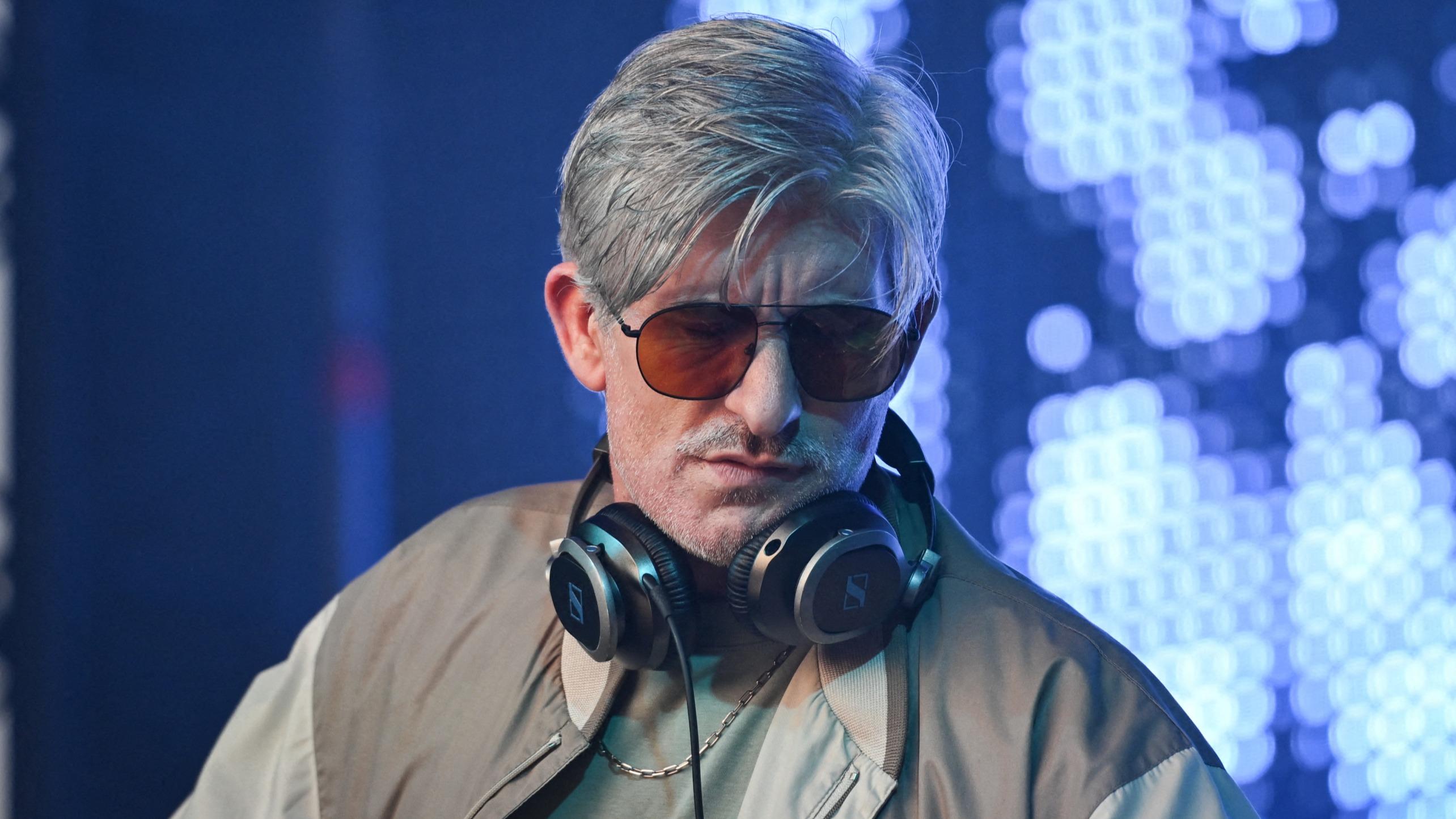
Perhaps SXSW, where every screen and poster and stand is filled with excitement about the AI future, is a part of this. Panellist after panellist holds forth on how machine intelligence is about to change everything in education, art, national security, marketing, sex – but never for long enough that these changes might trouble the audience. After a full day of this, none of it seems to matter. The crowd files out into the evening, to enjoy the music of Pete Tong, the 65-year-old DJ. Don’t fear the change, as the poster says. Don’t even try to understand it.
[Further reading: Mythos and the insecurity avalanche]