The Italian players’ association, AssoCalciatori, has called for new legislation to mandate the use of Italian players in Serie A, with president Umberto Calcagno arguing that the federation currently lacks the legal tools to enforce any such requirement, and that political intervention may be the only way to change that.
Read Football Italia Ad-Free and get access to Exclusive News – Free Trial – Click Here
The proposal arrives at a moment of acute national soul-searching following Italy’s third consecutive World Cup elimination, and the timing is no coincidence.
One of the most frequently cited structural problems in Italian football is the dwindling number of Italians receiving regular first-team football at the top level, and no club exemplifies that trend more starkly than Como.
Despite their remarkable rise in Serie A under Cesc Fabregas, Como have used an Italian outfield player for just one minute across the entire season, a figure that encapsulates the scale of the problem.
It is an extreme case, but the broader picture across the division is only marginally more encouraging, with many clubs increasingly reliant on foreign players at every level of their squads.
AIC chief Calcagno: ‘Serie A needs reform, but this is not a war on foreigners’
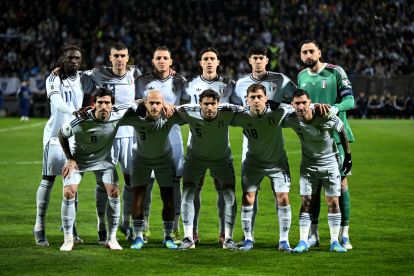
Calcagno was careful to frame the proposal in measured terms. “The federation does not have the legal tools to require that Italians play,” he said, via MilanNews. “We hope that through political channels, regulations on this matter can be studied. But let it be clear, this is not a war on foreigners.”
The distinction matters. The argument is not that foreign players are damaging Italian football, but rather that the absence of meaningful opportunities for Italian players at club level is directly undermining the talent pipeline that feeds the national team.
Many figures from the world of Calcio have made similar points in the days since the Bosnia defeat, highlighting that talented young Italians are either being squeezed out of first-team football in Serie A entirely or forced to drop down the divisions to find regular game time.
Calcagno also struck a forward-looking tone on the broader rebuilding process.
“The disappointment must be transformed into positivity,” he said. “What is important now are the programmes, reaching agreement on them, and then we choose the person to lead.”
It was a clear signal that the association’s priority is structural reform in Serie A and beyond, rather than an immediate focus on who replaces Gravina or Gattuso.