⚡ عاجل: كريستيانو رونالدو يُتوّج كأفضل لاعب كرة قدم في العالم●⚡ أخبار عاجلة تتابعونها لحظة بلحظة على خبر●⚡ تابعوا آخر المستجدات والأحداث من حول العالم●
AI اقتراحات ذكية
AI مباشر|--مشاهد مباشر
906,252مقال401مصدر نشط228قناة مباشرة4,765خبر اليوم
آخر تحديث:منذ 3 ثواني
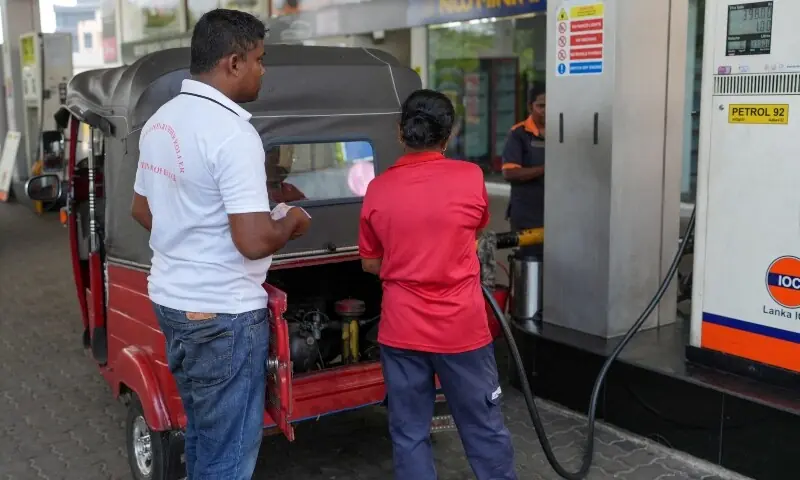
Asia battles rising, uneven toll of energy crisis caused by Iran war
•Governments in Asia, the top oil importing region, are scrambling to find alternatives and insulate their economies from the worst of the energy crisis triggered by the Iran war, but the pain is getti...
•The disruption spurred the Asian Development Bank to cut its growth forecast for developing Asia and the Pacific to 4.7 per cent this year and 4.8pc in 2027, down from 5.1pc for both years previously,...
•Overall oil imports to Asia, which takes 85pc of Gulf crude shipments, plunged 30pc in April on the year, to their lowest since October 2015, Kpler data shows, after two months of the near-closure of...
هذا الخبر من Dawn. خبر يقدم أدوات ذكاء اصطناعي للتلخيص والترجمة والاستماع.
Governments in Asia, the top oil importing region, are scrambling to find alternatives and insulate their economies from the worst of the energy crisis triggered by the Iran war, but the pain is getting increasingly costly.
The disruption spurred the Asian Development Bank to cut its growth forecast for developing Asia and the Pacific to 4.7 per cent this year and 4.8pc in 2027, down from 5.1pc for both years previously, and lifted its inflation outlook to 5.2pc for this year.
Overall oil imports to Asia, which takes 85pc of Gulf crude shipments, plunged 30pc in April on the year, to their lowest since October 2015, Kpler data shows, after two months of the near-closure of the Strait of Hormuz, a key chokepoint for a fifth of global oil and gas supplies.
Fiscal strains are mounting across the region, particularly South Asia, as governments spend billions of dollars on subsidies and import duty waivers to compensate.
“The first line of defence … is that the governments decided to absorb the initial shock by either providing subsidies or cutting excise duties on fuel products,” said Hanna Luchnikava-Schorsch of S&P Global Market Intelligence.
India’s state-dominated refining sector has kept fuel prices steady despite surging crude costs, losing about 100 Indian rupees ($1.06) a litre on diesel and 20 rupees on gasoline, but some analysts forecast price hikes after state polls ended in April.
Many regional governments have moved to limit fuel use or clamp down on hoarding, while several have curbed exports and many, including Australia, have espoused diplomatic efforts to ensure access.
China, the world’s biggest oil importer, has shielded itself with sizeable reserves, a diverse energy supply chain and export curbs on fuel and fertiliser, although Beijing is making exceptions for some regional buyers, from Australia to Myanmar.
Even as governments tap fiscal resources, forex reserves and oil inventories, the war’s economic impact on Asia has not been as bad as feared, Goldman Sachs said.
Nevertheless, it trimmed 2026 growth forecasts for Japan and some Southeast Asian countries and slightly lifted inflation expectations, while warning of a key unresolved question.
“How much of the resilience thus far reflects structural factors versus unsustainable declines in buffer stocks?” its analysts said in a note.
First line of defence
Asia’s emerging market currencies have fallen furthest and to lower lows against the dollar, compared with global peers and the region’s bigger currencies, with the peso, rupee and rupiah all making record lows.
Since the war started at the end of February, the Philippine peso has dropped more than 5pc, the Thai baht and rupee more than 3pc each and the rupiah more than 2.5pc.
By contrast, China’s yuan is the region’s top performer, up 0.8pc against the dollar, while Japan has intervened to push up the yen, to stand 0.4pc higher than pre-war levels. South Korea’s won is down about 1.1pc.
The South Asian economies of Pakistan, Bangladesh and Sri Lanka are the most vulnerable to the burdens triggered by the crunch, S&P Global Market Intelligence said.
Pakistan, for example, recently issued its first tenders since 2023 to buy liquefied natural gas.
It is looking to replace supply it is unable to source from Qatar, paying $18.88 per million British thermal unit for one cargo, or roughly $30m more than market prices before the war, according to Reuters calculations.
“These countries use more of their resources on subsidising domestic public energy enterprises and basically shielding the final consumers from the energy price shock,” added Luchnikava-Schorsch, the S&P unit’s head of Asia-Pacific Economics.
“These are also the countries which have the slimmest fiscal buffers.” Still, regional economies are better positioned than when the start of the Ukraine war in 2022 triggered the last energy shock, she said.
Coping mechanisms
Responses across Asia are shaped by the circumstances of individual nations.
For example, energy producer Indonesia has told operators to prioritise the domestic market over exports and is halting LNG shipments that were not under contract.
Southeast Asia’s biggest economy is also looking to Africa and Latin America to replace Middle Eastern oil, and plans to buy 150m barrels from Russia by year-end.
In Thailand, a source at a state-owned refiner said the firm had paused crude purchases as national stocks of refined products rose after refineries stepped up output and a government ban closed off exports.
At the same time, curbs on energy use and high prices have led to falling demand, he added.
Japan, which buys 95pc of its oil from the Middle East, has stepped up purchases of US oil, paying spot market prices that soared after the start of the war, plus the cost of shipping from the US, which takes twice as long as from the Gulf.
On Friday, Japan began releasing 36m barrels of crude from stockpiles, its second release since the start of the war.
ملاحظة تحريرية | Editorial Note:
نُشر هذا المقال في الأصل بواسطة Dawn.
خبر (Khabr) هي منصة إعلامية أردنية مرخّصة تعمل بالذكاء الاصطناعي.
نضيف قيمة تحريرية من خلال: تحليل ذكي للأخبار، ملخصات تلقائية، رواية صوتية بالذكاء الاصطناعي، ترجمة متعددة اللغات، وتدقيق الحقائق.
هدفنا جعل الأخبار أكثر وضوحاً وسهولةً للقارئ العربي.
This article was originally published by Dawn.
Khabr is a licensed Jordanian AI-powered news platform (Registration #82086).
We add editorial value through: AI-powered news analysis, automated summaries, AI audio narration, multi-language translation (Arabic, English, French, Turkish), and AI fact-checking.
Our mission is to make news more accessible and understandable for Arabic-speaking audiences worldwide.
هذا الخبر ضمن تغطية خبر لقسم اقتصاد.
نقدّم لك تحليلات ذكية وملخصات يومية لأهم الأخبار من مصادر موثوقة متعددة.
المصدر: Dawn.
يوجد 6 مقالات مرتبطة بهذا الموضوع.
This article is part of Khabr's coverage of Economy.
We provide AI-powered analysis, summaries, and multi-source aggregation to keep you informed.
Source: Dawn.
Tags: energy crisis, Asia, Iran war.
🍪 نستخدم ملفات تعريف الارتباط لتحسين تجربتك وعرض الإعلانات المخصصة. باستخدامك للموقع، فإنك توافق على سياسة ملفات تعريف الارتباط وسياسة الخصوصية.
We use cookies to enhance your experience and show personalized ads. By using this site, you agree to our Cookie Policy and Privacy Policy.
🔍
FREEFree 1GB Internet + Free International Calls
$1 trial — eSIM in 190+ countries — No roaming charges