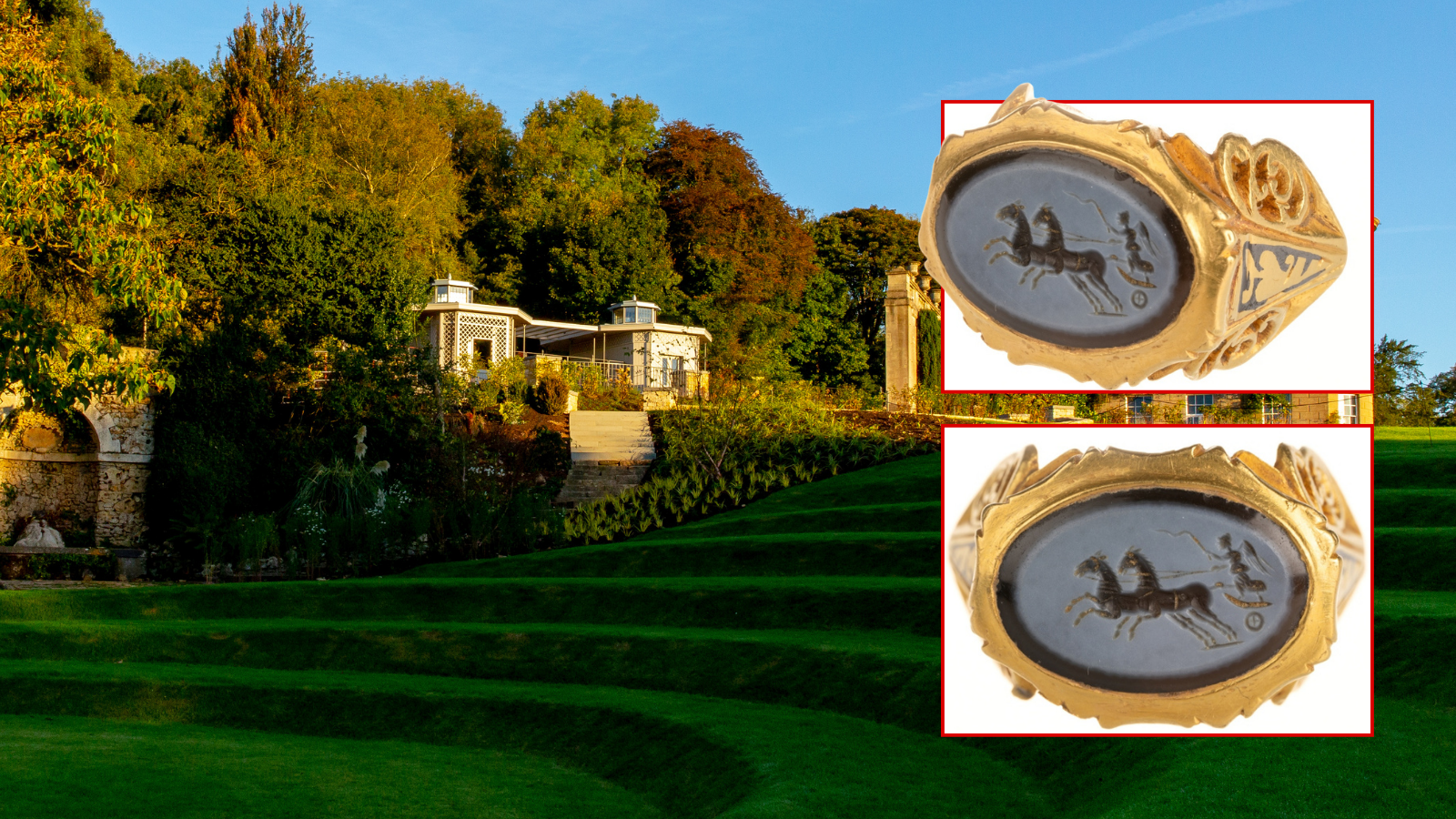
An army veteran has paid off his mortgage after using a metal detector to find a rare gold Roman ring worth tens of thousands of pounds.
Kevin Minto, a 68-year-old metal detectorist from Wiltshire, accidentally stumbled across the Ilminster Ring alongside friend Phil Costello on a country estate beneath a Somerset field.
The pair split the proceeds from the hefty sale, with Mr Minto confirming he used his share to pay off the remainder of his home loan.
The treasure, which was found during a detecting rally, dates back an incredible 1,700 years.
Experts believe the ring may have once adorned the finger of a Roman army general or senior official.
The initial discovery unfolded during a group detecting event in 2017 when Mr Minto was walking alone in a field while out on a group dig.
As he scavenged for treasure, the 68-year-old began finding more and more coins scattered across the ground.
"I was on a group dig when I found it. I was walking in this field on an estate by myself and I found a couple of coins. Then I found a couple more and a couple more and realised it was a hoard," he said.
"By the end of the day we had something like 200 coins."
The pair returned with a finds liaison officer, at which point Mr Costello unearthed the gold ring.
"It is every detectorist's dream. When I found it, it was quite overwhelming. I was in state of shock," Mr Minto shared.
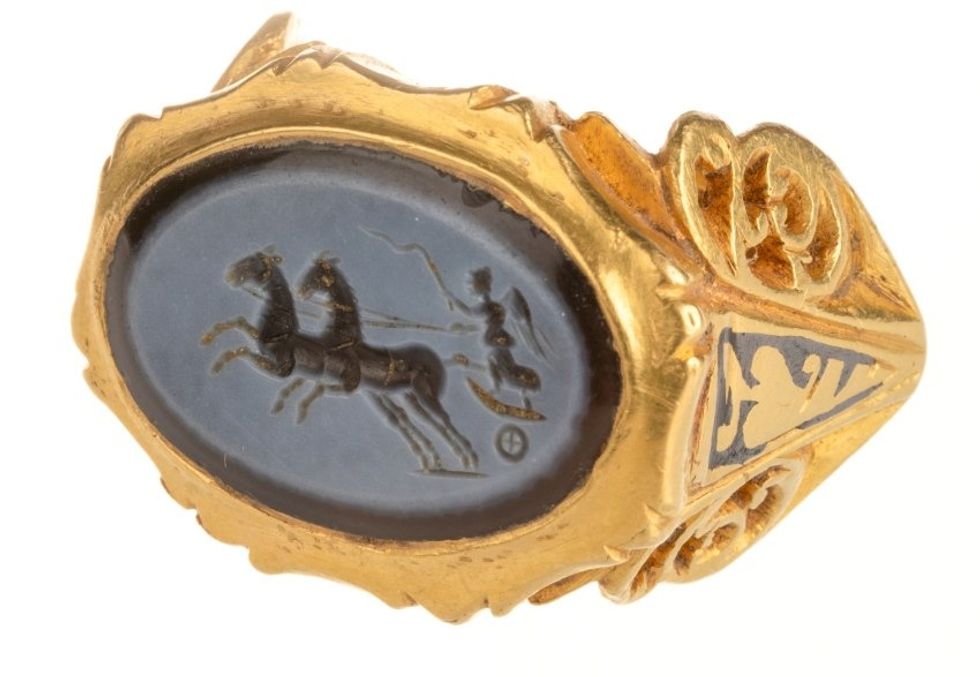
The ring weighs 48 grams and features an engraved gemstone showing the goddess Victoria, the Roman equivalent of the Greek goddess Nike, steering a two-horse chariot.
The treasure dates to around 297 AD.
LATEST ARCHAEOLOGY DISCOVERIES:
- 'Real-life Pirates of the Caribbean' shipwrecks discovered by British diver in shark-infested waters
- Metal detectorists uncover 'spectacular' Bronze Age arm rings under planned electric substation site
- Italian scientists make 'very good' sourdough from famous mummy's GUTS

"It is a ring that is unique to Britain. Because of the size and quality of it it must have belonged to someone very important like a top Roman general or a high ranking official," Mr Minto said.
The ring was buried alongside hundreds of coins during a period of unrest in south west England, historians have theorised.
"The hoard must have been buried in a pot in the ground and over the years has been struck by a farmer's plough and scattered," Mr Minto explained.
The South West Heritage Trust acquired the complete hoard for £78,010, with the ring alone valued at £75,000.
Amal Khreisheh, the senior curator at the trust, said: "The Ilminster Ring is both large and heavy, with elaborate goldwork and a beautifully executed intaglio.
"While other examples are known, these elements combine to create a spectacular ring that is only paralleled by continental discoveries.
"Its discovery sheds light on how South Somerset’s Roman inhabitants navigated a period of unrest from 286–296 AD.
"It is likely the ring was buried shortly after, in 297 AD, as part of a hoard including coins, lead and pottery objects."
The ring is due to go on display at the Museum of Somerset in Taunton following conservation work.
A community engagement programme is planned for summer, with local primary schools receiving visits to learn about Roman history.
Later this summer, a public Discovery Day will take place at Ilminster Arts Centre on August 20.
Our Standards: The GB News Editorial Charter