Archaeology mystery of skeleton 'belonging' to fouth musketeer may never be solved due to excavation blunder
•An archaeology mystery surrounding the skeleton said to belong to the fourth musketeer d'Artagnan, may never be solved due to an excavation blunder, it has been revealed.Dutch authorities have confirm...
هذا الخبر من GB News. خبر يقدم أدوات ذكاء اصطناعي للتلخيص والترجمة والاستماع.
المصدر: GB News | Source: GB NewsAn archaeology mystery surrounding the skeleton said to belong to the fourth musketeer d'Artagnan, may never be solved due to an excavation blunder, it has been revealed.
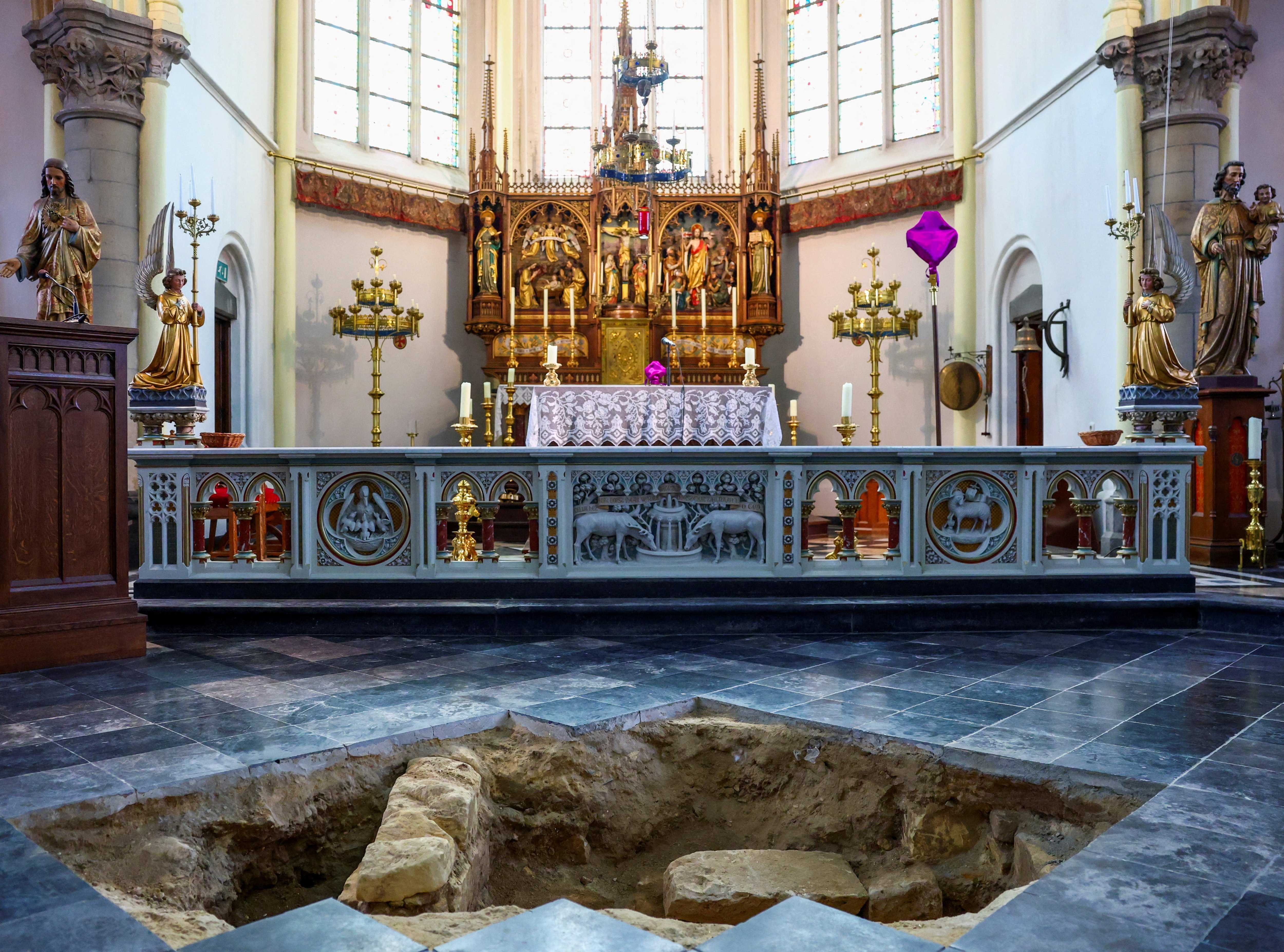
Dutch authorities have confirmed that a skeleton discovered beneath a church in Maastricht cannot be conclusively identified as the legendary musketeer, following errors during the initial dig that resulted in vital evidence being destroyed.
Maastricht city hall announced that insufficient proof exists to confirm the identity of the remains.
"Based on the current research findings, it cannot be established that the skeleton found is that of d'Artagnan," officials stated.
The authorities acknowledged that the investigation had been compromised because proper archaeological documentation was not completed before an emergency excavation took place.
"The loss of information limits the possibilities for fully interpreting the grave and the skeleton," the statement added.
While the skeleton's characteristics align with historical records about d'Artagnan, they remain insufficiently distinctive for definitive confirmation.
The Gascon nobleman Charles de Batz de Castelmore met his end during the siege of Maastricht in 1673, and his burial site has remained unknown for more than three centuries.
His life and exploits served as the inspiration for Alexandre Dumas's swashbuckling hero in The Three Musketeers, published during the 19th century.
The fictional character has since achieved worldwide recognition through the novel and countless cinema adaptations.
When the skeleton was unearthed in March within the nave of a church dating back to at least the 13th century, the discovery attracted international media attention.
Local outlet L1 subsequently reported that procedural mistakes during the first excavation meant valuable archaeological data had been irretrievably lost, prompting city authorities to intervene with an emergency dig.
LATEST DEVELOPMENTS
- Archaeologists uncover 'massive biblical structure' in hunt for Ark of the Covenant
- Archaeologists uncover 1,700-year-old ancient Roman statues in 'once-in-a-lifetime discovery'
- Message from ancient Rome emerges from ash after nearly 2,000 year
Several pieces of evidence discovered at the site remain consistent with historical accounts of d'Artagnan's death.
Archaeologists previously noted that a musket ball fragment was found near the ribs, alongside a French coin buried within the grave.
The burial location itself carries significance, as the skeleton was positioned where the altar once stood.
"Only royal or other important figures were buried under the altar at the time," deacon Jos Valke told The Telegraph.
Archaeologist Wim Dijkma, who has dedicated nearly three decades to locating the musketeer's tomb, maintains that nothing uncovered thus far contradicts the theory that these are d'Artagnan's remains.
Two teeth extracted from the skeleton were dispatched to Munich for analysis, though local reports indicate they failed to yield sufficient material for conclusive results.
Maastricht's mayor Wim Hillenaar emphasised the need for patience whilst investigations continue.
"If the DNA analysis confirms this, it would be a remarkable discovery within an important chapter in the history of Maastricht," he told L1Nieuws.
"At the same time, it is now of great importance that the ongoing investigation can be conducted with the necessary care and scientific accuracy."
Officials stated that additional archaeological, historical and genetic research would be required before any determination could be made.
"The current research findings do not confirm the identification, but they do not rule it out either," authorities concluded.
Our Standards: The GB News Editorial Charter


ملاحظة تحريرية | Editorial Note: نُشر هذا المقال في الأصل بواسطة GB News. خبر (Khabr) هي منصة إعلامية أردنية مرخّصة تعمل بالذكاء الاصطناعي. نضيف قيمة تحريرية من خلال: تحليل ذكي للأخبار، ملخصات تلقائية، رواية صوتية بالذكاء الاصطناعي، ترجمة متعددة اللغات، وتدقيق الحقائق. هدفنا جعل الأخبار أكثر وضوحاً وسهولةً للقارئ العربي.
This article was originally published by GB News. Khabr is a licensed Jordanian AI-powered news platform (Registration #82086). We add editorial value through: AI-powered news analysis, automated summaries, AI audio narration, multi-language translation (Arabic, English, French, Turkish), and AI fact-checking. Our mission is to make news more accessible and understandable for Arabic-speaking audiences worldwide.