Archaeologists discover 'extremely rare' 2,300-year-old iron shackles highlighting ancient slave trade
•French archaeologists have revealed the discovery of five exceptionally rare iron shackles at a 2,300-year-old Celtic settlement, offering compelling evidence the site served as a centre for the slave...
•TRENDING Stories Videos Your Say Such artefacts are extraordinarily uncommon from this period, making the Allonnes finds particularly significant for understanding Iron Age society.The wrist rest...
•"The removal of the coin's commercial function in order to dedicate the object to the sacred, thereby ensuring the permanence of the offering."The settlement itself covered approximately 20 hectares a...
هذا الخبر من GB News. خبر يقدم أدوات ذكاء اصطناعي للتلخيص والترجمة والاستماع.
المصدر: GB News | Source: GB NewsFrench archaeologists have revealed the discovery of five exceptionally rare iron shackles at a 2,300-year-old Celtic settlement, offering compelling evidence the site served as a centre for the slave trade in pre-Roman Gaul.
The French National Institute for Preventive Archaeological Research (INRAP) announced the findings on July 9, following a two-year excavation at Allonnes in the Loire Valley.
The restraints were initially unearthed in 2019, but years of post-excavation analysis were required before the results could be made public.
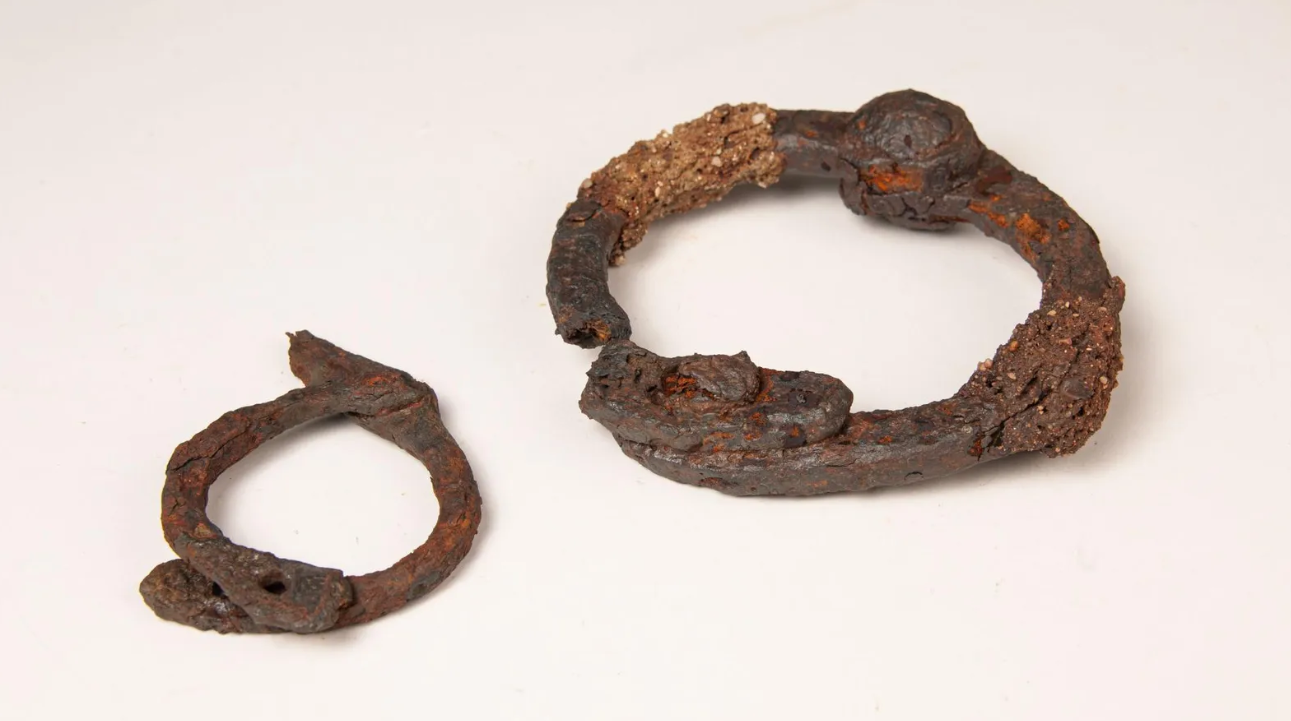
Among the items recovered were a double-wrist restraint, an ankle shackle, and three additional fragments of metal bindings.
TRENDINGStoriesVideosYour SaySuch artefacts are extraordinarily uncommon from this period, making the Allonnes finds particularly significant for understanding Iron Age society.
The wrist restraint measured just six centimetres in diameter, a size that indicates it was likely designed for a woman or child.
Meanwhile, the ankle shackle weighed more than a kilogram, demonstrating the physical burden forced upon those held captive.
Thierry Lejars, a specialist in Celtic metalwork, told INRAP: "The identification of restraints and weapons suggests a hierarchical social organisation composed of dominant and subordinate groups — prisoners or slaves."
The discovery points to a society sharply divided between those who held power and those stripped of all rights.
Enslaved individuals at the settlement may have included war captives, convicted criminals, or people who had fallen into debt.
Men, women and children alike could become property, bought and sold by their owners.
The Gauls, a confederation of Celtic tribes, were known to enslave prisoners of war, convicts and those unable to repay debts, often putting them to work in agricultural labour.
LATEST DEVELOPMENTS
- Archaeologists decipher name of Mayan astronomer for first time in history: 'Wonderful discovery!'
- Archaeologists discover 3,000-year-old tomb next to Ancient Egyptian necropolis
- Strange objects 'unlike anything ever found' spotted lurking below North Sea by scientists
However, physical evidence of slavery from this era is exceptionally scarce.
Because the Celts left behind few written records of their own, historians have struggled to piece together the realities of bondage in pre-Roman Gaul.
INRAP noted traces relating to the poorest members of Gallic society, particularly enslaved populations, typically remain invisible in the archaeological record.
The shackles from Allonnes therefore provide an unprecedented window into the experiences of people who left almost no mark on history.
The settlement's position at the junction of several major trade routes made it an ideal location for commerce, including the trafficking of human beings.
Beyond the shackles, archaeologists uncovered a religious sanctuary that remained active for nearly 800 years, continuing long after Roman conquest.
The site yielded hundreds of coins spanning more than five centuries, along with weapons, jewellery and personal items deposited as offerings.
Remarkably, about a third of the coins had been deliberately filed, sheared or etched with a chisel.
Isabelle Bollard-Raineau, an ancient-coin expert with the French ministry of culture, explained: "These mutilations reveal a ritual intention.
"The removal of the coin's commercial function in order to dedicate the object to the sacred, thereby ensuring the permanence of the offering."
The settlement itself covered approximately 20 hectares and functioned as a thriving artisan quarter.
Blacksmiths, coppersmiths and bronze workers operated from small workshops, producing swords, spearheads, keys and horse harness fittings.
Our Standards: The GB News Editorial Charter


ملاحظة تحريرية | Editorial Note: نُشر هذا المقال في الأصل بواسطة GB News. خبر (Khabr) هي منصة إعلامية أردنية مرخّصة تعمل بالذكاء الاصطناعي. نضيف قيمة تحريرية من خلال: تحليل ذكي للأخبار، ملخصات تلقائية، رواية صوتية بالذكاء الاصطناعي، ترجمة متعددة اللغات، وتدقيق الحقائق. هدفنا جعل الأخبار أكثر وضوحاً وسهولةً للقارئ العربي.
This article was originally published by GB News. Khabr is a licensed Jordanian AI-powered news platform (Registration #82086). We add editorial value through: AI-powered news analysis, automated summaries, AI audio narration, multi-language translation (Arabic, English, French, Turkish), and AI fact-checking. Our mission is to make news more accessible and understandable for Arabic-speaking audiences worldwide.