AI Summit London turns 10 as businesses move past the AI hype cycle
•A decade ago, AI conferences were still largely populated by researchers and a relatively small group of technologists trying to convince businesses the technology would eventually matter.
•But this year’s AI Summit London arrives in a very different climate.
•The event, which returns to Tobacco Dock on 10 and 11 June as part of London Tech Week, expects more than 5,000 attendees, 300 speakers and over 100 exhibitors.
هذا الخبر من سيتي أيه إم. خبر يقدم أدوات ذكاء اصطناعي للتلخيص والترجمة والاستماع.
المصدر: سيتي أيه إم | Source: سيتي أيه إم
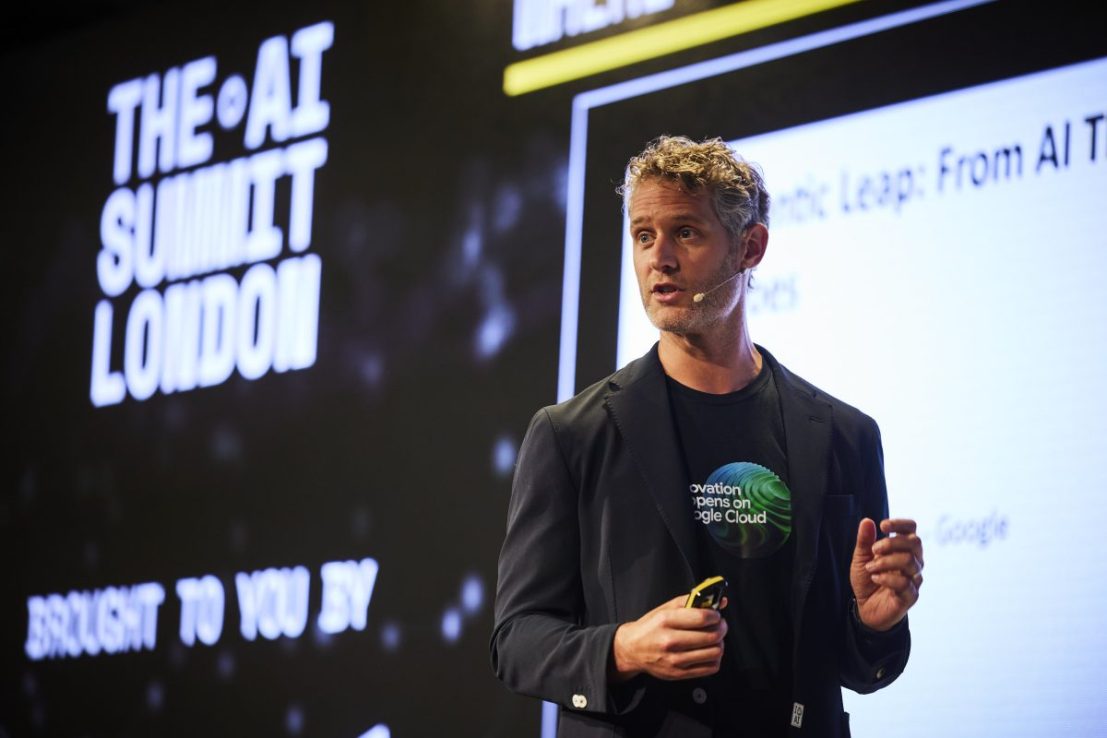
A decade ago, AI conferences were still largely populated by researchers and a relatively small group of technologists trying to convince businesses the technology would eventually matter. But this year’s AI Summit London arrives in a very different climate.
The event, which returns to Tobacco Dock on 10 and 11 June as part of London Tech Week, expects more than 5,000 attendees, 300 speakers and over 100 exhibitors.
The line-up includes executives from Nvidia, AWS, Astrazeneca, JPMorgan Chase, Virgin Atlantic and the Ministry of Defence, alongside startup founders and investors.
But perhaps the clearest sign of how much the industry has changed is the tone of the conversations themselves.
“There was a huge amount of enthusiasm, but not necessarily a huge amount of key practical takeaways” Caroline Hicks, vice president of The AI Summit Series at Informa, said ahead of the conference’s 10th anniversary edition.
“We were still in that theoretical stage. There was still a lot that was unknown.”
Two years after generative AI exploded into the mainstream following the launch of ChatGPT, companies are now under pressure to prove where AI can genuinely improve productivity or reduce costs.
And with it, the mood across the sector has become noticeably more cautious, with businesses concerned around the regulation, copyright, cyber risks and workforce disruption that come with AI adoption.
“Now we are very focused on not only the future, but where we are now,” Hicks said. “We have a lot of enterprise business leaders who come to the AI Summit to either present or learn, and the summit helps in informing the next thing. There will be key takeaways and practical learnings – and that’s what they’re really looking for.”
Facing adoption hurdles
This year’s summit includes 14 content tracks covering sectors including finance, manufacturing, healthcare, cybersecurity and the creative industries, alongside sessions on AI governance and regulation.
Hicks said adoption levels still vary sharply between industries: “I think they are seeing meaningful ROI, but I think it’s very varied. The financial community have got a lot of key takeaways, a lot of very successful pilots, as well as a lot of very successful at-scale projects.”
Healthcare, meanwhile, remains more cautious because of data sensitivity and compliance concerns.
“There’s such a high degree of regulation, and there’s so many different hurdles that you have to overcome there,” Hicks said.
Those tensions have become particularly acute as AI-generated content tools spread rapidly across film, music, advertising and publishing.
“With the creative industries, there’s a lot of very exciting stuff happening, but it’s probably one of the scarier industries,” Hicks said.
The conference will also focus heavily on the changing workplace and the rise of AI-focused leadership roles.
“We’re also seeing a real kind of uptick in chief AI officer roles and roles that really are starting from the ground with AI,” Hicks said.
Alongside executive discussions, the summit is introducing dedicated AI training programmes with London Business School and AI training company General Purpose.
Regulation and Britain’s AI goals
Beyond enterprise adoption, another major theme hanging over this year’s summit is sovereign AI.
The UK government has increasingly pushed the idea that Britain should develop domestic AI capability rather than relying entirely on American technology companies.
Recent government initiatives include a new sovereign AI fund and backing for British AI infrastructure projects.
The summit will host debates involving government officials, and defence representatives on whether Europe can realistically compete with the US and China in AI infrastructure and development.
“I think sovereign AI, there is a reason that most certainly most developed nations are having big conversations around sovereign AI,” Hicks said. “But maybe that’s not even the question. It’s not ‘do we need it?’ It’s ‘to what extent do we need it?’”
Regulation is expected to feature heavily too, particularly as Britain attempts to position itself between the EU’s stricter AI rules and the lighter-touch approach favoured in the US.
“We don’t have a dedicated stage for it because it’s so ubiquitous,” Hicks said. “Responsible AI and ethical AI are hugely important.”
ملاحظة تحريرية | Editorial Note: نُشر هذا المقال في الأصل بواسطة سيتي أيه إم. خبر (Khabr) هي منصة إعلامية أردنية مرخّصة تعمل بالذكاء الاصطناعي. نضيف قيمة تحريرية من خلال: تحليل ذكي للأخبار، ملخصات تلقائية، رواية صوتية بالذكاء الاصطناعي، ترجمة متعددة اللغات، وتدقيق الحقائق. هدفنا جعل الأخبار أكثر وضوحاً وسهولةً للقارئ العربي.
This article was originally published by سيتي أيه إم. Khabr is a licensed Jordanian AI-powered news platform (Registration #82086). We add editorial value through: AI-powered news analysis, automated summaries, AI audio narration, multi-language translation (Arabic, English, French, Turkish), and AI fact-checking. Our mission is to make news more accessible and understandable for Arabic-speaking audiences worldwide.