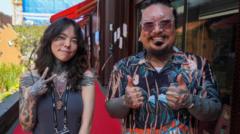
After decades risking arrest, South Korea's tattoo artists step into the limelight
•After decades risking arrest, South Korea's tattoo artists step into the limelight5 hours agoShareSaveAdd as preferred on GoogleLeehyun ChoiSeoulWhen Kim Tae-nam took the stage last Saturday in Seoul,...
•Let's hear it from everyone: Tattoos are art!"The crowd hollered in agreement.
•They had gathered on a rooftop in Seongsu, a hip Seoul neighbourhood, for Ink Bomb: more than 90 local tattooists and artists openly celebrating body art, which had thrived in the shadows for decades....
هذا الخبر من BBC News. خبر يقدم أدوات ذكاء اصطناعي للتلخيص والترجمة والاستماع.
ملاحظة تحريرية | Editorial Note: نُشر هذا المقال في الأصل بواسطة BBC News. خبر (Khabr) هي منصة إعلامية أردنية مرخّصة تعمل بالذكاء الاصطناعي. نضيف قيمة تحريرية من خلال: تحليل ذكي للأخبار، ملخصات تلقائية، رواية صوتية بالذكاء الاصطناعي، ترجمة متعددة اللغات، وتدقيق الحقائق. هدفنا جعل الأخبار أكثر وضوحاً وسهولةً للقارئ العربي.
This article was originally published by BBC News. Khabr is a licensed Jordanian AI-powered news platform (Registration #82086). We add editorial value through: AI-powered news analysis, automated summaries, AI audio narration, multi-language translation (Arabic, English, French, Turkish), and AI fact-checking. Our mission is to make news more accessible and understandable for Arabic-speaking audiences worldwide.