ADB says budget gaps delayed loan
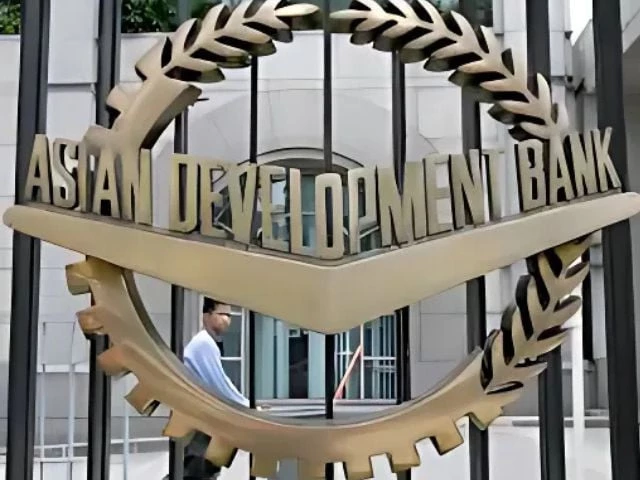
The Asian Development Bank (ADB) said on Friday that Pakistan's staff-level agreement for disbursement of a $1 billion tranche was delayed last month due to budget discrepancies – an assertion that the finance ministry has contested while terming these mere statistical discrepancies. "Pakistan recorded the second-largest equity losses and the highest rise in risk premiums since the start of the year, partly reflecting uncertainty surrounding delays affecting an International Monetary Fund (IMF) staff-level agreement caused by fiscal discrepancies identified in March," states a new ADB report. The ADB on Friday released the Asian Development Outlook, its flagship publication that also pitched Pakistan's economic growth rate at 3.5% for this fiscal year. The rate is slightly higher than the World Bank projection but 1% lower than Pakistan's hopes for this fiscal year. In response to the ADB's note about the delay in reaching a staff-level agreement, the finance ministry said that this discrepancy was reported to the IMF as statistical discrepancies and was a difference between civil accounting and cash accounting.The statistical discrepancy amounted to Rs413 billion during the first half of this fiscal year, according to the fiscal operations summary of the finance ministry. Pakistan and the IMF reached the staff-level agreement late last month, about three weeks after the scheduled time. The government had earlier said that the delay was because of disagreement over tax collection targets. The IMF's executive board is expected to approve the loan tranche and endorse the staff-level agreement in the first week of May. In the second week, the IMF will dispatch a mission to Pakistan to finalise next fiscal year's budget. ADB cautions Pakistan The ADB said that Pakistan's economy may grow by 3.5% in this fiscal year, which is lower than the official target. It nonetheless advised against chasing a rapid growth rate without fixing chronic ills in the energy, trade and investment sectors. "Pakistan is at a crucial moment with its economy stabilised and efforts under way to address key structural issues in energy, trade, investment and state-owned enterprises. However, expectations of rapid growth without fully tackling these issues could lead to reform fatigue and risk policy slippage," reads the report. The ADB's views were in line with the position of Finance Minister Muhammad Aurangzeb, who is also against accelerating economic growth without first fixing structural problems. The ADB said that deploying overly loose macroeconomic policies to support higher growth could revive balance-of-payments pressures and threaten hard-earned macroeconomic stability. Externally, rising geopolitical tensions and uncertainties, especially from a prolonged conflict in the Middle East, could worsen volatility in global commodity prices, particularly energy, and disrupt international trade. This has potential implications for domestic inflation and the external position, weighing on the growth outlook, according to the lender. The ADB said that raising long-term growth and living standards in Pakistan would depend crucially on making deeper changes to the country's development strategy. This includes opening further to foreign investment and trade, privatising state-owned enterprises, and addressing taxation and energy costs. In its flagship Asian Development Outlook report, the Manila-based lender said that inflation in Pakistan would also increase because of the Middle East conflict, which could also adversely impact remittances and the current account deficit. A prolonged Middle East conflict, by raising energy and fertiliser costs, would cut growth by dampening output in agriculture and industry, while also curbing remittances from the Gulf, boosting inflation and widening the current account deficit. The ADB said that surging oil prices and disrupted trade routes amid the Middle East conflict will drive inflation and import costs up further, with oil and gas constituting a large share of Pakistan's imports. Inflation is anticipated to increase in the coming months, most likely breaching the upper bound of the central bank's medium-term target range of 5% to 7%, said the ADB. The central bank is committed to keeping the real policy rate sufficiently positive to anchor inflation expectations within the medium-term target range, it added. Pakistan has already assured the IMF that it stands ready to increase interest rates to contain inflationary pressures. Average inflation is projected to rise to 6.4% in this fiscal year and 6.5% in the next fiscal year due to surging oil prices and disrupted trade routes amid the Middle East conflict, as oil and gas constitute a large share of Pakistan's imports, according to the report. "Pakistan's economy has stabilised and begun to show stronger momentum, supported by progress in implementing key economic reforms amid a challenging global environment," said ADB Country Director for Pakistan Emma Fan. She said that growth is expected to continue in 2026 and 2027, but downside risks are significant. "Sustained reform efforts are critical to preserve the growth momentum and bolster fiscal and external buffers against global shocks," said Fan. However, the ADB said that investment in Pakistan is projected to increase due to accommodative monetary conditions, greater macroeconomic stability and lower government financing requirements, which will free up funds for private sector lending, particularly for small and medium enterprises and agriculture. The revival of privatisation, including the successful privatisation of PIA, will further boost private investment. Private consumption is expected to recover as lower inflation and moderate growth increase household incomes, according to the lender.المصدر: Express Tribune | Source: Express Tribune
ملاحظة تحريرية | Editorial Note: نُشر هذا المقال في الأصل بواسطة Express Tribune. خبر (Khabr) هي منصة إعلامية أردنية مرخّصة تعمل بالذكاء الاصطناعي. نضيف قيمة تحريرية من خلال: تحليل ذكي للأخبار، ملخصات تلقائية، رواية صوتية بالذكاء الاصطناعي، ترجمة متعددة اللغات، وتدقيق الحقائق. هدفنا جعل الأخبار أكثر وضوحاً وسهولةً للقارئ العربي.
This article was originally published by Express Tribune. Khabr is a licensed Jordanian AI-powered news platform (Registration #82086). We add editorial value through: AI-powered news analysis, automated summaries, AI audio narration, multi-language translation (Arabic, English, French, Turkish), and AI fact-checking. Our mission is to make news more accessible and understandable for Arabic-speaking audiences worldwide.