A question for Apple’s new leadership: Is it enough to be cool?
•For over two decades, Apple did not merely build products; it repeatedly revealed to consumers possibilities they had not yet imagined.
•From the iPod to the iPhone, from the Mac to the iPad, it combined intuitive use, elegant design, and quiet technological depth to turn devices into objects of desire as much as utility.
•Entire industries, from music to mobile computing to media, reorganised themselves around these moments, as Apple set the terms for how technology should look, feel, and work.
هذا الخبر من Indian Express. خبر يقدم أدوات ذكاء اصطناعي للتلخيص والترجمة والاستماع.
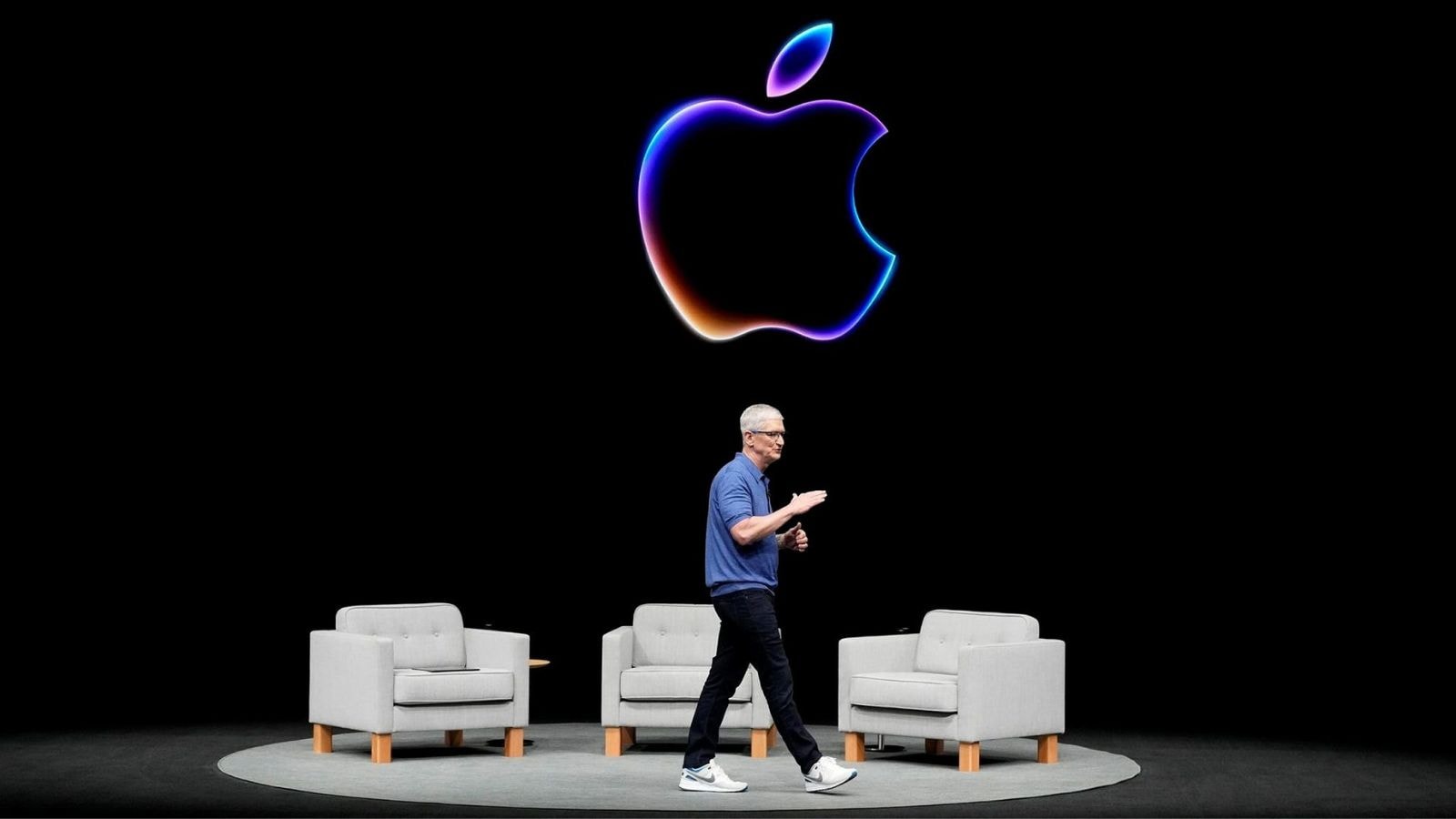
For over two decades, Apple did not merely build products; it repeatedly revealed to consumers possibilities they had not yet imagined. From the iPod to the iPhone, from the Mac to the iPad, it combined intuitive use, elegant design, and quiet technological depth to turn devices into objects of desire as much as utility. Entire industries, from music to mobile computing to media, reorganised themselves around these moments, as Apple set the terms for how technology should look, feel, and work. For nearly two decades, the iPhone has been Apple’s organising force, commercially and culturally. It is difficult to overstate the scale and durability of that success. Yet, it is precisely this dominance that now frames Apple’s dilemma. When a single product becomes both engine and identity, the company around it begins to optimise for extension rather than disruption. Apple’s choice of a leader who does not emerge from the iPhone’s commercial core, therefore, signals a recognition that the next phase cannot be built by merely scaling the last. This is where the question of “cool” becomes more than a superficial critique. Apple is not uncool. It remains widely desired, deeply embedded, and globally aspirational. But it is no longer singular in defining what comes next, nor does it dictate the cultural direction of technology with the same authority. In that precise sense, Apple has moved from defining cool to participating in it. Apple today is one of the most powerful consumer ecosystems ever built. Its devices, software, and services form an integrated architecture that locks in users across generations. Among millennials and older cohorts, Apple is not just a brand but a dependable infrastructure, where communication happens, memories are stored, and digital life is organised. Among younger consumers, technology is approached less as a closed ecosystem and more as a modular stack. Devices, platforms, and identities are assembled rather than inherited. Apple continues to benefit from strong network effects, especially in communication and content layers, but that is behavioural lock-in, not cultural leadership. The distinction matters because cultural capital is not about how many people use a product, but about who defines what others aspire to use next. In markets like India, this transition is even more visible. Apple’s expansion, aided by financing, localisation, and retail presence, has broadened its base significantly. The brand remains aspirational, but its meaning is shifting. Apple’s strength today lies as much in the difficulty of leaving its ecosystem as in the appeal of entering it. The risk is that retention begins to rely less on innovation and more on switching costs. Competitors have recognised this opening. They are not merely matching Apple on features; they are positioning themselves as expressions of identity. They move faster, experiment more visibly, and engage younger users with a fluency that large incumbents often struggle to match. The critique that Apple’s innovation has slowed is not entirely misplaced. The company that once redefined categories now appears to refine them. In the most significant technological transition of the moment, artificial intelligence, Apple’s posture has been notably cautious. A structural shift is also underway in who enters the technology ecosystem and when. Consumers are encountering personal devices far earlier in life, shaping preferences before brand hierarchies have time to settle. For this cohort, “cool” is not inherited from legacy reputation but constructed through immediacy, intelligence, and adaptability. Artificial intelligence, ambient computing, and emerging interfaces will increasingly define this perception, not industrial design alone. The centre of gravity is moving from hardware excellence to contextual intelligence, from what a device is to what it anticipates and enables. In that transition, the companies that define cool will be those that make technology feel intuitive, responsive, and socially embedded from the outset. Apple’s challenge is not simply to participate in this shift, but to lead it at a moment when its instincts have been shaped by a very different era of computing. And yet, it would be premature to conclude that Apple’s innovation engine is exhausted. Its investments in custom silicon, spatial computing, and next-generation interfaces indicate a longer horizon. Apple is preparing for a world beyond the smartphone, even if those bets have not yet crystallised into mass-market shifts. The issue is not the absence of innovation, but the visibility and immediacy of it. Tim Cook’s tenure institutionalised operational excellence at a scale few companies have achieved. He built resilience into supply chains, predictability into execution, and discipline into decision-making. Under John Ternus, that baseline is likely to hold, and may even deepen through more technically integrated supplier relationships aimed at enabling future product platforms. Apple is not less relevant, but it is less culturally directive than it once was, having traded a measure of agenda-setting power for the certainty of scale. That shift may be a natural consequence of becoming a company of its size, but it is also a strategic choice to privilege optimisation over disruption. Apple’s future, therefore, will not be decided by whether it can sustain its annuity of loyal users, but by whether it is willing to unsettle that comfort in order to shape what comes next. Apple once made the unimaginable feel inevitable; its next test is whether it still has the appetite to do so. Sridharan is a corporate advisor and author of Family and Dhandaالمصدر: Indian Express | Source: Indian Express
ملاحظة تحريرية | Editorial Note: نُشر هذا المقال في الأصل بواسطة Indian Express. خبر (Khabr) هي منصة إعلامية أردنية مرخّصة تعمل بالذكاء الاصطناعي. نضيف قيمة تحريرية من خلال: تحليل ذكي للأخبار، ملخصات تلقائية، رواية صوتية بالذكاء الاصطناعي، ترجمة متعددة اللغات، وتدقيق الحقائق. هدفنا جعل الأخبار أكثر وضوحاً وسهولةً للقارئ العربي.
This article was originally published by Indian Express. Khabr is a licensed Jordanian AI-powered news platform (Registration #82086). We add editorial value through: AI-powered news analysis, automated summaries, AI audio narration, multi-language translation (Arabic, English, French, Turkish), and AI fact-checking. Our mission is to make news more accessible and understandable for Arabic-speaking audiences worldwide.