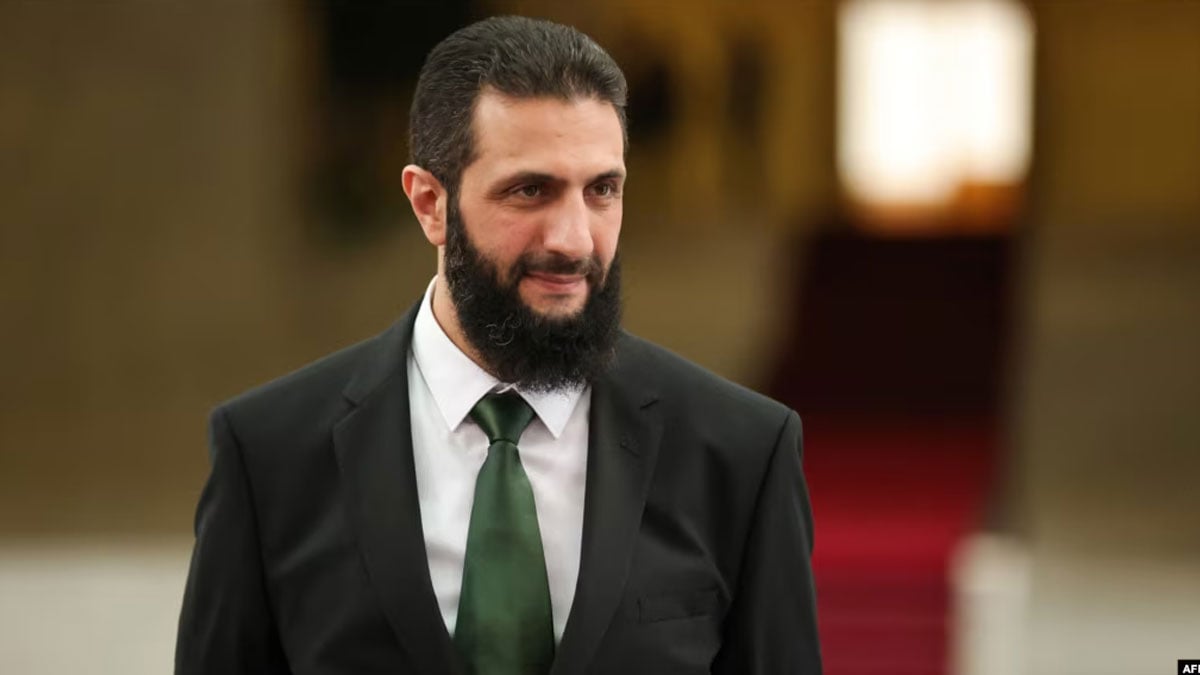
Statements by Syrian Foreign Minister Asaad al-Shibani have reopened one of the most opaque files since U.S.-mediated contacts between Syria and Israel began. In an interview with Reuters, Shibani revealed that the two sides had reached “understandings on almost everything on paper” earlier this year, only for those arrangements to stall amid renewed Israeli escalation in the months that followed.
His remarks offer the most detailed Syrian account yet of the discussions held in Paris in early 2026. Until now, public information had been limited to brief statements about coordination mechanisms and de-escalation protocols. Shibani’s disclosures suggest that the talks were far more substantive, touching on core security issues and territorial arrangements.
What Was Agreed “On Paper”?
According to Shibani, the draft understandings included an Israeli pledge of non-aggression toward Syria, non-interference in Syrian internal affairs, and a set of border security arrangements. The agreement also envisioned an Israeli withdrawal from areas seized after the collapse of Bashar al-Assad’s regime in late 2024.
The framework outlined a multilayered security architecture: a fully demilitarized buffer zone under exclusive United Nations supervision, followed by additional zones inside Syria where Syrian forces would deploy under varying numerical and equipment restrictions.
These details align with several maps circulated by Western think tanks and media outlets—maps that resurfaced immediately after Shibani’s statements.
Security Maps Back in Focus
Although none of the maps can be confirmed as the actual text of the Paris understandings, their content closely mirrors elements described by Shibani, particularly regarding buffer zones, military constraints, and deployment mechanisms near the disengagement line.
The ISW Map
In September 2025, the Institute for the Study of War (ISW) published a map outlining what it described as an Israeli vision for southern Syria. The model proposed:
- An expanded UN-monitored disengagement zone inside Syrian territory
- A demilitarized belt prohibiting military deployments and heavy weapons
- A broader security perimeter across southern Syria subject to additional air and security restrictions
Some areas would remain accessible to police and internal security forces, while regular military formations would face tiered limitations.
The CNN Map
A separate map published by CNN focused on a wide demilitarized zone spanning parts of Quneitra, Daraa, and Suweida. Under this blueprint, the southern border region would be governed by strict controls limiting Syrian military presence, while the occupied Golan Heights and adjacent areas would remain under a special security regime designed to keep heavy weaponry away from the front lines.
Despite differences in detail, both maps rely on the same principle: creating graduated security zones between the Golan Heights and Syria’s interior.
Beyond Military Arrangements
Shibani stressed that the negotiations were not limited to military measures. The security zones were part of a broader reciprocal framework: Israel would halt its attacks and refrain from interfering in Syrian affairs, while Syria would address Israeli security concerns through defined border mechanisms.
The obstacle, he said, was not drafting the agreement but the absence of political will on the Israeli side. “Damascus did not find real motivation or genuine desire to reach an agreement,” he noted, despite most issues being resolved on paper.
What Paris Actually Produced
The Paris meetings concluded in early January 2026 with a joint U.S.–Syrian–Israeli announcement establishing a communication cell to exchange information, contain escalation, and prevent misunderstandings. The statement referenced a U.S.-supervised mechanism for security, intelligence, and diplomatic coordination, but omitted any mention of the detailed security zones or deployment arrangements that Shibani now confirms were discussed.
His latest remarks indicate that the talks went far beyond what was publicly acknowledged, reaching detailed understandings on force deployment, border management, and de-escalation mechanisms.
The Amman Meeting: A New Attempt to Contain Escalation
The renewed attention to these maps comes amid fresh Israeli escalation, most notably the August 18 airstrikes on Abu al-Duhur Airbase. In response, a Syrian diplomatic source told SANA that Shibani led a high-level delegation—including the heads of general and military intelligence—to Amman for a meeting with a senior Israeli delegation, mediated by the United States.
The discussions focused on practical mechanisms to halt Israeli attacks, end arrests and targeted operations, and revive the negotiation track toward a security agreement that could serve as the foundation for a broader future settlement.
The Syrian delegation emphasized Syria’s sovereign right to rebuild and modernize its national army and determine its alliances according to national interests. It rejected any arrangements that would restrict these sovereign rights.
The delegation also reaffirmed Syria’s position that the occupied Golan Heights is Syrian territory. While noting that its final status remains premature for discussion, the delegation insisted that the immediate priority is an Israeli withdrawal to pre-December 8, 2024 lines and full reactivation of the 1974 Disengagement Agreement.
Why the Maps Matter Again
The resurfacing of these maps reflects renewed urgency surrounding the stalled understandings. The Abu al-Duhur strikes revived questions about the fate of the Paris framework and whether the two sides can return to the negotiation table.
Shibani made clear that Damascus now prioritizes halting Israeli attacks above all else. “Our focus now is stopping the aggression before anything else—even before the security agreement,” he said. “The peace track and the Golan track can be reopened later. For now, we have stepped back one stage.”
A Deal Written, But Not Implemented
Recent developments suggest that the gap was never about the absence of proposals or maps. Rather, it lay in the lack of mechanisms—and political will—to translate what was “completed on paper” into a real, enforceable arrangement capable of reducing tensions and establishing a more stable foundation for future relations.
As Israeli strikes continue and diplomatic channels oscillate between activity and stagnation, the question remains whether the understandings drafted earlier this year will ever move beyond documents and into implementation.
This article was translated and edited by The Syrian Observer. The Syrian Observer has not verified the content of this story. Responsibility for the information and views set out in this article lies entirely with the author.
The post A Deal on Paper, Dead on Arrival: What Syria and Israel Actually Agreed To first appeared on The Syrian Observer.