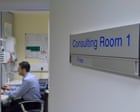
GP patients must be offered face-to-face appointments if that is their preference. NHS GP says: "Practices in England must offer face-to-face appointments if requested. GPs who fail to make the necessary arrangements for patients to make an appointment without having to spend hours on the phone or who are not available for face-to-face appointments are, in the strictest terms, breaking the law." NHS England has issued guidance to GP surgeries confirming that practices must ensure they provide in-person appointments and should respect patients' preferences for face-to-face care unless there are legitimate clinical grounds not to, such as when a patient is displaying COVID symptoms . In England, NHS guidelines state that GP surgeries should provide face-to-face appointments upon request, though there is no absolute legal right to an in-person consultation if the GP considers a remote assessment to be more appropriate. Nevertheless, you are entitled to see a healthcare professional within 48 hours when required. Sophie McGarry , a solicitor and senior litigation executive at Fletchers Group , has set out your legal rights to an in-person GP appointment. She has also shed light on the options open to you should you believe you have been misdiagnosed during a telephone or video GP consultation. McGarry suggests that if you believe a face-to-face appointment is necessary, don't hesitate to ask for one and set out your reasons. If they decline your request, you can take the matter up with the practice manager or make a formal complaint, reports the Liverpool Echo . In a letter sent to GP surgeries dated May 13, 2021, NHS England states that, as a minimum requirement, clear guidance should be displayed and regularly updated on all practice websites, including: How to get in touch with the GP and request assistance. How to access face-to-face or walk-in services. McGarry recommends that your initial step should be to check your surgery's website to see if information is available about accessing face-to-face or walk-in services. If you're unable to locate this on the practice's website, you could ask the practice to provide it. She also suggests that, should you encounter resistance from the surgery, you can point them towards NHS England's letter, which makes clear that such information should be available on their website as standard. Ask that your GP Practice arrange an in-person consultation for assessment, examination or testing, and explain why you feel a face-to-face appointment is necessary. Be clear that attending in person is what you'd prefer, and you can refer to NHS England guidance, which states that GP Practices must offer face-to-face appointments, with surgeries expected to respect patients' preferences for in-person care. She added: "If the GPs or receptionists continue to refuse to examine you in person, you could escalate the matter to the Practice Manager and ask them to explain why your wish and request for a face-to-face examination are being refused." You can check what options are currently available to NHS patients in the NHS Choice Framework. NHS GP says rather than spending hours on the phone trying to get through to the reception at your local GP surgery, it is much quicker and easier to use an online form. Some practices have them available on your GP surgery’s website, or you may be able to access them via the NHS app. Although there are quite a few questions to answer on these forms, this is generally a much faster way to access the GP services that you need rather than booking an appointment over the phone. NHS GP adds: "These online forms are secure and confidential and can be used to contact your general practice about your own health or someone else’s – your loved ones in care homes needing health care services don’t need to add the stress of using online methods like this on top of their health conditions, so take care of this for them. "If you or your loved one don’t mind having an online appointment, this is generally much quicker to get sorted, and you can easily get one with NHS GP clinics. If you need help booking an online appointment with your GP, please contact us here, and we will do our best to help you get the healthcare advice you need." If you feel you need an appointment at your GP surgery, you can contact them: using a form on your GP surgery's website (many surgeries also have a form you can access if you use the NHS App or log into your account on the NHS website ) by phone in person by going into the surgery and talking to the receptionist Prior to booking an appointment, your GP surgery may enquire about your medical requirements. This enables them to assess the urgency of your situation and determine the most suitable doctor, nurse or healthcare professional to see you. McGarry clarifies: "Telephone and remote assessments have their place for certain minor issues, but overall, I believe in-person appointments are safer, and you are less likely to be misdiagnosed than if you had a remote assessment. "If a GP is assessing someone by telephone, there is no opportunity for them to conduct any tests or examinations. If a GP is assessing someone in person, even if they just want to perform the examinations as a precautionary measure, this is more likely to identify an abnormality than a telephone appointment. "An in-person appointment also lends itself to any incidental findings which would not be spotted during a telephone assessment. During a remote assessment, a GP is completely reliant on asking the right questions and the patient providing the right answers." She continued: "People are also discussing difficult and sensitive personal issues. It may be easier for them to open up to a GP in an in-person appointment, where they are receiving face-to-face, hands-on, human care, which is much more personable, rather than speaking to a voice asking questions on the phone. "Remote appointments can leave patients feeling like there is a disconnect between them and their GP, and like there is less 'care'. In stressful and emotional situations, patients will find comfort in the GP's physical presence and human touch. "During an in-person appointment, patients are in the room with their GP, solely focusing on the consultation and discussing their symptoms. Telephone GP appointments can catch patients whilst they are at work, driving, or doing the shopping, so the patient may not be able to give the appointment their full, undivided attention." The solicitor explained: "Generally speaking, children, the elderly and those with mental health issues or communication difficulties can be more difficult to assess remotely. Children can have difficulties expressing themselves and their symptoms so this may require more careful assessment. "The elderly may be hard of hearing and struggle to hear on the phone, and therefore may be less likely or able to give a full account of their symptoms. They may also be less technologically skilled and be unable to share photographs to evidence issues. "I believe older people value the face-to-face and human touch more. GPs may be more likely to find incidental findings, conditions and symptoms in older people during an in-person appointment. "Some people do not feel comfortable speaking on the phone and may find it difficult to express themselves or may benefit from an in-person appointment to feel able to open up about their mental health symptoms. However, it's important to remember that every demographic is vulnerable to health issues, which can be difficult to assess remotely." Should your GP need to refer you for either a physical or mental health condition, you are legally entitled, in most circumstances, to choose the hospital or service you'd prefer. This includes many private hospitals , provided they provide NHS services and the cost to the NHS is no higher than that of a typical NHS hospital referral. You also have the option to choose a clinical team led by a consultant or designated healthcare professional, as long as that team provides the treatment you require. Further details are available regarding selecting a hospital or consultant and choosing a mental health service. Appointments can be booked through the NHS e-Referral service. This can be done during your GP appointment or, alternatively, online using the shortlist of hospitals or services included in your referral letter. Your GP puts together this shortlist, so it's crucial to make your preferences known during your consultation. You have a legal right to request that your appointment be moved to a different provider if you're facing a wait that exceeds the maximum waiting time specified for your treatment. The hospital or integrated care board (ICB) must then look into this and offer you a range of suitable alternative hospitals or clinics that are able to see you sooner. Refer to the guide on waiting times for further information. McGarry explains that any condition requiring visual examination or physical contact is much more difficult to assess and diagnose accurately when consultations are conducted remotely. This includes infections, chest pain and abdominal pain. It's vital that patients show their GP exactly where the discomfort is, and that the GP can press and feel the area to pinpoint the precise source of the pain. The legal expert notes that it's essential to both see and feel any lump to establish its location, size, texture (firm or soft), and whether it is tender to the touch. The solicitor goes on to highlight the importance of comparing the appearance and feel of the affected area with those of the corresponding healthy part of the body. All guidelines for early cancer detection are built around knowing your own body, performing self-examinations, and staying alert to any changes — not relying on photographs. Medical professionals must physically examine and press a lump to judge whether it appears worrying and requires further investigation or a specialist referral, and to determine whether that referral should be routine or fast-tracked via the urgent two-week suspected cancer pathway. McGarry explained: "An example is a digital rectal examination to assist in diagnosing prostate cancer, or vaginal examinations with a speculum to visualise cervical abnormalities, assisting in the diagnosis of cervical cancer. GPs need to see and feel the prostate or cervix to decipher whether or not there are suspicious features which require further investigation / onward referral. They need to consider on what basis the referral should be made, either routine or an urgent two week suspected cancer pathway." NHS England states: "It is not advisable to encourage patients to send clinical images of intimate regions or reveal or self-examine intimate areas during a remote consultation. The GMC is clear that all patients should be offered a chaperone. Patients who require an intimate examination should, therefore, be encouraged to attend for a face-to-face assessment." McGarry continues: "If you believe that you have been misdiagnosed over the telephone or in a video consultation at the time of your assessment, you can ask your GP to arrange an in-person appointment for further assessment, examination or testing and explain why you feel a face-to-face appointment is necessary. "If that particular GP will not arrange an in-person appointment with you, you can call the surgery to make a further appointment and request an in-person appointment for a second opinion and further assessment, examination or testing and explain why you feel a face-to-face appointment is necessary. "For example, you could advise that you are very concerned that the lump you have located is suspicious and you feel a physical appointment is necessary so that the GP can see and feel a lump to decipher whether or not it is suspicious and requires further investigation / onward referral and on what basis that referral should be made. If the GPs continue to refuse to examine you in person, you could ask for the matter to be escalated to the Practice Manager." Should your condition become urgent or deteriorate after a telephone or video consultation, it is absolutely essential that you seek appropriate medical attention by visiting a walk-in centre, an urgent care centre, or A&E, depending on the severity of your condition and how worried you are about your symptoms.
المصدر: Mirror
| Source: Mirror