⚡ عاجل: كريستيانو رونالدو يُتوّج كأفضل لاعب كرة قدم في العالم●⚡ أخبار عاجلة تتابعونها لحظة بلحظة على خبر●⚡ تابعوا آخر المستجدات والأحداث من حول العالم●
AI اقتراحات ذكية
AI مباشر|--مشاهد مباشر
1,074,313مقال401مصدر نشط228قناة مباشرة3,854خبر اليوم
آخر تحديث:منذ 3 ثواني
World Health Day: Why UAE doctors say eating disorders hide in plain sight—and the road to recovery
•Thin, but not thin enough.And no one really knows what enough means.It’s the conundrum that plagued Abu Dhabi-based Poorna Ghosh (name changed on request) throughout her school life.
•Her mother would often complain about Ghosh’s physique: “She would say that I was slim, but my arms were the problem.
•I shouldn’t wear dresses.
هذا الخبر من Gulf News. خبر يقدم أدوات ذكاء اصطناعي للتلخيص والترجمة والاستماع.
Thin, but not thin enough.
And no one really knows what enough means.
It’s the conundrum that plagued Abu Dhabi-based Poorna Ghosh (name changed on request) throughout her school life. Her mother would often complain about Ghosh’s physique: “She would say that I was slim, but my arms were the problem. I shouldn’t wear dresses. But I really wanted to,” remembers Ghosh.
It grew more painful as she watched her classmates and friends wear dresses, skinny jeans and bell bottoms for birthdays and parties. Looking back now, Ghosh could wear them, but she stopped believing that she could. So, she started skipping meals. She threw her lunch in the garbage everyday, and ate only one meal a day. In the mornings if her parents weren’t home, she would skip breakfast too.
The following months became a blur. She was fitting easily into dresses, but it was still not the way she had imagined. Something felt off.
She couldn’t play basketball anymore; she was out of breath quickly. And she began multiple fainting spells, till her parents finally cracked down on what was happening. “I did fall very ill at one point and was in the hospital for such a long time. It took a year of recovery and intensive treatment. Food didn’t taste like anything for such a long time, and I can’t even remember how long it took for me to appreciate different tastes,” she says.
It has been a series of painful, exhausting lessons. She is 34 now, and now chides people strongly, the moment she hears the labels of ‘chubby, slim, slender’. “You never know the impact that it can have on a person.”
You don’t see the scars immediately. But they’re there. And, it’s a lot more than just wanting to ‘look good’. There are a lot of more complex factors at play too.
The idea that someone can ‘just stop’ if they try hard enough overlooks the fact that eating disorders are complex mental health conditions—not a matter of willpower,
‘It’s not just a vanity to look thin’
For starters, there are several misconceptions around the ideas of eating disorders. As Dr Victoria Mountford, Psychology Lead and Eating Disorder Service Lead at Sage Clinics explains, eating disorders can affect anyone. It doesn’t matter what age, gender or background you are. “In fact, sometimes eating disorders are missed because people rely too heavily on these stereotypes,” she says.
“Most people with eating disorders will be at a normal or above normal weight and eating disorders are increasing in males. A further misconception is that you can’t recover from an eating disorder. There are good treatments out there that can really help if delivered by a specialist.”
Furthermore, one of the most common misconceptions about eating disorders, is that it’s all about a desire to look thin. Dr May Chalhoub, Valeo Health Licensed Clinical Dietitian and Health Coach in Dubai, explains that these disorders are rooted in deeper psychological factors, such as a need for control, copping with stress, or underlying anxiety or trauma.
“Finally, the idea that someone can ‘just stop’ if they try hard enough overlooks the fact that eating disorders are complex mental health conditions—not a matter of willpower,” she says.
There are no rules, when it comes to eating disorders, as Dr Mountford says. “However, we tend to see an equal gender ratio when it comes to Binge Eating Disorder and Avoidant Restrictive Food Intake Disorder, whereas more females than males may present with Anorexia Nervosa and Bulimia Nervosa. Anorexia Nervosa may start at a younger age, for example from age 12 upwards, whereas Bulimia Nervosa may develop slightly later, age 16 upwards,” she says.
The early warning signs
‘It’s okay, I don’t feel like eating’ is normally the clearest sign.
Abu Dhabi-based Lavanya, remembers her son who stopped eating during a particularly stressful in his life. Without divulging many details, she shares that he was rather withdrawn, and just relied on a lot of fresh juices, or a sandwich, and would lie to her that he ‘was eating well’. It almost became catastrophic, and after nightmarish hospital visits, he managed to recover.
The early warning signs are slight, but hidden in the details. It starts with shifts in a person’s mood and behaviour as both Dr Mountford and Dr Chalhoub say. There is increased irritability, sadness or anxiety, apart from avoiding mealtimes. They feel guilty about eating, and frequently visit the bathroom after meals.
Moreover, there may also be physical changes including weight fluctuations or drastic weight loss, fatigue, cold, hair loss and in women, or loss of menstrual periods. “While no single sign confirms an eating disorder, a pattern of these changes, especially when they affect daily functioning, should raise concern,” adds Dr Chalhoub.
Trauma, anxiety and health
Eating disorders are complex illnesses with complex biological, psychosocial and genetic risk factors. And, trauma, mental health conditions such as anxiety, depression can increase the risk of developing an eating disorder, explains Dr Mountford. “For some, disordered eating becomes a way to cope with overwhelming emotions. Someone who has experienced trauma may use their eating disorder to regain a sense of control. Others may binge or restrict eating to numb painful feelings or manage stress.”
It serves as numbing the emotional distress, sometimes. Anxiety can drive rigid routines and food restriction to manage uncertainty, as Dr Chalhoub says. “Traits associated with obsessive-compulsive tendencies, such as perfectionism and compulsivity, are also commonly observed. These factors don’t directly cause eating disorders on their own, but they significantly increase the risk,” she says.
Excessive praise and compliments about their body, will just reinforce their behaviour as there isn’t much awareness about muscle dysmorphia.
The burning question of fitness culture
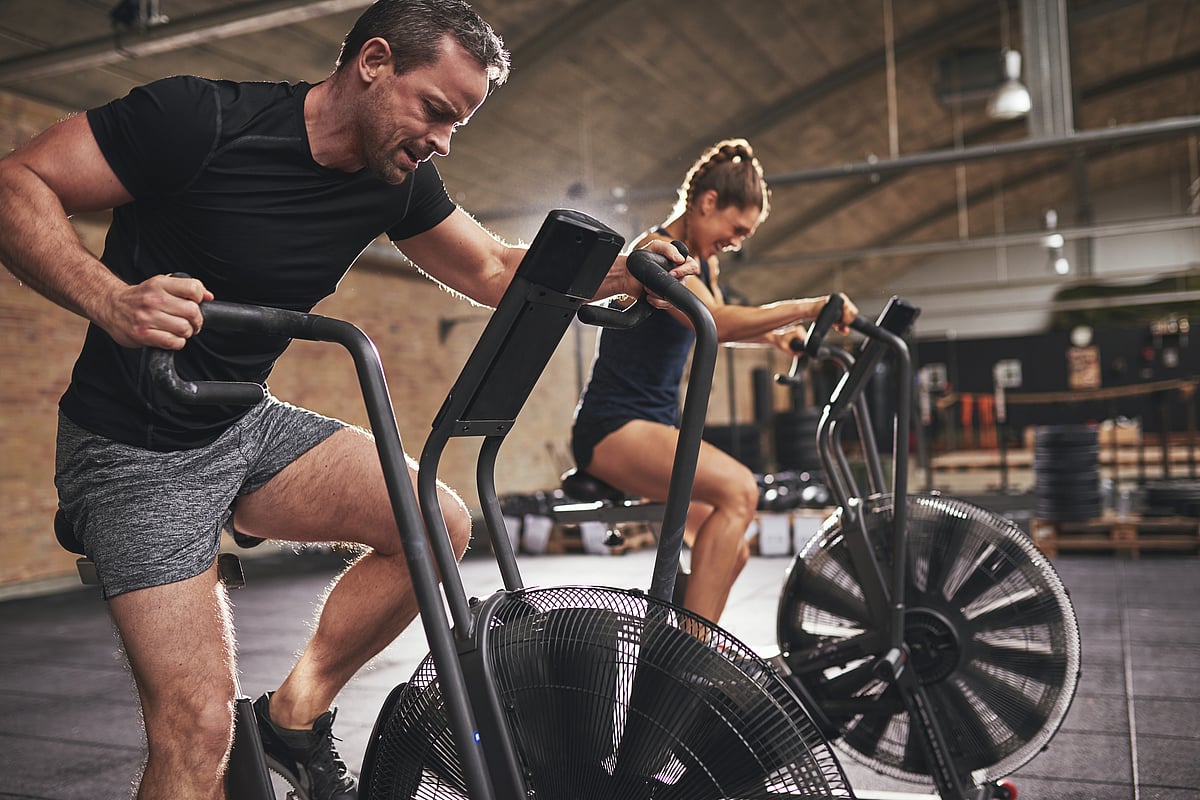
An Abu Dhabi father who doesn’t wish to be named, was stunned when his own son took to hard dieting. “He was bullied a lot for being overweight in school, and finally, he snapped. At first, we were happy with him hitting the gym. He had a goal, and then we saw that obsession took over him, because we saw that he was comparing himself to others.”
And that’s the cons of dieting and extreme fitness culture. It intensifies focus on body shape, weight and food, reinforcing the harmful message that appearance determines worth, adds Dr Mountford. “Over time, strict food rules and rigid exercise habits can become deeply ingrained, increasing preoccupation with eating and body image,” she says.
What begins as a socially accepted attempt to ‘eat healthier’, escalates into rigid rules, guilt around food, explains Dr Chalhoub. “Fitness culture can further reinforce this by normalizing overtraining, strict dietary control, and constant body comparison. Social media intensifies these pressures by promoting unrealistic body standards and curated images of health. While not everyone who diets develops an eating disorder, these environments can act as powerful triggers for those who are vulnerable.”
How can eating disorders be treated?
As Dr Mountford explains, the most effective treatment for eating disorders combines specialized psychological therapy with expert dietary support. This team-based approach addresses both the emotional causes of disordered eating and the physical impact on the body. The other Recommended psychological therapies include Cognitive Behavior Therapy for Eating Disorders (CBT-ED), Maudsley Anorexia Nervosa Treatment for Adults. "In some cases, medication may also be recommended to help manage co-occurring conditions such as anxiety, depression, or obsessive thoughts.”
In more severe cases, higher levels of care, such as intensive outpatient programs, partial hospitalisation, or residential treatment, may be necessary. Treatment is highly individualised, as no single approach works for everyone, adds Chalhoub.
The recovery time
Recovery is possible, but it is rarely simple. It involves a lot more than just physical healing.
Recovering from an eating disorder depends on several factors, including the severity and duration of the illness, the motivation to recover and support available. The person learns how to eat in a balanced, flexible manner without guilt and anxiety, while maintain a stable weight.
It's a gradual and non-linear process, says Dr Chalhoub. “While some physical improvements may occur within months, full psychological recovery can take years."
Recovery involves more than restoring eating patterns, it includes healing physical health, addressing underlying emotional challenges, reshaping thoughts about food and body image, and building healthier coping strategies. Relapse can occur, but it's all part of the journey. And, it's not a failure.
ملاحظة تحريرية | Editorial Note:
نُشر هذا المقال في الأصل بواسطة Gulf News.
خبر (Khabr) هي منصة إعلامية أردنية مرخّصة تعمل بالذكاء الاصطناعي.
نضيف قيمة تحريرية من خلال: تحليل ذكي للأخبار، ملخصات تلقائية، رواية صوتية بالذكاء الاصطناعي، ترجمة متعددة اللغات، وتدقيق الحقائق.
هدفنا جعل الأخبار أكثر وضوحاً وسهولةً للقارئ العربي.
This article was originally published by Gulf News.
Khabr is a licensed Jordanian AI-powered news platform (Registration #82086).
We add editorial value through: AI-powered news analysis, automated summaries, AI audio narration, multi-language translation (Arabic, English, French, Turkish), and AI fact-checking.
Our mission is to make news more accessible and understandable for Arabic-speaking audiences worldwide.
هذا الخبر ضمن تغطية خبر لقسم صحة.
نقدّم لك تحليلات ذكية وملخصات يومية لأهم الأخبار من مصادر موثوقة متعددة.
المصدر: Gulf News.
يوجد 6 مقالات مرتبطة بهذا الموضوع.
This article is part of Khabr's coverage of Health.
We provide AI-powered analysis, summaries, and multi-source aggregation to keep you informed.
Source: Gulf News.
Tags: health, eating disorders, UAE.
🍪 نستخدم ملفات تعريف الارتباط لتحسين تجربتك وعرض الإعلانات المخصصة. باستخدامك للموقع، فإنك توافق على سياسة ملفات تعريف الارتباط وسياسة الخصوصية.
We use cookies to enhance your experience and show personalized ads. By using this site, you agree to our Cookie Policy and Privacy Policy.
🔍
FREEFree 1GB Internet + Free International Calls
$1 trial — eSIM in 190+ countries — No roaming charges