Dubai: There’s something deeply exhausting about how predictable the outrage cycle around women’s bodies in Bollywood has become.
A woman gains weight, shows up in public after giving birth to a tiny human, or simply exists outside the narrow bandwidth of “acceptable beauty" and suddenly, her body becomes public property.
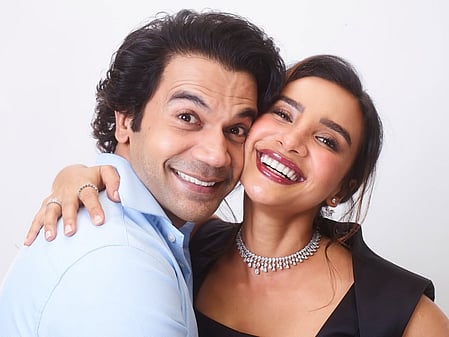
The latest target? Patralekha.
Get updated faster and for FREE: Download the Gulf News app now - simply click here.
Fresh off giving birth, the actor-producer found herself at the receiving end of relentless body-shaming, with paparazzi pages zooming in not on her work, not on her new phase as a mother, but on her weight.
Her response was gloriously sharp, unapologetic, and long overdue. Say it with me: She has just delivered a baby, her body has changed, and the real problem isn't her body, but with your gaze.
What I deeply admire about Patralekha is that she called the paparazzi out, almost immediately. Simply put, she took one for the women's team everywhere.
"Pap pages! What's happened to me?! is that I have just given birth! Yes, I have gained the weight, which seems like an unnatural phenomenon to you all. I have not sat and eaten a mountain," she schooled them through this Insta post.
She also added that apart from pushing out a baby, she also produced two movies "simultaneously". She had just one message at the end of it all: 'Learn to be a little kind'. She was even vulnerable saying if she had a choice should wouldn't be in that particular state.
But here's the truth. She doesn't need to apologize for being human and she must be afforded the space to expand or shrink based on her reality.
And what makes her fierce clapback even sadder is that this is not an isolated incident. Stars being scrutinised for their bodies after pregnancy isn't uncommon.
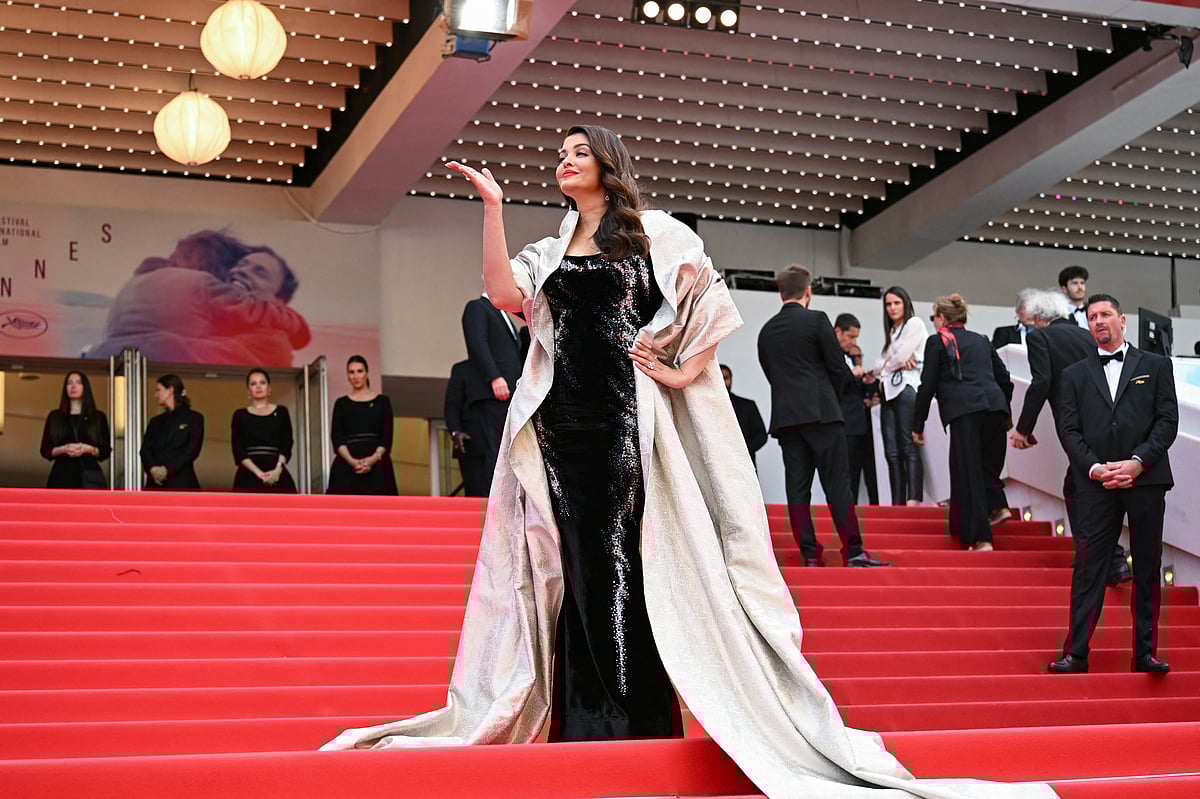
Remember Aishwarya Rai Bachchan at Cannes Film Festival? Here was a woman who has spent decades building a global career, representing Indian cinema on one of the world’s most prestigious stages like the Cannes only to have the conversation reduced, yet again, to her waistline.
It’s almost as if the industry, and by extension, the media ecosystem around it, has decided that a woman’s achievements are always secondary to how closely she aligns with an impossible, ever-shifting beauty ideal.
And let’s be clear: these standards are not just unrealistic, they’re inhumane.
Pregnancy, childbirth, hormonal changes, these are not aesthetic inconveniences. They are life-altering experiences. Yet, actresses are expected to “bounce back” with alarming speed, as if their bodies are elastic props rather than lived-in spaces.
What’s even more troubling is how normalised this scrutiny has become. Headlines are framed casually. Photos are dissected clinically. And the language, often disguised as “concern” or “observation”, is anything but harmless.
But here’s why Patralekha’s pushback matters.
In calling it out, she isn’t just defending herself — she’s holding up a mirror to an industry that’s obsessed with shrinking women, in every sense of the word. Patralekha isn’t the problem. The gaze is.
She’s reminding us of something we keep conveniently forgetting: a woman’s body is not a breaking news alert. Postpartum weight isn’t a “before and after” story.
And kindness, in an industry that thrives on perfection and scrutiny, shouldn’t feel revolutionary.
But here we are.
And maybe the shift doesn’t come from big, performative statements. Maybe it begins in quieter, more deliberate choices. Choosing not to zoom in on a waistline before acknowledging a body of work. Choosing not to package women into neat, reductive narratives. Choosing to opt out of a culture that dissects far more than it celebrates. Because the real question isn’t why her body changed. It’s why we’re still so obsessed with it.