What lies beneath Trump’s ballroom: A hidden military complex
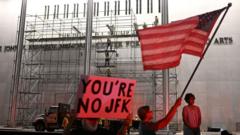
DUBAI 23°CGOLD/FOREXPRAYER TIMESNEWSLETTERSLOGIN GOLD/FOREXDUBAI 23°CPRAYER TIMES WORLDWORLDGULFMENAEUROPEAFRICAAMERICASASIAAUSTRALIA-NEW ZEALANDCORRECTIONS World / AmericasWhat lies beneath Trump’s ballroom: A hidden military complexBeneath a $400m project, a deeper security overhaul takes shape Public debate has focused on US President Donald Trump’s planned $400 million White House ballroom, but the more consequential development may lie beneath it — a vast underground military complex now under construction. Work crews have been digging for weeks below the site of the former East Wing, where the ballroom is set to rise. According to The New York Times, the project involves replacing the existing Presidential Emergency Operations Centre (PEOC) with a larger, deeper facility designed to house advanced security infrastructure. Trump has framed the ballroom and bunker as linked projects, arguing that the structure above ground will help protect what lies below. “The military is building a massive complex under the ballroom, and that’s under construction, and we’re doing very well,” he told reporters on Air Force One. The planned underground facility is expected to go far beyond the existing PEOC, which dates back to World War II and has long served as a secure shelter for US leaders during crises. The bunker was used during the September 11 attacks, when Vice-President Dick Cheney and later President George W. Bush were taken there, and again in 2020 when Trump was moved to the facility during protests in Washington. Trump has said the new complex would include bomb shelters, secure communications systems and “very major medical facilities,” including a hospital. “We have biodefense all over,” he said. “We have secure telecommunications and communications all over. We have bomb shelters that we’re building. We have a hospital and very major medical facilities that we’re building.” He added that the ballroom itself would act as a protective layer, with “high-grade bulletproof glass” shielding the structure from drones and other attacks. The above-ground project has become the focus of a legal and political fight, even as construction continues on security-related elements. A federal judge ruled that the ballroom project requires congressional approval, ordering a halt to construction unless lawmakers authorise it. “Unless and until Congress blesses this project through statutory authorisation, construction has to stop!” wrote Judge Richard J. Leon. However, the ruling allows work tied to security to continue — a point the Trump administration has emphasised as it presses ahead with the underground build. At the same time, the National Capital Planning Commission voted 8-1 to approve the project, despite opposition from city officials and public interest groups. Critics have argued the addition is too large and has been rushed through the approval process. The US Secret Service has backed the project, warning that any pause in construction could undermine its protective mission. “Accordingly, any pause in construction, even temporarily, would leave the contractor’s obligation unfulfilled in this regard and consequently hamper the Secret Service’s ability to meet its statutory obligations and protective mission,” Deputy Director Matthew Quinn wrote in court filings. Officials have also stressed that key details of the underground facility cannot be disclosed publicly. “There are some things regarding this project that are, frankly, of top-secret nature that we are currently working on,” a White House official told planning authorities. The White House has declined to provide specifics on the military’s role or the full scope of the construction, saying only that upgrades are being made to secure facilities. Trump has described the ballroom as a legacy project that will transform the White House, saying it will be “the Greatest and Most Beautiful Ballroom of its kind anywhere in the World.” But the inclusion of a major underground military complex has shifted attention from architecture to security — and from aesthetics to geopolitics. Public funding is being used for the bunker and security upgrades, even as the ballroom itself is expected to be financed through private donations, including contributions from Trump and corporate backers. With construction underway and legal challenges ongoing, the project highlights a broader question: whether the most significant change to the White House in decades will be the one that remains largely invisible. Trump’s Iran address: More questions than answers Judge halts Trump's White House ballroom construction Insider is 'best choice' to lead post-war Iran: Trump Trump's 4 objectives in Iran explainedالمصدر: Gulf News | Source: Gulf News
ملاحظة تحريرية | Editorial Note: نُشر هذا المقال في الأصل بواسطة Gulf News. خبر (Khabr) هي منصة إعلامية أردنية مرخّصة تعمل بالذكاء الاصطناعي. نضيف قيمة تحريرية من خلال: تحليل ذكي للأخبار، ملخصات تلقائية، رواية صوتية بالذكاء الاصطناعي، ترجمة متعددة اللغات، وتدقيق الحقائق. هدفنا جعل الأخبار أكثر وضوحاً وسهولةً للقارئ العربي.
This article was originally published by Gulf News. Khabr is a licensed Jordanian AI-powered news platform (Registration #82086). We add editorial value through: AI-powered news analysis, automated summaries, AI audio narration, multi-language translation (Arabic, English, French, Turkish), and AI fact-checking. Our mission is to make news more accessible and understandable for Arabic-speaking audiences worldwide.