Wage protests in Haryana and UP made headlines. But a city in Rajasthan has been simmering too
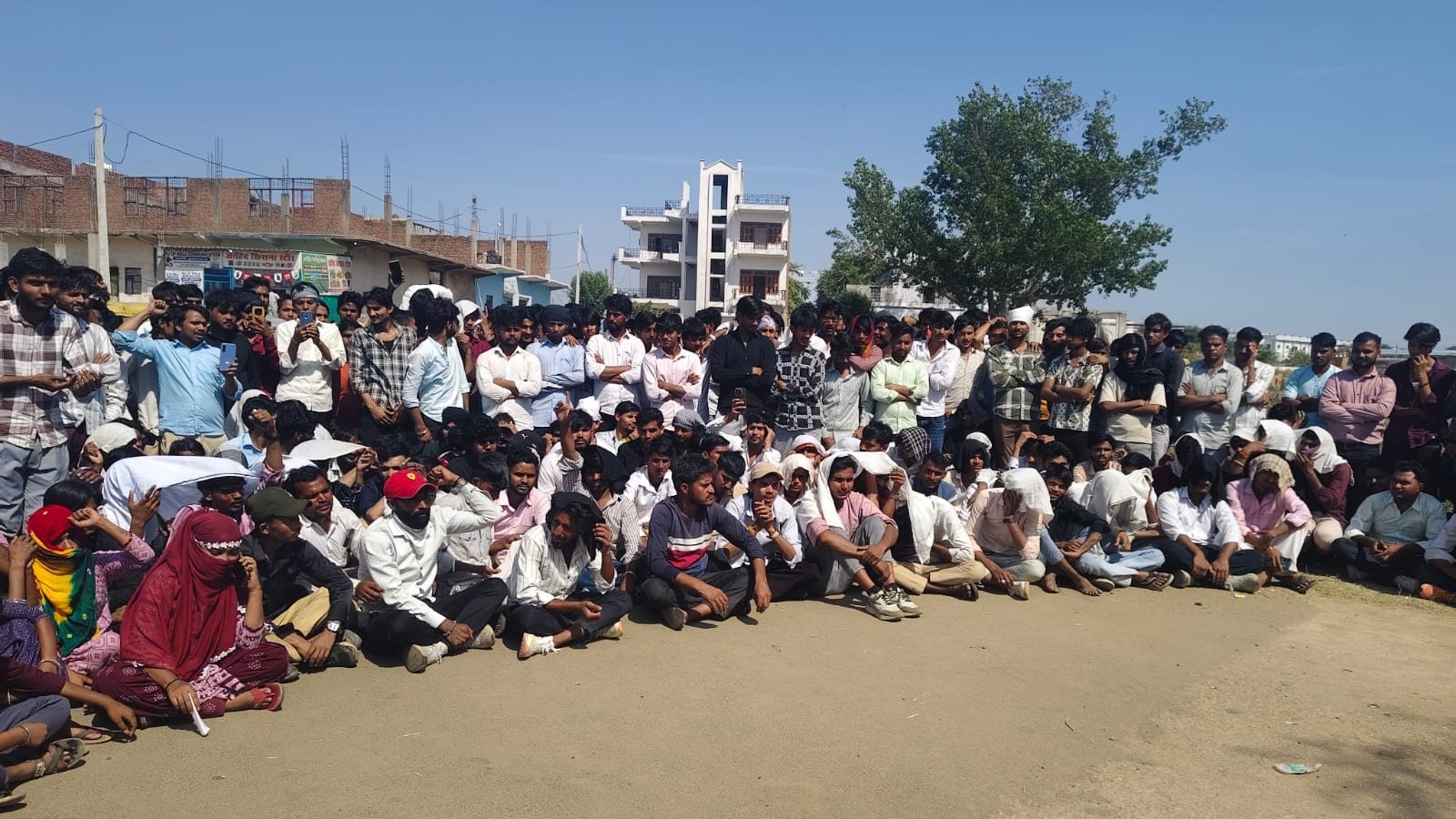
Weather ePaper Today’s Paper Journalism of Courage Home ePaper Politics Explained Opinion India Business Premium Cities UPSC Entertainment Sports World Lifestyle Tech Subscribe Sign In TrendingUPSC OfferIPL 2026US NewsPuzzles & GamesLegal NewsFresh TakeHealthResearch🎙️ Podcast Advertisement function checkAndLoadWindowSizeScript() { if (window.jQuery) { // jQuery is loaded, include your script jQuery(document).ready(function($) { // Your existing script for checking window width if (window.innerWidth) var page_w = window.innerWidth; else if (document.all) var page_w = document.body.clientWidth; if (page_w > 1024) { $(".add-left, .add-right").show(); } else { $(".add-left, .add-right").hide(); } }); } else { // jQuery is not loaded, check again after 0.2 seconds setTimeout(checkAndLoadWindowSizeScript, 200); } } // Initial call to the function checkAndLoadWindowSizeScript(); NewsCitiesJaipurWage protests in Haryana and UP made headlines. But a city in Rajasthan has been simmering too Wage protests in Haryana and UP made headlines. But a city in Rajasthan has been simmering too At Bhiwadi, workers cite rising LPG costs, long hours and alleged poor conditions; talks on wage hike underway Written by: Parul Kulshrestha5 min readBhiwadiApr 16, 2026 07:02 AM IST Workers’ allegations range from poor working conditions to alleged abuse and intimidation by factory owners. While some factory managements have agreed to hike salaries, negotiations are ongoing at others. Make us preferred source on Google Whatsapp twitter Facebook Reddit PRINT Until last month, Sunita Devi would get by on her salary: Rs 11,500 a month. A mother of three, Sunita would use that money to pay rent and buy groceries, and whatever remained would go into raising her three children. That changed when the West Asia war began to drive up gas prices, squeezing finances at home. “Earlier, I could buy a 3 kg cylinder for Rs 200. Now, it’s gone up to Rs 1,500,” she says. “I work eight hours, for which I get Rs 60 as overtime. How is my salary meant to keep pace?” the 35-year-old, who works at a factory in Bhiwadi, tells The Indian Express. She isn’t the only one. As the West Asia war drives up LPG prices, hundreds of workers have been protesting in Rajasthan’s industrial town of Bhiwadi over the last week to demand an increase in pay. Although the agitation has been ongoing, it intensified after the Haryana government’s decision to institute a 35 percent hike in minimum wages, prompting calls for similar measures here. Workers’ allegations range from poor working conditions to alleged abuse and intimidation by factory owners. While some factory managements have agreed to hike salaries, negotiations are ongoing at others. “We’ve asked for salary hikes multiple times but no one listens to us,” one worker who has worked in Bhiwadi for four years says. “I get paid Rs 14,000, and my shift is from 6 am to 2 pm, but they force us to work longer without overtime pay. Verbal abuse is routine. If we cannot support ourselves and our families, what is the point of working?” For its part, the administration has dispatched several police contingents to prevent a repeat of the violence in Noida. However, Bhiwadi Additional SP Atul Sahu said the protests in the area have been peaceful. “No violence has taken place, and the police held meetings with various factory associations to resolve the workers’ issues,” he says. Bhiwadi is a major industrial hub that’s home to 6,500 units focusing on automotive, engineering, pharmaceuticals, and manufacturing. As a result, it is home to over 4 lakh unskilled labourers — 60 per cent of whom are from outside Rajasthan. Factory owners say between 40 and 50 per cent of these workers are hired on a contractual basis. According to Rajasthan’s laws, the minimum wages for unskilled workers are Rs 7,410 per month; semi-skilled, Rs 7,722 per month; skilled, Rs 8,034 per month; and highly skilled, Rs 9,334 per month. On April 8, the Haryana government announced a 35 percent minimum wage hike, effective April 1. The move, prompted by workers’ protests, means that unskilled workers in the state will earn Rs 15,220.71 per month, semi-skilled workers Rs 16,780, and skilled workers Rs 18,500. The move fuelled similar demands in Bhiwadi. Apart from increasing minimum wages, workers’ demands include better working hours and an end to alleged harassment. The protests come against the backdrop of recent unrest in Noida, where similar worker agitations had turned violent, raising concerns among authorities here. Workers allege poor conditions, including abuse, denial of breaks, and threats. But factory owners deny the allegations, claiming they have “set work timings and paid overtime”. “Many factories also provide food,” Jasbir Singh Rana, president of the factory owners’ body, Bhiwadi Manufacturing Association, says. At the same time, some remain resistant to the demand for increased wages, citing a series of setbacks and saying they feel “hemmed in”. “First came the tariffs by US President Donald Trump, then the fuel shortage from the Iran-US war, and now the Haryana government’s wage announcement,” Gridhari Lal Swami, treasurer of the Bhiwadi Manufacturing Association — a factory owners’ body — told The Indian Express, adding: “In Rajasthan, the minimum salary of the unskilled worker is Rs 7,450. These workers are demanding a wage hike despite getting good money.” As protests grow, factory owners have begun to take conciliatory measures: the Bhiwadi Manufacturing Association, for instance, claims to have distributed 600 gas cylinders among workers. “We have also written a letter to the district supply officer to provide 500 more cylinders. Most of these workers do not have a gas connection, so they get it on the black market,” Rana says. Amid the protests, the state government says it is in “constant talks with workers and factory owners” and that the “situation is under control”. Asked about whether a hike in minimum wages is being considered in Rajasthan, Deputy Labour Commissioner Pragya Shamra says an increase is “long overdue” and that her department has sent its report recommending it to the state government. Parul Kulshrestha is a Principal Correspondent for The Indian Express, based in Rajasthan. A lawyer turned journalist, she brings a unique cross-disciplinary perspective to her reporting, blending legal precision with deep social inquiry to cover one of India's most culturally and politically vibrant regions. Expertise and Experience Legal-Journalistic Synergy: Parul’s transition from a legal background to mainstream journalism provides her with a distinct advantage in interpreting policy, legislation, and judicial impacts. This expertise allows her to "read between the lines" of government orders and court rulings affecting the public. Diverse Beat: With years of experience across both mainstream newsrooms and independent journalism, she has built high-level authority in several critical areas: Nomadic Tribes & Marginalized Communities: She is recognized for her sensitive and in-depth reporting on the struggles and rights of Rajasthan's nomadic populations, often giving a voice to those outside the traditional political spotlight. Gender & Social Justice: Parul focuses on the intersection of law and gender, covering issues ranging from women’s safety and reproductive rights to the socio-economic empowerment of rural women. Environmental & Political Reporting: She tracks Rajasthan’s complex political landscape—including electoral shifts and bureaucratic changes—alongside critical environmental concerns like water scarcity and land use. Academic & Professional Pedigree: Her background as a lawyer, combined with her rise to the rank of Principal Correspondent at a national broadsheet, establishes her as a senior voice in the media landscape. ... Read More Stay updated with the latest - Click here to follow us on Instagramالمصدر: Indian Express | Source: Indian Express
ملاحظة تحريرية | Editorial Note: نُشر هذا المقال في الأصل بواسطة Indian Express. خبر (Khabr) هي منصة إعلامية أردنية مرخّصة تعمل بالذكاء الاصطناعي. نضيف قيمة تحريرية من خلال: تحليل ذكي للأخبار، ملخصات تلقائية، رواية صوتية بالذكاء الاصطناعي، ترجمة متعددة اللغات، وتدقيق الحقائق. هدفنا جعل الأخبار أكثر وضوحاً وسهولةً للقارئ العربي.
This article was originally published by Indian Express. Khabr is a licensed Jordanian AI-powered news platform (Registration #82086). We add editorial value through: AI-powered news analysis, automated summaries, AI audio narration, multi-language translation (Arabic, English, French, Turkish), and AI fact-checking. Our mission is to make news more accessible and understandable for Arabic-speaking audiences worldwide.