The US Treasury Department has imposed fresh sanctions targeting individuals, companies and Iran-backed groups accused of exploiting Iraq’s oil sector to benefit Tehran.
According to a press release, Iraq’s Deputy Oil Minister Ali Maarij Al-Bahadly is among those sanctioned, whom Washington alleges facilitated the diversion and smuggling of oil tied to Iranian-linked networks.
The measures also target senior figures associated with Asa’ib Ahl Al-Haq and Kata’ib Sayyid al-Shuhada, groups designated by the United States as terrorist organisations.
US officials said the action is part of ongoing efforts to intensify economic pressure on Iran and disrupt financial channels allegedly used to fund regional militant activities and sanctions evasion operations.
US Treasury Secretary Scott Bessent likened the Iranian regime to "a rogue gang", accusing it of pillaging Iraqi oil resources by smuggling millions of barrels across borders to finance proxy militias and terrorism.
"The US Treasury will not stand idly by as Iran's military exploits Iraqi oil revenues to fund terrorism against the United States and our partners, including deadly attacks on our forces and allies in the region," Bessent said in a statement announcing fresh sanctions on Iran-linked oil networks.
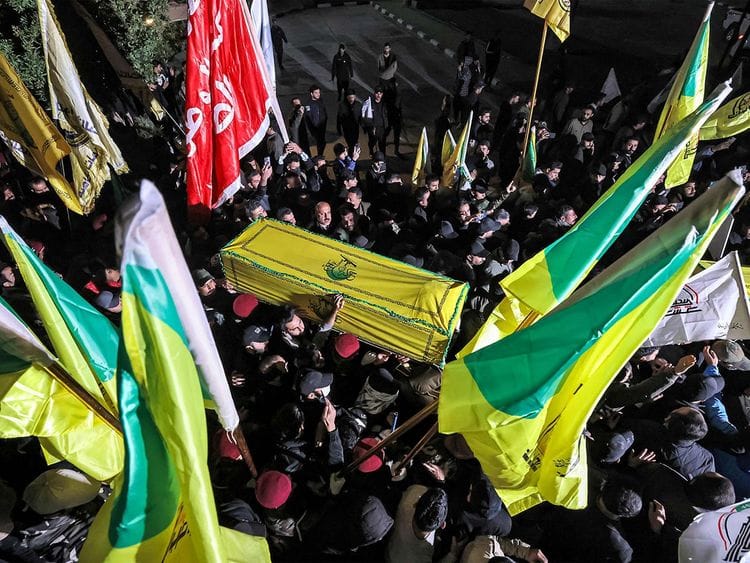
The sanctions target entities tied to Iraq's Popular Mobilisation Forces, including Kata'ib Hezbollah, which the Treasury accuses of siphoning oil from fields like those in Basra and Maysan provinces.
US officials estimate these operations have generated over $100 million annually for Iran-backed groups, fuelling drone and rocket strikes on US troops in Syria and Iraq amid escalating Middle East tensions.
This marks the latest US move to disrupt Iran's shadow economy, following similar actions in 2025 against ghost fleets shipping Iranian crude.
Like a rogue gang, the Iranian regime is pillaging resources that rightfully belong to the Iraqi people. Treasury will not stand idly by as Iran's military exploits Iraqi oil to fund terrorism against the United States and our partners. https://t.co/BgpGCBN7FW
— Treasury Secretary Scott Bessent (@SecScottBessent) May 7, 2026
The Iranian regime and its military, specifically the Islamic Revolutionary Guard Corps (IRGC), exploit Iraqi oil through complex smuggling networks to bypass sanctions and generate billions for regional terrorism.
These illicit revenues directly fund proxy groups like Kataib Hezbollah (KH) and Asaib Ahl al-Haq (AAH), which have conducted deadly rocket and drone attacks against US forces and allies in the region.
Kataib Hezbollah, also known as the Hezbollah Brigades, is an Iraqi Shia paramilitary group and a component of the Iraqi Popular Mobilisation Forces (IPMF), staffing the 45th, 46th, and 47th Brigades. It is considered the most powerful militia in Iraq.
Ideology and goals
The group adheres to the ideology of Velayat-e Faqih (Guardianship of the Islamic Jurist) and seeks to establish an Iran-aligned government in Iraq. They have been deeply involved in the Syrian civil war supporting the Assad regime.
Designated as a foreign terrorist organization by the US in 2009, KH is responsible for numerous attacks on US and coalition forces using IEDs, rockets, and unmanned aircraft systems (drones).
They have been particularly active since October 2023, carrying out over 150 attacks in Iraq and Syria.
Beyond Iraq, the group has threatened the UAE and Saudi Arabia. They are also linked to activities in the Caucasus, where they have a presence, according to a Washington Institute report.
Methods of smuggling
Blending and forgery: Smugglers use a "shadow fleet" to mix Iranian crude with Iraqi oil, often using forged certificates of origin to disguise the product as legitimate Iraqi exports for Western buyers.
Institutional infiltration: The US Treasury Department has recently sanctioned high-ranking Iraqi officials, including Deputy Oil Minister Ali Maarij Al-Bahadly, for allegedly abusing their positions to facilitate these diversions.
Fuel oil diverting: Networks within Iraq's security apparatus overstate fuel needs for domestic plants to create a surplus that is then diverted and sold on the black market, generating an estimated $1 billion annually for Iran and its proxies.
Front companies: Operations led by figures like Salim Ahmed Said and Waleed al-Samarra'i utilise networks of companies in different countries such as the UK and Hong Kong to launder oil proceeds through the international financial system.
Structure and Leadership: KH staffs the 45th, 46th, and 47th Brigades of the PMF, which are officially part of the Iraqi security apparatus. However, they follow the directives of Iran's Islamic Revolutionary Guard Corps–Qods Force (IRGC-QF). The senior leadership, including Abu Hussein al-Hamidawi and Abu Fadak (Abdul-Aziz al-Mohammadawi), is heavily vetted by Tehran.
Attacks and Terrorism: Designated as a foreign terrorist organization by the U.S. in 2009, KH is responsible for numerous attacks on U.S. and coalition forces using IEDs, rockets, and unmanned aircraft systems (drones). They have been particularly active since October 2023, carrying out over 150 attacks in Iraq and Syria.
Regional Activity: Beyond Iraq, the group has threatened the UAE and Saudi Arabia. They are also linked to activities in the Caucasus, where they have a presence, according to a Washington Institute report.