⚡ عاجل: كريستيانو رونالدو يُتوّج كأفضل لاعب كرة قدم في العالم●⚡ أخبار عاجلة تتابعونها لحظة بلحظة على خبر●⚡ تابعوا آخر المستجدات والأحداث من حول العالم●
AI اقتراحات ذكية
AI مباشر|--مشاهد مباشر
885,332مقال404مصدر نشط228قناة مباشرة3,728خبر اليوم
آخر تحديث:منذ ثانية
US–Iran talks: Why the deal is stuck — and what happens next as trump threatens fresh strikes
Dubai: US President Donald Trump has warned that fresh military strikes on Iran remain firmly on the table, declaring he would act if Tehran “misbehaves,” even as both sides continue to exchange draft proposals to end the war. The blunt threat underscores the fragile and contradictory moment in the conflict: a ceasefire is technically holding, negotiations are ongoing, yet the risk of escalation is as real as ever.
“If they misbehave, if they do something bad — we’ll see. It’s a possibility that could happen, certainly,” Trump told reporters on Saturday, making clear that diplomacy is being pursued alongside active military planning. The remarks came as Iran submitted a new 14-point framework proposal that seeks a rapid reopening of the Strait of Hormuz, an end to the US naval blockade, and a permanent halt to the war — before any substantive negotiations on its nuclear programme begin.
But Washington remains unconvinced. Trump, who has already rejected earlier proposals, said he would review the latest offer while signalling it may fall short, deepening a high-stakes standoff where talks and threats now move in parallel.
The result is a negotiation that looks active on the surface but remains fundamentally stuck. Washington is pressing for a deal that tackles Iran’s nuclear programme first, while Tehran is demanding that the war end and restrictions be lifted before it makes any such concessions. Between those positions lies the strategic choke point of the Strait of Hormuz — now both a bargaining chip and a flashpoint.
Latest proposal
Iran’s latest proposal reflects that approach. It calls for the reopening of the strait, the lifting of sanctions, and an end to the US naval blockade within a month, followed only later by negotiations on nuclear limits. For Washington, that sequencing is a non-starter, with officials insisting any agreement must first ensure Iran cannot move closer to a nuclear weapon.
That gap has left diplomacy and deterrence running side by side. The US continues to tighten financial and maritime pressure, while Iran signals it is prepared for both negotiation and confrontation. With neither side willing to move first, the question now is not just what either wants — but who blinks.
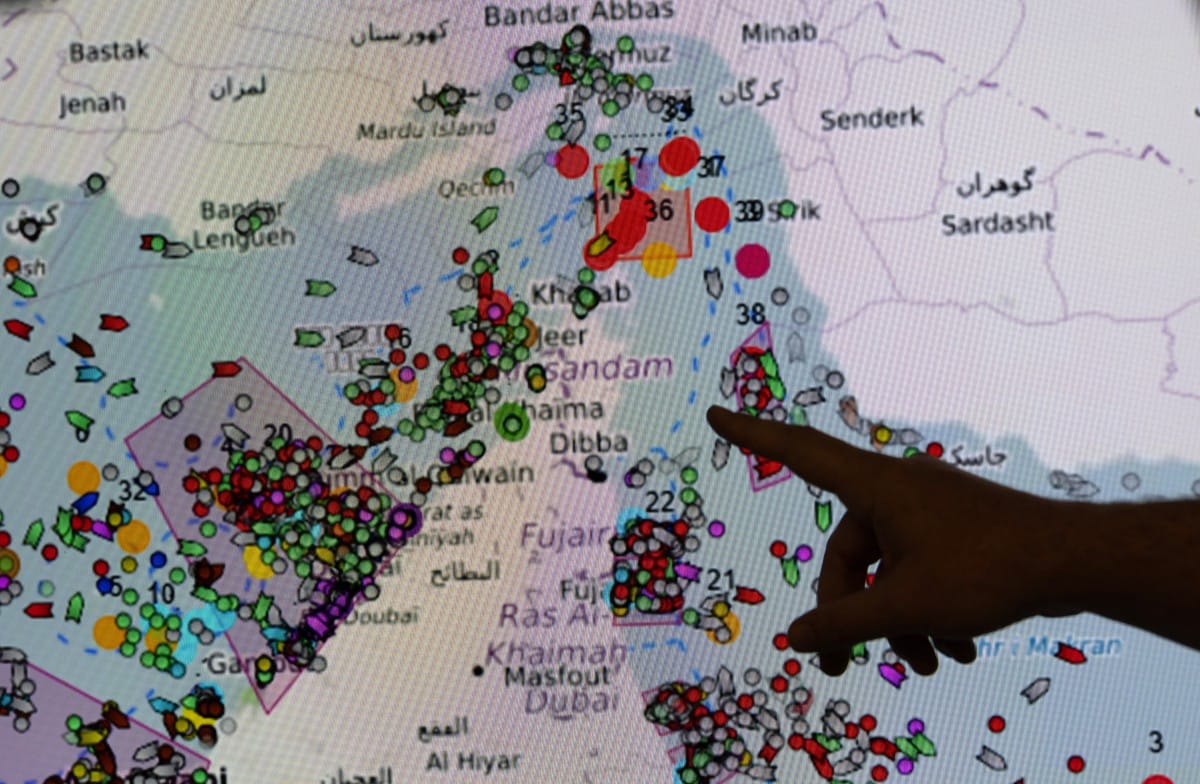
French Commandant Thomas Scalabre points towards the positions of ships on the Strait of Hormuz on a screen at the MICA center (Maritime Information and Cooperation and Awareness) in Brest, western France on April 27, 2026.
What’s driving the standoff, and where could it go next?
What’s the current situation? Are the US and Iran at war or in talks?
It’s both — uneasily.
The United States and Iran are under a fragile ceasefire that began after the US Israel strikes on Iran, but negotiations to end the conflict are stalled.
At the same time, Donald Trump has openly warned that fresh military strikes remain an option, saying he could act if Iran “misbehaves.”
So right now:
No active large-scale fighting
No peace deal either
Real risk of escalation
What did Trump say — and why does it matter?
Trump’s message was blunt: Diplomacy is still on the table, but so is force.
He said new strikes are “certainly a possibility,” even as he reviews Iran’s latest proposal.
This matters because it shows his strategy:
Pressure first (military + blockade)
Talk later (on US terms)
It also signals that the ceasefire is conditional, not stable.
What is Iran’s new 14-point proposal?
Iran has sent a detailed proposal — reportedly via Pakistan — that flips the usual negotiation order.
Key elements include:
Reopen the Strait of Hormuz
End the US naval blockade
Lift sanctions and release frozen assets
US troop pullback from nearby regions
Compensation for war damage
End the conflict across Iran and Lebanon
Crucially:
Iran wants all this before serious nuclear negotiations begin.
Why is that a problem for the US?
Because Washington wants the exact opposite.
The US position is:
No deal without strict nuclear limits first
Iran must give up or severely restrict enriched uranium
Prevent any path to a nuclear weapon
This creates a core deadlock:
Iran: End war first, then discuss nuclear issue
US: Solve nuclear issue first, then end war
What’s happening with Iran’s nuclear programme?
This is the heart of the conflict.
Iran insists its programme is peaceful, but:
It has large stockpiles of enriched uranium
Some enriched close to weapons-grade levels
Total reserves could theoretically support multiple nuclear weapons
The US demands:
Full halt to enrichment
Long-term restrictions (up to 20 years)
Iran refuses, citing its rights under the Nuclear Non-Proliferation Treaty.
Why is the Strait of Hormuz such a big deal?
Because it’s one of the world’s most critical energy chokepoints.
Roughly:
20% of global oil supply passes through it
Key route for gas, food, and industrial goods
Right now:
Traffic has dropped sharply
Ships are avoiding the route
Some vessels have been seized or turned back
This has pushed oil prices ~50% higher than prewar levels.
Is Iran really charging ships to pass?
Iran claims it has begun collecting tolls — but:
No independent verification
The US rejects it outright
US officials argue:
Hormuz is international water
No country can legally charge for passage
Washington has warned shipping firms they could face sanctions if they pay Iran — through cash, crypto, or even indirect means.
What is the US naval blockade doing?
The US has imposed a blockade on Iranian ports, led by forces under United States Central Command.
Effects include:
Dozens of ships turned away
Iranian oil exports restricted
Major pressure on Iran’s economy
The idea: Cut revenue and force Iran back to the table.
Iran, meanwhile, calls it “piracy.”
Who has the upper hand right now?
Honestly? Neither.
The US has:
Military dominance
Financial pressure tools (sanctions, blockade)
Iran has:
Control over Hormuz access
Ability to disrupt global energy flows
High tolerance for prolonged standoffs
That’s why this feels stuck:
each side has leverage — but not enough to break the deadlock.
Why are talks moving so slowly?
It’s partly about strategy and partly about style.
Trump prefers fast, pressure-driven deals
Iran’s leadership is known for slow, layered negotiations
Add deep mistrust and conflicting goals, and you get:
Repeated proposals
Rejections
No convergence
What role is Pakistan playing?
Pakistan has emerged as a key intermediary:
Hosting talks in Islamabad
Relaying proposals between both sides
But even mediation hasn’t broken the impasse so far.
What happens next?
There are three realistic paths:
1. Breakthrough (least likely right now)
A compromise on sequencing—Hormuz + nuclear issues together
2. Continued stalemate (most likely)
Ceasefire holds
Talks drag on
Economic pressure builds
3. Escalation (real risk)
US resumes strikes
Iran retaliates in Hormuz or via proxies
Global energy shock intensifies
Why should the world care?
Because this isn’t just a regional conflict.
It directly affects:
Global oil prices
Shipping and supply chains
Inflation worldwide
Energy security in Europe and Asia
In short, Hormuz has become what many analysts describe as:
ملاحظة تحريرية | Editorial Note:
نُشر هذا المقال في الأصل بواسطة Gulf News.
خبر (Khabr) هي منصة إعلامية أردنية مرخّصة تعمل بالذكاء الاصطناعي.
نضيف قيمة تحريرية من خلال: تحليل ذكي للأخبار، ملخصات تلقائية، رواية صوتية بالذكاء الاصطناعي، ترجمة متعددة اللغات، وتدقيق الحقائق.
هدفنا جعل الأخبار أكثر وضوحاً وسهولةً للقارئ العربي.
This article was originally published by Gulf News.
Khabr is a licensed Jordanian AI-powered news platform (Registration #82086).
We add editorial value through: AI-powered news analysis, automated summaries, AI audio narration, multi-language translation (Arabic, English, French, Turkish), and AI fact-checking.
Our mission is to make news more accessible and understandable for Arabic-speaking audiences worldwide.
هذا الخبر ضمن تغطية خبر لقسم سياسة.
نقدّم لك تحليلات ذكية وملخصات يومية لأهم الأخبار من مصادر موثوقة متعددة.
المصدر: Gulf News.
يوجد 6 مقالات مرتبطة بهذا الموضوع.
This article is part of Khabr's coverage of Politics.
We provide AI-powered analysis, summaries, and multi-source aggregation to keep you informed.
Source: Gulf News.
Tags: US, Iran, diplomacy.
🍪 نستخدم ملفات تعريف الارتباط لتحسين تجربتك وعرض الإعلانات المخصصة. باستخدامك للموقع، فإنك توافق على سياسة ملفات تعريف الارتباط وسياسة الخصوصية.
We use cookies to enhance your experience and show personalized ads. By using this site, you agree to our Cookie Policy and Privacy Policy.
🔍
FREEFree 1GB Internet + Free International Calls
$1 trial — eSIM in 190+ countries — No roaming charges