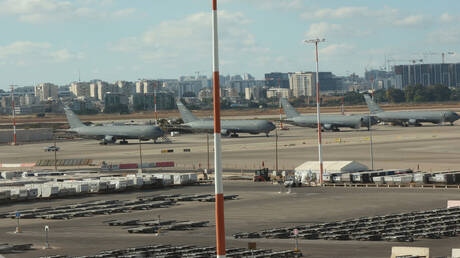
The United States and Iran are sending renewed signals of possible negotiations, with President Donald Trump repeatedly pointing to progress in talks. Yet even as diplomatic messaging intensifies, military operations continue to escalate, with both sides stepping up strikes and accelerating preparations for potential ground combat.
On Thursday evening, loud explosions rocked Iran's capital, Tehran and air defense systems engaged in heavy interception. The situation sharply intensified as US and Israeli military operations against Iran entered their 27th day.
The Israeli military said that it has struck more than 1,000 Iranian weapons production targets as part of an expanded campaign against Tehran's military-industrial infrastructure.
It also said it carried out airstrikes overnight on Bandar Abbas in southern Iran, killing several senior Iranian naval officials, including Islamic Revolutionary Guard Corps (IRGC) Navy Chief Ali Reza Tangsiri and intelligence chief Behnam Rezai.
Iran responded by launching the 82nd round of its "True Promise 4" military operation, deploying missiles and drones to strike US military bases across Gulf countries, including Kuwait, Saudi Arabia, Bahrain and the United Arab Emirates, while also targeting Israeli military sites and nuclear-related facilities.
Fighting while talking
Amid the intensifying conflict, diplomatic contacts are proceeding through indirect channels.
Pakistan confirmed it is acting as an intermediary between Washington and Tehran. According to Pakistani Deputy Prime Minister and Foreign Minister Mohammad Ishaq Dar, a US-proposed 15-point plan is currently under consideration by Iran.
Tehran has put forward five conditions for ending the war: the acts of "aggression" coming to an end, ensuring the war will not recur, a payment of war damages and reparations, the ending of the war across all fronts involving all resistance groups and Iranian sovereignty over the Strait of Hormuz.
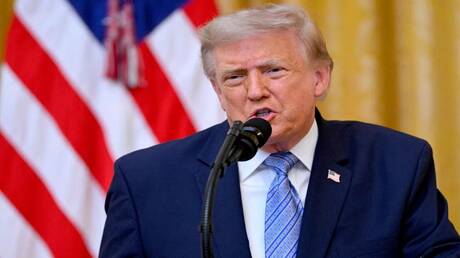
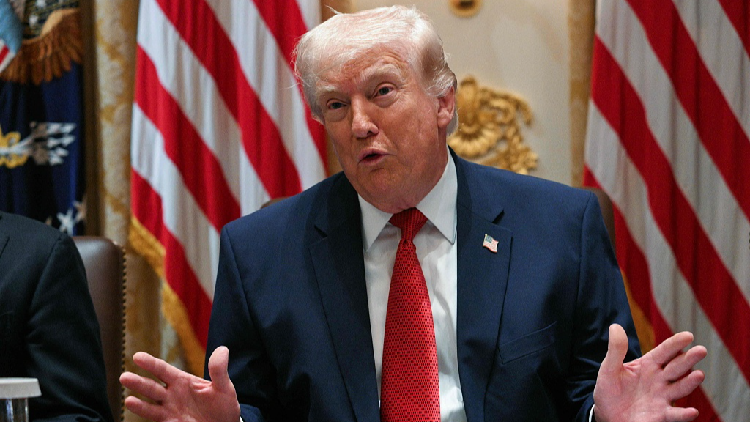
Trump on Thursday rejected media reports suggesting he is eager to end the war through diplomacy, insisting instead that Iran is seeking to resume negotiations. He said that it is up to Iran to convince him to stop the strikes and that US military strikes will continue in the meantime. "They are begging to work out a deal," Trump argued.
A CNN report said on Wednesday that the White House is trying to arrange a meeting in Pakistan this weekend to discuss an "off-ramp" to end the military conflict with Iran.
Earlier in the day, Trump announced to suspend strikes on Iranian energy facilities for 10 days, until April 6, describing current negotiations as "progressing well." He also revealed what he called a "present" from Iran – allowing 10 oil tankers to pass through the Strait of Hormuz – and suggested that controlling Iranian oil remains "an option."
However, sources familiar with the matter said Iran views US statements about negotiations as a "deceptive" tactic aimed at projecting a peace-seeking image, stabilizing global oil prices and buying time for a potential ground offensive in southern Iran.
Analysts say Washington is pursuing a strategy of "fighting while talking," combining military pressure with diplomatic signaling to gain leverage. Meanwhile, Tehran is adopting a dual-track approach: maintaining military resistance to demonstrate its ability to disrupt global energy market while continuing indirect engagement through third parties to avoid a full-scale war.
However, the gap between the two sides remains wide. Iran's demands, including guarantees against future conflict, war compensation, halting attacks on regional allies and recognition of its sovereignty over the Strait of Hormuz, diverge significantly from US positions, leaving little room for a near-term agreement.
Rising risk of ground military operations
Military risks are continuing to rise. Multiple officials and sources say the US Department of Defense is accelerating preparations for a potential "decisive blow" against Iran.
Plans reportedly include strikes on key oil export hubs and strategic islands, possible interception or seizure of Iranian oil tankers in the Strait of Hormuz, ground operations deep into Iranian territory to secure highly enriched uranium at nuclear facilities and large-scale air campaigns to disrupt Iran's access to nuclear materials. While the White House described ground operations as "hypothetical," military readiness is rapidly intensifying.
Iran has also stepped up preparations. Military sources said Tehran has mobilized more than one million personnel and warned that any attempt by the United States to forcibly reopen the Strait of Hormuz would be met with continued blockade efforts. Iranian Army Commander Ali Jahanshahi said a ground war would be "more dangerous and costly" for the enemy, adding that Iranian forces are fully prepared to repel any invasion.
An anonymous Iranian military source further warned that if hostile forces attempt ground operations on Iranian territory or increase naval pressure in the Persian Gulf and the Gulf of Oman, Iran could open a new front in the Bab el-Mandeb Strait.
Together, the Strait of Hormuz and the Bab el-Mandeb Strait form two critical chokepoints for global energy supply. The latter connects the Red Sea and the Gulf of Aden and carries more than 4 million barrels of oil per day – over 5% of global seaborne oil trade. Any disruption could send oil prices sharply higher, disrupt shipping routes, drive up logistics costs, trigger energy shortages and inflation, and force manufacturing slowdowns due to supply chain disruptions.
The war has now entered its 27th day with no clear end in sight, while the humanitarian crisis continues to deepen. Iran's ministry of health reported 23,000 casualties, including 1,801 children and 4,150 women, as well as 23 fatalities and 112 injuries among healthcare workers. In Lebanon, the UN Refugee Agency said more than 1,094 people have been killed and over 3,000 injured, with more than one million displaced as evacuation orders continue.