US and Iran set for second round of talks in Islamabad
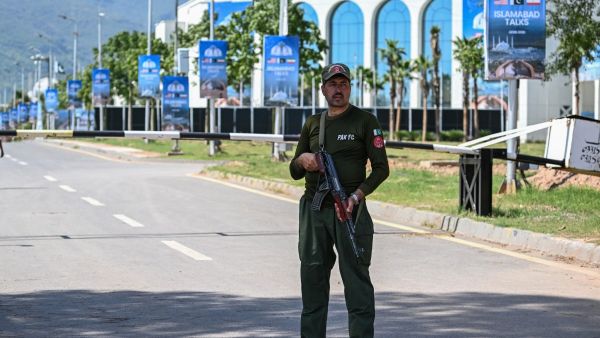
•ALBAWABA - Despite continued military and political escalation, diplomatic efforts between the United States and Iran are scheduled to resume this week in Islamabad with a second round of negotiations...
•Washington says it intends to provide Tehran what it calls a "fair and acceptable" proposal, but it cautions that other options are still available in the event that talks fall down.Trump reiterated t...
•Washington can swiftly transition from deterrence to direct military action if necessary thanks to the buildup.According to officials, the United States is presently expecting Iran's reaction to recen...
هذا الخبر من البوابة. خبر يقدم أدوات ذكاء اصطناعي للتلخيص والترجمة والاستماع.
المصدر: البوابة | Source: البوابةALBAWABA - Despite continued military and political escalation, diplomatic efforts between the United States and Iran are scheduled to resume this week in Islamabad with a second round of negotiations.
President Donald Trump of the United States said that envoys Steve Witkoff and Jared Kushner will visit Pakistan's capital on Tuesday to take part in the negotiations, indicating a resurgence of attempts to come to a consensus.
The declaration came after it was reported that a preliminary team had already landed in Islamabad on an American plane. Washington says it intends to provide Tehran what it calls a "fair and acceptable" proposal, but it cautions that other options are still available in the event that talks fall down.
Trump reiterated the threat of military escalation in the event that Iran rejects the offer and said that an agreement may be made "peacefully or otherwise." He implied that strikes aimed against vital infrastructure might result from an inability to come to an agreement.
Military Preparedness and Strategic Pause
Washington reported that the White House has purposefully cut back on public remarks in recent hours so that talks can move forward without further pressure.
Concurrently, the United States has strengthened its military presence in the area by deploying destroyers, aircraft carriers, and submarines that can navigate the Strait of Hormuz. Washington can swiftly transition from deterrence to direct military action if necessary thanks to the buildup.
According to officials, the United States is presently expecting Iran's reaction to recent suggestions, despite signs that the two sides' divisions may be closing, as Vice President J. D. Vance pointed out.
Iran Responds with Signals of Deterrence
Tehran has responded to U.S. pronouncements with unambiguous military message, highlighting its preparedness for quick deployment and showing its drone and missile capabilities.
Senior Iranian officials, such as adviser Ali Akbar Velayati, issued a warning that any hostile action will be immediately retaliated against. Iranian forces are still on high alert, according to military leaders.
Iranian authorities continue to reject what they characterize as externally imposed demands, but they have not ruled out a diplomatic settlement despite the heated rhetoric.
Conflict Regarding the Strait of Hormuz
The future of the Strait of Hormuz, a vital international maritime route, is still a source of great tension. Iran has hinted that it would impose access restrictions during a war, claiming that international law allows for such actions in specific circumstances.
However, Washington warns that any attempt to shut the strait might lead to a wider escalation and views it as a violation of current agreements.
Regional Consequences
Leaders in the region are keeping a careful eye on how the negotiations turn out. As Israeli forces continue to operate in southern Lebanon, Israeli Prime Minister Benjamin Netanyahu is allegedly evaluating the possibility of a ceasefire collapse.
The reopened negotiations in Islamabad are viewed as a crucial test of whether diplomacy can keep the crisis under control or if hostilities would worsen in the days ahead.
ملاحظة تحريرية | Editorial Note: نُشر هذا المقال في الأصل بواسطة البوابة. خبر (Khabr) هي منصة إعلامية أردنية مرخّصة تعمل بالذكاء الاصطناعي. نضيف قيمة تحريرية من خلال: تحليل ذكي للأخبار، ملخصات تلقائية، رواية صوتية بالذكاء الاصطناعي، ترجمة متعددة اللغات، وتدقيق الحقائق. هدفنا جعل الأخبار أكثر وضوحاً وسهولةً للقارئ العربي.
This article was originally published by البوابة. Khabr is a licensed Jordanian AI-powered news platform (Registration #82086). We add editorial value through: AI-powered news analysis, automated summaries, AI audio narration, multi-language translation (Arabic, English, French, Turkish), and AI fact-checking. Our mission is to make news more accessible and understandable for Arabic-speaking audiences worldwide.