Rabat – The United Nations Population Fund (UNFPA), the UN’s sexual and reproductive health agency, warns in their April regional analysis that gender-blind responses are failing women across Gaza, Lebanon, Sudan, and Yemen.
The report highlights how the crisis in the Middle East affects 161 million women and girls residing in countries directly affected by conflict that remain largely invisible in conflict analysis and funding priorities.
“The omission is not merely analytical – it is structural,” the report states, “without data that captures the differentiated experiences of women and girls, the invisible cannot be made visible and the case for targeted action remains undervalued.”
The organization argues that solely focusing conflict analysis on macro-level economic and political indicators and failing to include qualitative metrics like gender causes “incomplete risk assessments, misaligned interventions, and missed opportunities to stabilize communities and sustain peace.”
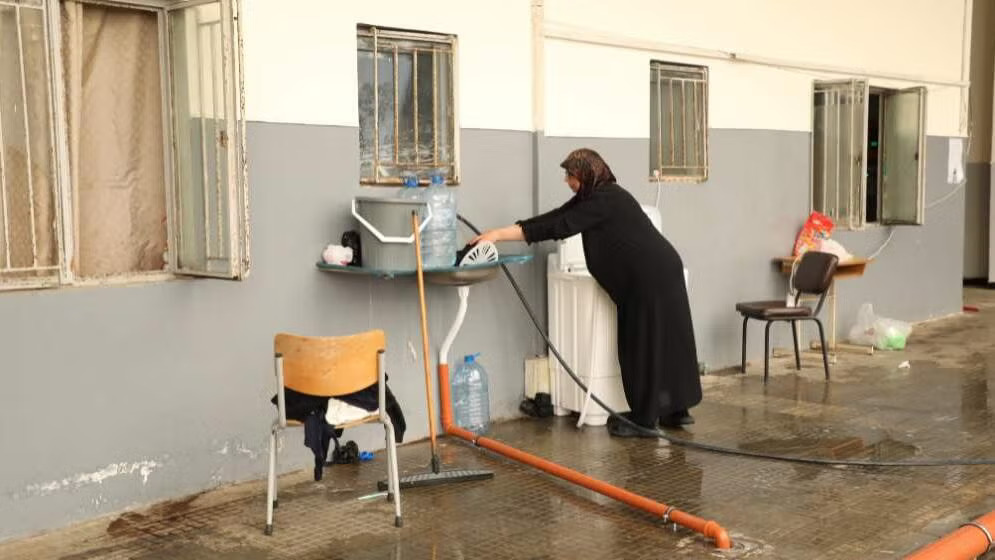
Pointing to the ongoing economic shocks, hyper-displacement, and shrinking civic space, the report emphasises that women and girls are among those most affected through disrupted access to health services, increased exposure to gender-based violence (GBV), and loss of livelihoods.
While most research studies the direct impact of conflict, i.e. displacement, injury, economic losses, the UNFPA’s report paints a broader picture of the indirect impacts economic strain, food scarcity, price instability in hand with weakened legal and social support play in increasing GBV, exploitation, and reduced mobility.
Acknowledging the potential macro-economic losses between $120 billion to $194 billion on regional economies, coupled with 3.64 million job losses, UNFPA reports that four million additional people may be pushed into poverty, when 89 million already require humanitarian assistance in 2026.
Women in the region already experience low labor force participation and as they are overrepresented in informal employment, they are more likely to see a collapse in livelihood. When this happens, women typically take on additional unpaid domestic labor – more than twice as much as men.
Conflict heighten women and girls’ vulnerabilities
In already underinvested areas including health and care systems, women fill the gaps through additional unpaid labor and therefore limit potential opportunities in paid labor positions. As public services continue to shrink, this cycle of women’s economic disempowerment accelerates.
While gender based research is limited, the UNFPA attributes rising child and forced marriages in Syria as a survival strategy in the face of economic fallout. The proportion of child marriages among Syrian refugees in Jordan rose from 15% in 2014 to 36% in 2018, with 41% of young displaced Syrian women in Lebanon married before 18.
Research among Syrian refugee women in Lebanon also documented transactional sex for survival, with extreme poverty enabling men to weaponize control over essential resources to coerce compliance.
The UNFPA warns this is a pattern the current economic shock risks replicating across the Middle East.
Another report released last week underscores a funding crisis playing out “at the worst possible moment.” Funding for local civil society organizations working to address GBV and sexual and reproductive health services decreased approximately 14.5% between 2024 and 2025 and an additional 44.3% from 2025 to 2026.
Food insecurity threatens maternal and newborn health
The Arab world already faces widespread food insecurity, with 186 million unable to afford a healthy diet and predictions of a 14% increase of acute food insecurity in the Middle East and North Africa if the US-Israel war in Iran continues.
The report expresses that in periods of extreme food insecurity, women and girls “eat last and least.”
Citing a pattern witnessed at the beginning of the Ukraine war and from Somalia’s 2022 drought, the organization warns that while these crises’ impacts may not be immediately evident, an “impending regional food crisis will likely lead to a delayed but severe spike in maternal malnutrition, negatively impacting pregnancy outcomes and maternal and infant health.”
A call to action
The UNFPA urges national governments, UN agencies, donors, and civil society to include gender systematically into all conflict analysis and response frameworks, protect and fund GBV and sexual and reproductive health services
Other initiatives include bolstering local women-led organizations, removing barriers to their access, and ensuring women’s leadership in recovery and decision-making processes.
Above all, the organization stresses that women and girls must be systematically considered at every stage of conflict analysis, response design, and recovery planning.
The call to action seeks to address the persistent gender gap and the consequences of women’s and girls’ limited visibility with particular consideration of overstretched health systems, deprioritized funding, and policy environments where gender remains an afterthought.
“Making women and girls visible is not optional,” the report concludes. “It is fundamental to effective humanitarian action, sustainable recovery, and lasting peace.”
Read: Trump’s Iran Port Blockade Rattles Hormuz Shipping as Oil Tops 100
The post UNFPA Warns that Gender-Blind Analysis in Middle East is Failing Women and Girls appeared first on Morocco World News.