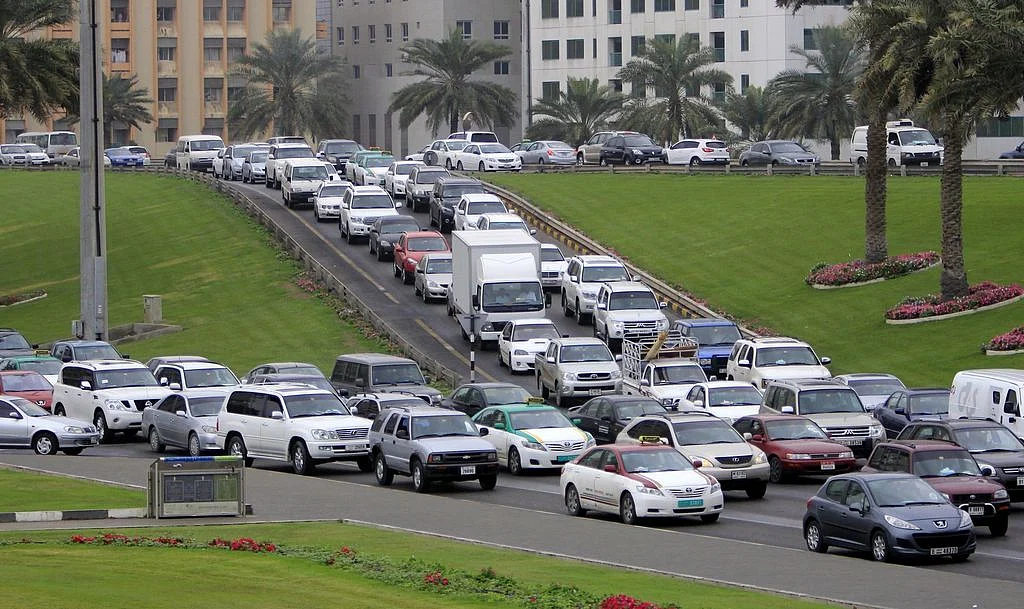
UAE property trends: How traffic is redefining where residents live
•Property experts in the UAE highlight that a growing number of residents are choosing to live closer to workplace hubs, as traffic congestion reshapes daily life and housing decisions.For many, the rh...
•As traffic levels return to pre-disruption norms, residents say long and unpredictable journeys — common in most global cities — are steadily eating into personal time, prompting a rethink of where th...
•Data from the TomTom Traffic Index shows that even a 10-kilometre drive now takes an average of 19.1 minutes, reflecting slower speeds and mounting congestion.Stay up to date with the latest news.
هذا الخبر من Khaleej Times. خبر يقدم أدوات ذكاء اصطناعي للتلخيص والترجمة والاستماع.
المصدر: Khaleej Times | Source: Khaleej TimesProperty experts in the UAE highlight that a growing number of residents are choosing to live closer to workplace hubs, as traffic congestion reshapes daily life and housing decisions.
For many, the rhythm of work and commute is becoming increasingly exhausting. As traffic levels return to pre-disruption norms, residents say long and unpredictable journeys — common in most global cities — are steadily eating into personal time, prompting a rethink of where they live.
According to the Inrix Global Traffic Report, Dubai motorists lost 45 hours to traffic in 2025, up from 35 hours the previous year. Data from the TomTom Traffic Index shows that even a 10-kilometre drive now takes an average of 19.1 minutes, reflecting slower speeds and mounting congestion.
Stay up to date with the latest news. Follow KT on WhatsApp Channels.
For commuters travelling between Dubai and the Northern Emirates, the situation is even more severe, with annual delays reaching nearly 460 hours — equivalent to almost 60 working days.
Trading space for time
Mohammed S., a long-term UAE resident, said he had been living in Sharjah while working in Dubai, paying Dh24,000 a year for a 1,200-square-foot one-bedroom apartment. However, the daily commute of more than 90 minutes each way eventually became too exhausting.
“Things got so bad that I broke my tenancy contract midway and moved into the first apartment I could find close to my workplace in Dubai,” he said. “I had to pay a penalty, and my rent doubled to Dh48,000 a year for a 400-square-foot apartment.”
He explained that although he ended up paying significantly more for a much smaller home, the benefits outweighed the costs.
“But I don’t regret it,” he said. “Life became far more manageable. I was less tired in the evenings and could spend more meaningful time with my family.”
Mohammed has since moved to a bigger apartment, but said the decision at the time was driven by his need for a better quality of life.
“That first apartment in Dubai was too small for my family of four,” he said. “But at that point, my peace of mind mattered more.”
For others, the shift still remains aspirational. Sudanese expat Nawal Barakat, who lives in Warsan 4 and works near Times Square Center on Sheikh Zayed Road, describes her commute as a daily balancing act.
“I live in Warsan 4, and my daily commute is usually 25 to 30 minutes, sometimes longer. I try to leave work by 4.30pm because if I leave any later, it can take more than 45 minutes to get home. I’ve looked at places closer to work, but they’re not within my budget — if I ever find something affordable nearby, I’d move immediately.”
Recalling a brief period when she stayed closer to work, Barakat said the difference was immediate and noticeable.
“For a short time, I stayed with a friend in Al Barsha, and it took me just 11 minutes to get to work without traffic, or about 15 minutes with it. Honestly, it was the best phase for me — it made a big difference physically and mentally, especially for my back.”
A shift in urban living patterns
Property experts say this growing preference is part of a broader behavioural shift among residents seeking to “reclaim time as a resource.”
Nitin Chauhan, Partner, Pride & Property explains this has happened “not just for comfort, but because in a global centre like Dubai, long commutes were cutting into productive hours and family time in ways that became harder to justify.”
He added that demand therefore has remained strong in centrally located communities.
“Areas like Business Bay, JLT, and Dubai Marina saw sustained demand partly because they placed residents within reach of major employment corridors.”
However, industry experts note that while proximity is currently driving decisions, long-term urban planning could reshape this trend.
Rohit Bachani, Co-Founder, Merlin Real Estate said, “While current congestion is pushing many residents to live closer to traditional downtown cores today, RTA’s aggressive infrastructure pipeline is fundamentally reshaping Dubai’s spatial logic. With 72 road, bridge and tunnel projects by 2027, major corridor upgrades, and the new 42-km Gold Line Metro linking 15 areas and over 55 major developments, the so-called ‘outskirts’ are being repositioned as the next city centres.”
They added that major infrastructure initiatives signal a decentralised future for the emirate.
“It’s decentralising the core. For real-estate entrepreneurs and investors, the winners will be those communities that are well-connected nodes on this new network, not just those closest to today’s CBD (Central Business District).”
“So, families and professionals are trading long commutes for proximity today,” added Bachani.
The hidden toll of traffic
Beyond inconvenience, congestion is also taking a psychological toll. The issue has even been raised at the Federal National Council (FNC), where Dr Adnan Al Hammadi, an FNC member, highlighted its mental health impact.
“It leads to anxiety,” he had said.
Healthcare professionals echo this view, warning that the long-term effects can be more severe, as daily commuting stress becomes chronic rather than occasional.
Dr Shaju George, Specialist Psychiatrist, International Modern Hospital Dubai, said, “We often observe chronic stress patterns, generalized anxiety, burnout, and reduced overall life satisfaction. Extended commuting is also linked to decreased time for restorative activities such as exercise, social interaction, and adequate rest, which further compounds mental health risks.”
He explains that in some cases, individuals may develop anticipatory anxiety
“Feeling stressed even before the commute begins—creating a persistent cycle of psychological strain. Over time, this can contribute to more serious conditions, including anxiety disorders and depressive symptoms, especially when combined with other lifestyle stressors,” added George.
ملاحظة تحريرية | Editorial Note: نُشر هذا المقال في الأصل بواسطة Khaleej Times. خبر (Khabr) هي منصة إعلامية أردنية مرخّصة تعمل بالذكاء الاصطناعي. نضيف قيمة تحريرية من خلال: تحليل ذكي للأخبار، ملخصات تلقائية، رواية صوتية بالذكاء الاصطناعي، ترجمة متعددة اللغات، وتدقيق الحقائق. هدفنا جعل الأخبار أكثر وضوحاً وسهولةً للقارئ العربي.
This article was originally published by Khaleej Times. Khabr is a licensed Jordanian AI-powered news platform (Registration #82086). We add editorial value through: AI-powered news analysis, automated summaries, AI audio narration, multi-language translation (Arabic, English, French, Turkish), and AI fact-checking. Our mission is to make news more accessible and understandable for Arabic-speaking audiences worldwide.