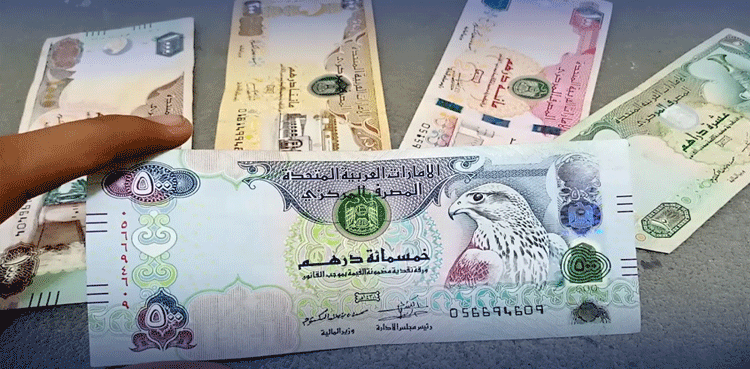
Karachi / Dubai, March 25, 2026 — The UAE Dirham (AED) has eased to 75.98 Pakistani Rupees in the open market today, a small decline of 0.08 PKR from recent levels. The pair has now touched the lower boundary of the 76.00–76.50 corridor that has dominated trading for the past several months, offering Pakistani expatriates and their families a slightly more favorable conversion rate.
The Dirham’s calm performance continues to be anchored by its fixed peg to the US Dollar at 3.6725 AED per USD — a policy unchanged since 1997 that provides strong protection against sharp volatility. The Pakistani Rupee, while floating, has been supported by healthy foreign reserves and consistent remittance inflows, helping it maintain balance against the AED. Today’s rate of 75.98 PKR per AED reflects this ongoing equilibrium, serving as a dependable reference point for daily transfers and longer-term planning.
Real support for Pakistani households
With more than 1.5 million Pakistanis working in the UAE — from construction sites to corporate offices — today’s rate means each dirham sent home now converts to 75.98 PKR. Monthly remittances from the UAE regularly exceed $700 million, so even a small daily improvement adds up to meaningful assistance for families covering school fees, medical expenses, groceries, utility bills, and other essentials in Punjab, Sindh, Khyber Pakhtunkhwa, Balochistan, and beyond. These funds remain a vital economic lifeline, helping millions manage daily life amid ongoing regional and global pressures.
Today’s Quick Snapshot
- Current Rate: 1 AED = 75.98 PKR
- Change: −0.08 PKR (−0.10%)
- 7-day high: 76.50 PKR
- 30-day average: ~76.30 PKR
- 2025 high (July): 77.61 PKR
- 2025 low (Jan): 75.44 PKR
2026 Outlook
Most market forecasts continue to see the AED-PKR pair trading between 75.80 and 77.00 through the first half of 2026, with the central tendency around 76.10–76.60 by March–April. The UAE’s ongoing diversification into technology, renewables, logistics and tourism, combined with Pakistan’s remittance strength and reserve accumulation, is expected to keep volatility moderate.