⚡ عاجل: كريستيانو رونالدو يُتوّج كأفضل لاعب كرة قدم في العالم●⚡ أخبار عاجلة تتابعونها لحظة بلحظة على خبر●⚡ تابعوا آخر المستجدات والأحداث من حول العالم●
AI اقتراحات ذكية
AI مباشر|--مشاهد مباشر
1,131,835مقال408مصدر نشط228قناة مباشرة3,944خبر اليوم
آخر تحديث:منذ ثانية
This is how the age of American dominance comes to an end
•The war between the US and Iran marks the end of an anomalous era
Regardless of how the conflict between the United States and Iran formally concludes...
•An ancient civilization, one of the oldest continuous states in human history, has emerged as the final obstacle to the project of American global dominance.
•That alone tells us something about the direction in which the world is moving.
هذا الخبر من RT English. خبر يقدم أدوات ذكاء اصطناعي للتلخيص والترجمة والاستماع.
The war between the US and Iran marks the end of an anomalous era
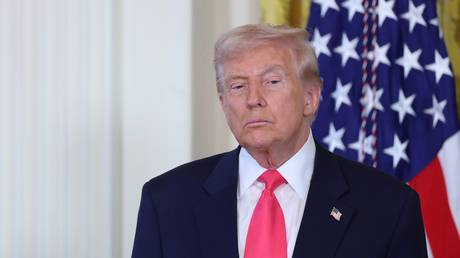
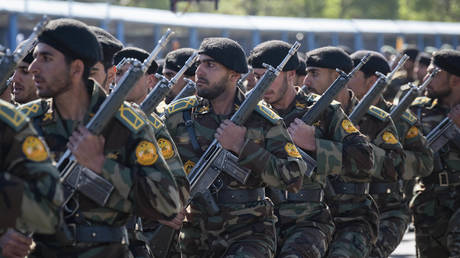
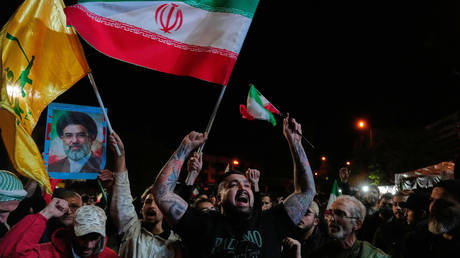
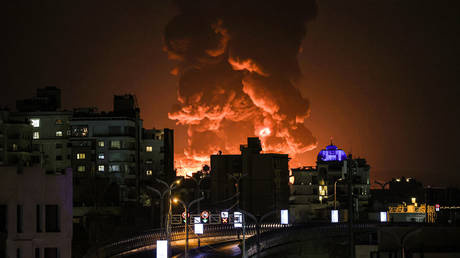
Regardless of how the conflict between the United States and Iran formally concludes, its symbolism is already unmistakable. An ancient civilization, one of the oldest continuous states in human history, has emerged as the final obstacle to the project of American global dominance. That alone tells us something about the direction in which the world is moving.
For historians, the deeper meaning of the current Middle Eastern crisis lies in the confrontation between two powers at opposite ends of the historical spectrum. Iran is arguably the world’s oldest centralized state, with roots stretching back to around 530 BC. Since then, it has never ceased to exist as a unified political entity. That continuity is remarkable. Even Russia, the major Western European powers, India and China have all experienced fragmentation at various points in their histories.
The United States, by contrast, is among the youngest major nations – barely 250 years old. Its history is ten times shorter than that of Persia. In that sense, the present conflict pits antiquity against modernity, a civilization forged over millennia against a state that rose rapidly in a uniquely favorable historical moment.
In purely military terms, such comparisons mean little. The United States retains overwhelming destructive capacity. If it chose to do so, it could devastate Iran. This is, after all, the only country in history to have used nuclear weapons against civilian populations. That fact alone should temper any illusions about the limits of American power.
Yet the long-term significance of this confrontation lies elsewhere. It isn’t about whether Iran can defeat the United States in a conventional sense. It’s about whether the current international order, one shaped by American dominance, can continue to function as it has.
Modern Iran represents more than a state. It’s a living embodiment of civilizational continuity. Over 2,500 years, it has endured invasions and dynastic upheavals, yet has preserved a distinctive political culture and a strong sense of unity. Many of its historical adversaries have disappeared altogether. Iran remains.
This doesn’t make it invincible. But it does mean that it must be taken seriously, not only as a military opponent, but as a political and historical actor. Iranian decision-making reflects a depth of strategic thinking that few contemporary states can match. It’s precisely this quality that makes Iran such a difficult counterpart, both for allies and adversaries.
The United States, meanwhile, has long sought to imprint itself on history as a transformative force. Yet its successes have been tied to exceptional circumstances rather than intrinsic durability. Its meteoric rise in the 20th century was made possible by a unique convergence of factors.
First, that century witnessed an unprecedented clash of ideas. For the first time in history, global politics was driven not only by states and interests, but by competing ideologies – liberalism, communism, socialism and nationalism – each claiming universal relevance.
Second, Western Europe, which had dominated world affairs for centuries, was exhausted by internal conflict. Russia and China, though powerful, were primarily concerned with preserving their independence rather than projecting global influence. This left a vacuum that the United States was uniquely positioned to fill.
Finally, the collapse of European empires created a vast number of new states, many of them vulnerable. The United States lacked the capacity to subdue major powers directly, but it could exert influence over smaller, weaker countries. This allowed it to construct a global system of influence that, under normal historical conditions, would have been difficult to sustain.
The result was a paradox: a form of hegemony achieved not through enduring civilizational depth, but through favorable timing and circumstance. For a time, this led many to believe that the United States was uniquely capable of reshaping the world.
That illusion is now fading.
The United States is facing a profound internal crisis, intellectual and political. Its political system has become increasingly polarized, its strategic thinking narrower, and its ability to formulate coherent long-term policies more limited. These weaknesses are visible in the decisions and contradictions of recent administrations.
Even Western Europe, once firmly within the American orbit, is showing signs of resistance. The assumption that the transatlantic relationship would remain unchallenged indefinitely is proving to be misplaced.
In this context, the conflict with Iran takes on broader significance. It is not merely another regional war. It is part of a larger process in which the United States is being forced to adapt to a reality that other states have always known: that no single power can exercise uncontested control over global affairs.
Iran’s role in this process is, in many ways, symbolic. It’s not a perfect state. It lacks the economic resources of China, the mobilization capacity of Russia, or the intellectual traditions of Western Europe. Even a victory over the United States would not transform it into a global hegemon.
And yet, it may prove decisive in bringing an era to a close.
The attempt to construct a system of American-led global dominance, what might be called the “Frankenstein” of modern geopolitics, is encountering its limits. Iran has become the point at which those limits are most clearly exposed.
The consequences extend far beyond the Middle East. What is at stake is not simply the outcome of a particular conflict, but the broader structure of international relations. The idea that one state can impose its will universally, shaping the global order in its own image, is being tested, and found wanting.
History offers many examples of powers that aspired to such dominance. None succeeded in the long term. Even those that appeared closest ultimately encountered constraints, structural or strategic, that they couldn’t overcome.
The United States is no exception.
The end of this illusion will mark the true conclusion of the 20th century, an era defined by ideological confrontation, unprecedented globalization and the temporary ascendancy of a single power. What follows will be more familiar: a world of multiple centers of power, competing interests and shifting alliances.
The war between the United States and Iran is one of the moments through which this transition is taking place.
Regardless of how it ends, one conclusion is already possible. Iran, by standing its ground, has made a significant contribution to the evolution of the international system. It has become, in effect, the final weight that brings down a structure built on overreach and illusion.
The world won’t be the same. Not because of the destruction or the diplomacy that may follow, but because a fundamental idea, that of uncontested global hegemony, is losing its hold.
ملاحظة تحريرية | Editorial Note:
نُشر هذا المقال في الأصل بواسطة RT English.
خبر (Khabr) هي منصة إعلامية أردنية مرخّصة تعمل بالذكاء الاصطناعي.
نضيف قيمة تحريرية من خلال: تحليل ذكي للأخبار، ملخصات تلقائية، رواية صوتية بالذكاء الاصطناعي، ترجمة متعددة اللغات، وتدقيق الحقائق.
هدفنا جعل الأخبار أكثر وضوحاً وسهولةً للقارئ العربي.
This article was originally published by RT English.
Khabr is a licensed Jordanian AI-powered news platform (Registration #82086).
We add editorial value through: AI-powered news analysis, automated summaries, AI audio narration, multi-language translation (Arabic, English, French, Turkish), and AI fact-checking.
Our mission is to make news more accessible and understandable for Arabic-speaking audiences worldwide.
هذا الخبر ضمن تغطية خبر لقسم سياسة.
نقدّم لك تحليلات ذكية وملخصات يومية لأهم الأخبار من مصادر موثوقة متعددة.
المصدر: RT English.
يوجد 6 مقالات مرتبطة بهذا الموضوع.
This article is part of Khabr's coverage of Politics.
We provide AI-powered analysis, summaries, and multi-source aggregation to keep you informed.
Source: RT English.
Tags: American dominance, geopolitics, international relations.
خبر هو أول مجمّع أخبار عربي يعمل بالذكاء الاصطناعي. نقدم تحليلات ذكية وملخصات تلقائية ورواية صوتية لكل خبر من أكثر من 700 مصدر موثوق. نضيف قيمة تحريرية فريدة من خلال أدوات الذكاء الاصطناعي التي تساعدك على فهم الأخبار بعمق أكبر.
Khabr is the first AI-powered Arabic news aggregator. We provide AI-generated editorial analysis, automated summaries, audio narration, and fact-checking for every article from 700+ trusted sources. Our platform adds unique editorial value through AI tools that help you understand the news more deeply.
يا هلا! اسألني أي شي 🎤
🍪 نستخدم ملفات تعريف الارتباط لتحسين تجربتك وعرض الإعلانات المخصصة. باستخدامك للموقع، فإنك توافق على سياسة ملفات تعريف الارتباط وسياسة الخصوصية.
We use cookies to enhance your experience and show personalized ads. By using this site, you agree to our Cookie Policy and Privacy Policy.
🔍
FREEFree 1GB Internet + Free International Calls
$1 trial — eSIM in 190+ countries — No roaming charges