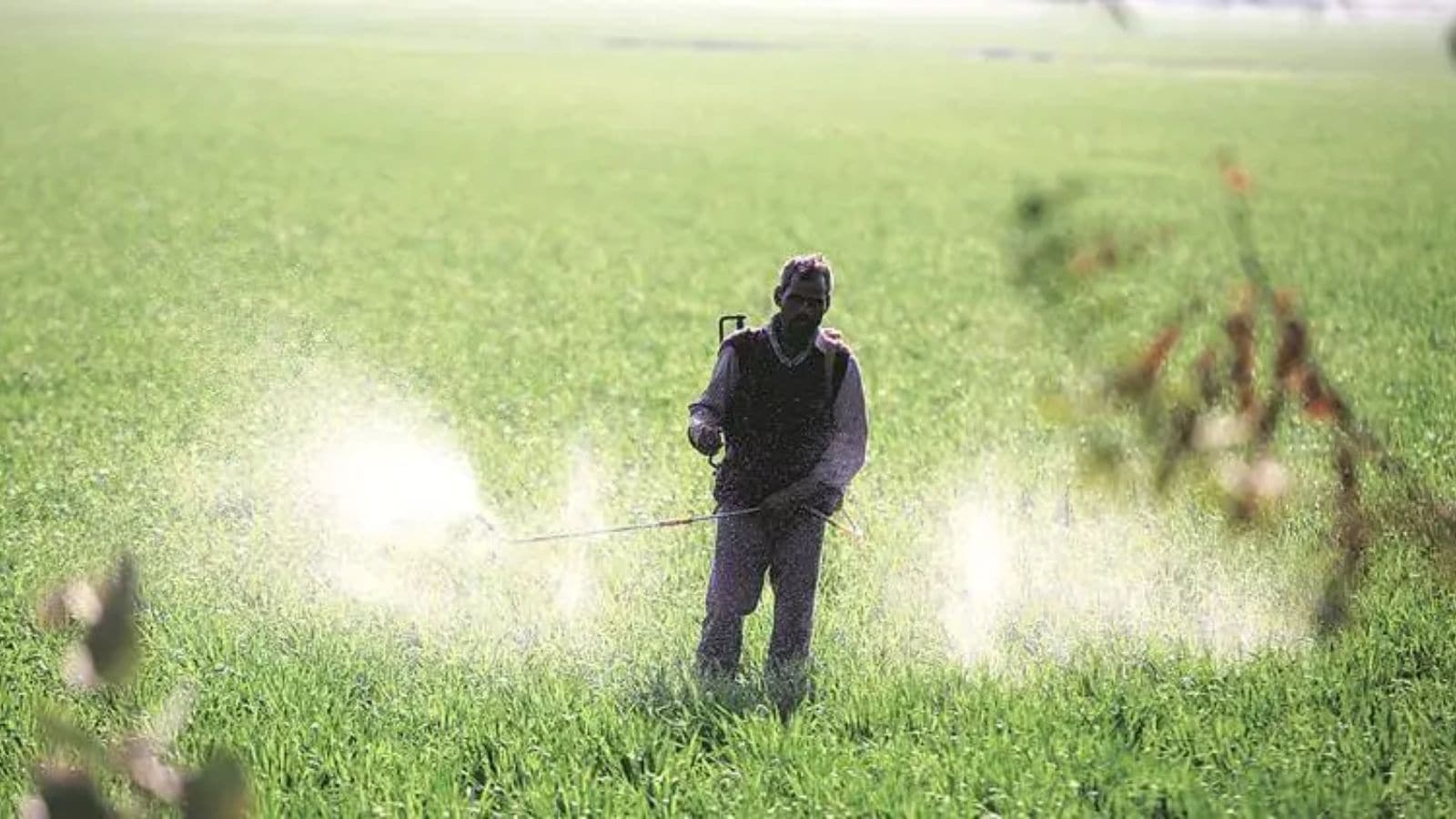
Weather ePaper Today’s Paper Journalism of Courage Home ePaper India Cities UPSC Premium Entertainment Politics Sports World Explained Opinion Business Lifestyle Tech Subscribe Sign In TrendingUPSC OfferIPL 2026US NewsPuzzles & GamesLegal NewsFresh TakeHealthResearch🎙️ Podcast Advertisement function checkAndLoadWindowSizeScript() { if (window.jQuery) { // jQuery is loaded, include your script jQuery(document).ready(function($) { // Your existing script for checking window width if (window.innerWidth) var page_w = window.innerWidth; else if (document.all) var page_w = document.body.clientWidth; if (page_w > 1024) { $(".add-left, .add-right").show(); } else { $(".add-left, .add-right").hide(); } }); } else { // jQuery is not loaded, check again after 0.2 seconds setTimeout(checkAndLoadWindowSizeScript, 200); } } // Initial call to the function checkAndLoadWindowSizeScript(); NewsCitiesCity OthersThe farmer with gudness of ganna and other medicinal herbs The farmer with gudness of ganna and other medicinal herbs Medicinal farming success story of Naresh Kumar, an ex-Army Havildar who built a thriving herbal plantation and sugarcane-based gud business. Written by: Rajesh Chander Sharma4 min readPunjabApr 14, 2026 11:12 AM IST Ex-Army Havildar Naresh Kumar builds a successful medicinal farming and sugarcane venture, producing herbal crops, gud, and shakkar.(Representative Photo) Make us preferred source on Google Whatsapp twitter Facebook Reddit PRINT Last year, Naresh Kumar visited the national capital twice — first as a special guest of the Central government at the Independence Day function on August 15, then as an awardee on December 17. The double Delhi dash — and distinction — was powered by his work in his dusty and barren village fields. “I grew up watching these fields. My ancestors took care of them. Then came a time when the fields demanded care. I did my bit,” he says. Naresh is still doing his bit, carrying another double distinction of being a jawan and kisan. He retired as a Havildar in the Army in November 2016 when he was 34, and started medicinal plantation in 2017. “My ancestors used to do medicinal farming. So, I decided to follow in their footsteps,” he says. He planted sarpgandha, ashwagandha, tulsi, shatavari, moringa, kalmegh, gurmar, aloe vera and lemongrass on his seven-acre land. “Medicinal plants are good for the environment,” he says. Naresh did not stop there. In June 2018, he formed a farmer producer organisation (FPO), Suhavi Producer Company, and the medicinal plantation expanded to 40 acres. The FPO faces many kinds of problems, the most important being the marketing part. “Finding a market for our produce is always a challenge,” says Surjit Kumar, who has been associated with the FPO since 2018. Now the FPO has 110 members and is marching ahead without any external aid. “They are not getting any government aid. That is a sad commentary on the system,” says Dr Arun Chandan, principal investigator of National Medicinal Plants Board for the northern region. When Covid came in 2020, Naresh turned to sugarcane farming. Now he grows sugarcane on two acres developed as Suhavi Natural Farm. Apart from growing sugarcane, he has an elaborate system for making cane juice, gud and shakkar. Strict quality control is the norm here. If he is not present, his wife Mamta monitors the manufacturing operations. “I love to be here and help my husband with whatever I can. Sugarcane has added more sweetness to our relationship,” she says. Naresh has experimented a lot first by mixing into gud ashwagandha, amla, tulsi, moringa, alsi, haldi, and fruit flavours (guava, strawberry, peach, mango, banana); and then adding saunf, ajwain, adrak, haldi, dalchini, saund, laung, and kali mirch to shakkar. “But my focus is on plain gud and shakkar. I am not able to fulfil its demand,” he says. He claims he gets 10 to 12 quintal gud from one acre and sells it at Rs 170 per kg and shakkar at Rs 250 per kg. Ask him about the profit he is making, and he says politely, “I never went into such details.” One reason for that can be the pension he draws as an ex-serviceman, he admits laughingly. Now Naresh is infusing kadi patta into mustard oil. Not just this, he has also floated a new concept of “family farmer” — where a family adopts a farmer. “People in cities should adopt farmers who feed them. They should come to them on weekends, spend time with them and see for themselves how much hard work goes into what they produce,” he says. Dr Chandan finds Naresh doubly determined and has a “tubewell connection” with him. “Both of us had gone to Varanasi to attend a conference. On return, we spent the night at his village. In the morning, I expressed my desire to take a bath with the tubewell water in the open. He took me to a neighbour’s tubewell since he didn’t have one. After six months, I got a call from Naresh, inviting me to his village again as he had got a tubewell installed. I was pleasantly surprised,” says Dr Chandan. “If he sets his sights on something, he gets it. Now he is working closely with IIT-Ropar, Punjab State Bio-diversity Board and Punjab Agro.” Works on the desk, dealing with datelines and deadlines day in, day out. Writes on and off on Himachal Pradesh and the surrounding areas. Weaves into his stories the groundwork from the grassroots and green fields, the benchmark from classrooms, the view from the women's wonderful world, the rocking and shocking from everyday life, and the politically correct -- and incorrect -- from the corridors of power. ... Read More Stay updated with the latest - Click here to follow us on Instagram
المصدر: Indian Express
| Source: Indian Express
ملاحظة تحريرية | Editorial Note:
نُشر هذا المقال في الأصل بواسطة Indian Express.
خبر (Khabr) هي منصة إعلامية أردنية مرخّصة تعمل بالذكاء الاصطناعي.
نضيف قيمة تحريرية من خلال: تحليل ذكي للأخبار، ملخصات تلقائية، رواية صوتية بالذكاء الاصطناعي، ترجمة متعددة اللغات، وتدقيق الحقائق.
هدفنا جعل الأخبار أكثر وضوحاً وسهولةً للقارئ العربي.
This article was originally published by Indian Express.
Khabr is a licensed Jordanian AI-powered news platform (Registration #82086).
We add editorial value through: AI-powered news analysis, automated summaries, AI audio narration, multi-language translation (Arabic, English, French, Turkish), and AI fact-checking.
Our mission is to make news more accessible and understandable for Arabic-speaking audiences worldwide.