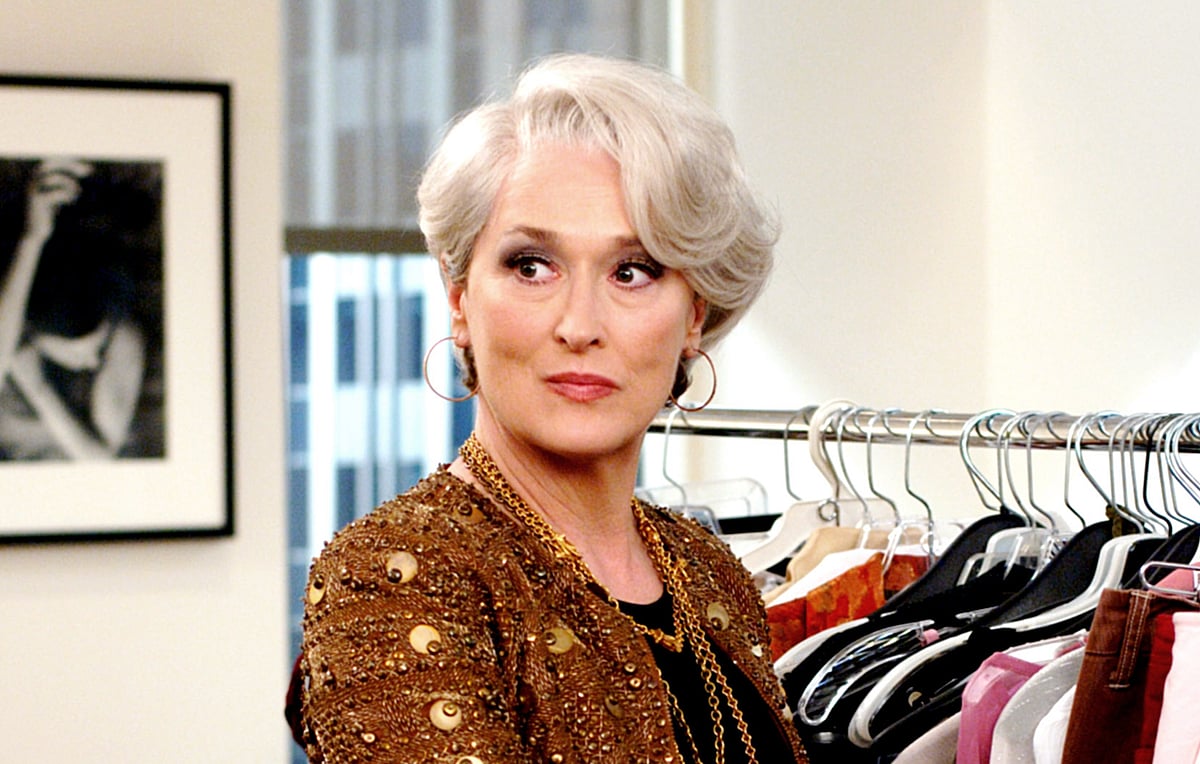
A million re-watches later, my friend and I looked at each other, after finishing The Devil Wears Prada. The question came quickly, and without much optimism: how long would we actually last under Miranda Priestly?
A day, maybe. If you don’t fail the first round of instructions, you might struggle to rebook a flight in five minutes. Some of us would never make it to the part of rebooking an unpublished manuscript.
It’s 2026 now, and dissecting Miranda Priestly’s work ethic isn’t exactly groundbreaking. Yes, it was intense and calling it unreasonable is excessively polite and yes in the language of today’s workplace, it was a tad toxic. Some observations don’t need a panel discussion. The forks are already in the kitchen.
Nevertheless, Miranda became the boss that is so deeply seared into our memories. Of course, we can watch her on screen, say her dialogues as she says it, curl up in fear at the Cerulean monologue, but in real life, we might have just quit the next day.
So what exactly made Meryl Streep’s Miranda so bone-chilling, and yet the kind of boss most of us would’ve bent over backwards to please, right up until we had our own Andy Sachs moment where we throw the beeper into a fountain?
Her favours. That's where the danger lay.
The quick favours
The icy charm and power lay in the fact that Miranda, never, really asked for anything. She implied, and that made it non-negotiable. Her weapon, or one of many, was the ‘quick favour’, a phrase that would mean that nothing would be quick and neither was it a favour, it was a stone-cold order for a five-minute deadline and no margin for error. The coffee on her table was a test of timing. A car becomes a citywide chase. A manuscript becomes…well, a problem for someone with fewer boundaries than sense.
Her requests were softspoken and yet those around her, were frantic and tripping over their toes. She never shouted; she just had a calm precise expectation that what she wants will materialise—somehow, somewhere, preferably before she finishes her sentence, and if it doesn’t, well that’s a you problem, go find another job. The pressure doesn’t come from what she says. It comes from what she doesn’t. it’s all accompanied by a pause, a look and that a failure just means you need to update your CV once again.
And that’s what makes the 'quick favour' so dangerous. You agree before you’ve fully processed it. And to hesitate is to admit you don’t already have a plan, and in Miranda’s world, not having a plan is the real failure. It was the case with all her errands.
Step one: Accept the task with confidence you don’t feel. Step two: Realise it’s impossible. Step three: Attempt it anyway, powered by adrenaline, caffeine, and a rapidly deteriorating sense of self-worth. Step four: deliver, or don’t, and brace for that immaculate, wordless disappointment.
You don’t complete Miranda Priestly’s requests. You chase them. And if you’re good, if you’re fast, if you’re just delusional enough to think you can outpace the spiral, you might even catch one.
So, before The Devil Wears Prada 2 releases, here's looking back at the requests that...well, sent her employees running, falling and well, panicking.
5. The coffee run that's just never coffee
Sounds simple. It isn’t. The order has to be exact, immediate, and somehow immune to traffic, delays, or basic human error. It’s usually your first task of the day, which means if you fail, you fail early.
Panic level: Low. Deceptively so.
4. Fixing scheduling chaos in real time
A meeting disappears, a booking collapses, a calendar implodes—and it’s now your responsibility to fix it instantly, flawlessly, and invisibly.
Chaos level: Moderate. Panic, but make it polished.
3. The Last-Minute Fashion Emergency
Find the item. Not a version. Not a substitute. The item. It’s unavailable, out of stock, or never meant to be found—but that’s beside the point.
Panic level: High. Logic has left the building.
2. Rebooking a flight in five minutes
Flights are full. Systems are slow. Time is nonexistent. And yet, you’re expected to make it happen like you personally run aviation.
Panic level: Very high. Reality is negotiable.
1. The unpublished manuscript mission
No one still knows how Andy managed to get the Harry Potter manuscripts for Miranda's twins, but she did, and got them spiral bound too. Yes, don't attempt this in reality; spare yourself that meltdown.
Panic level: Completely unhinged.