The Business of Football: A 10-year anniversary EFL special, plus League Two takeover talk
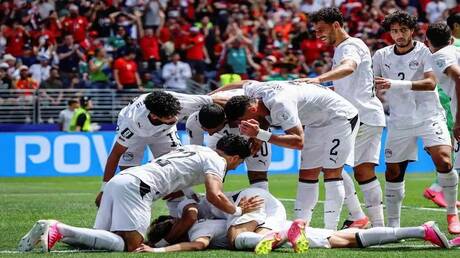
Birmingham CityBlackburn RoversBristol CityCharlton AthleticCoventry CityDerby CountyHull CityIpswich TownLeicester CityMiddlesbroughMillwallNorwich CityPortsmouthPreston North EndQueens Park RangersSheffield UnitedSheffield WednesdaySouthamptonStoke CitySwansea CityWatfordWest Bromwich AlbionWrexhamScores & ScheduleStandingsPodcastsThe Business of Football: A 10-year anniversary EFL special, plus League Two takeover talkJack Wilshere holds aloft the Vertu Trophy Jasper Wax/Getty Images Share articleWhen two towns both claim to have been the home of the once great British hat-making industry, there really is only one way to settle it: El Hattico. So, nearly 50,000 football fans went to Wembley last Sunday to watch “The Hatters” of Luton Town play “The Hatters” of Stockport County. Luton won 3-1 to claim the hat-making crown and take home something called the Vertu Trophy. Do not beat yourself up if this competition has escaped your attention until now — most English fans have been ignoring it since 1983 when it launched as the Associate Members’ Cup, a knockout tournament for teams in the third and fourth divisions of the Football League. The idea was to give them a more realistic shot at a Wembley final than they had in the FA Cup or League Cup. Bournemouth won the first edition (and look at them now). Vertu is a chain of car dealerships, by the way. Over the next three decades, the league tinkered with the format — “lucky losers”, regional splits, group stages, non-League teams to fill out the bracket — but by the time Barnsley beat Oxford United to win it in 2016, the competition, then known as the Johnstone’s Paint Trophy, was in a rut. Fans still turned up for the final, but attendances in the earlier rounds were poor. So the EFL broke the habit of a lifetime and did something radical. It invited 16 under-21 sides from Premier League and Championship clubs with Category 1 academies, the best kind, to boost the field to 64 teams. It then split them into eight four-team groups in the north and eight in the south, with one of the under-21 teams in each group. Each team would play the other teams in their group once, home or away, but the under-21 teams would only play away. The top two would progress to a round of 32, still on a regional basis, and then play knockout football all the way to Wembley. Desperate to give their stockpiled young talents more minutes against senior pros, the Premier League made it worth the EFL clubs’ while, by throwing £1million ($1.35m) into the prize pot. The EFL hoped that the extra Premier League cash, another home fixture, and the chance to take on some stars of the future would revive interest in the competition, which had even attracted a new title sponsor — Checkatrade. There was one problem, though. The fans. They absolutely hated it. The academy teams were immediately tagged “B teams”, which was — and still is — a loaded term in any conversation about the English league pyramid. No matter how many times we are told that most other European nations seem quite relaxed about their biggest clubs having subsidiaries that play in the same pyramid (but cannot play in the same division), we are not having it. So, the attendances for the group-stage games went from disappointing to embarrassing, and to make matters worse, several EFL clubs found themselves in trouble for fielding weakened teams. The headlines were appalling, but at least everyone had heard of Checkatrade, an online directory for electricians, locksmiths and plumbers. More than 74,000 fans turned up to watch Coventry City beat Oxford United in the final. The dictionary definition, then, of the late-arriving crowd. Sunday’s final was the 10th since the revamp, and looking back, it is interesting to see how much has changed over the decade and how much has not. For example, the gates for the early rounds have gotten slightly better, but there are still plenty of games with fewer than 1,000 fans in attendance. But nobody believes the competition is a Trojan horse to introduce Arsenal Athletic or Jong Chelsea to the EFL anymore, and the early fears that the competition would be dominated by the academy sides have not materialised. Only one, that of West Ham, qualified from the group stage this season. No academy side has ever reached the final. This has not dampened the Premier League’s enthusiasm for the competition, though. On the contrary, it wants to add two more games to the group stage. It has also launched a similar competition with National League sides. And EFL club bosses have grown fonder of the EFL Trophy, in its various sponsor-related guises, too. The “full-strength” rules have been tweaked to let managers use their squads more flexibly, giving more minutes to those who need them, and the finance directors like the prize money. Every team receives £20,000 for taking part and wins are worth £10,000 each in the group stage, a sum that increases with each round. Luton earned £250,000 in prize money; Stockport got £195,000. I realise none of the above is news, which is what this column usually offers, but the 10th anniversary of something that once seemed like the end of the world but now passes by without much comment at all seemed, well, worthy of comment. Having dipped into the archive once, I am going to do it again as we are approaching another 10th anniversary, which is closely related to the revamp of the EFL Trophy, similarly forgotten but, in my view, still pertinent. Without Googling, who remembers Shaun Harvey’s “Whole Game Solution“? Nobody? I thought so. Before he became a regular character on hit dramedy Welcome to Wrexham, Harvey was the slightly controversial boss of the EFL. Some of this controversy was related to his previous roles at Bradford City and Leeds United, both of whom had spells in administration while he was working for them. But a bigger reason for his frequent appearances in the newspapers was his enthusiasm for bold ideas, such as the EFL Trophy shake-up, adding “English” to the Football League’s name, and launching the league’s own streaming platform, iFollow. Looking back now, none of these controversies make much sense, as they were all decent ideas. But it is his Whole Game Solution, the big idea that got away, that seems most relevant as we wait for the EFL and Premier League to agree a new financial distribution deal or have one imposed on them by the Independent Football Regulator. Then, as now, EFL clubs were worried about rising costs and frequent losses. The Football Association, still reeling from England’s dismal showing at the 2014 World Cup, was fretting about the apparent contradiction of fixture congestion, but not enough minutes for talented youngsters — something the Premier League was interested in, too. With those objectives in mind, the changes to the EFL Trophy were well received by EFL club bosses, the FA, and the Premier League. Harvey wanted to go much further, though. In May 2016, Harvey revealed that he had spent the last two months working on a restructuring of the league pyramid that would leave the Premier League at 20 teams, but replace the EFL’s three 24-team divisions with four divisions of 20 teams each. So, he was both cutting the number of fixtures in each division and adding eight teams to the EFL. The latter immediately provoked a lively debate about who those new teams might be. Could they, for example, be the dreaded Manchester United Reserves, or perhaps the equally feared Celtic and Rangers? Having set the hares running, Harvey sensibly agreed that these teams would have to come from the fifth-tier National League and, after some feedback from his clubs, he tweaked the original plan so that the proposed structure would be 20 teams each in the Premier League and Championship, with 22 teams in the next three tiers, to make 106 teams in total. Why? Well, the whole idea of the plan was to dramatically cut the number of midweek league games, as they attracted the smallest crowds and least amount of broadcast interest, and often clashed with UEFA’s competitions — a situation that has only worsened as UEFA’s competitions have grown. He also believed fewer games might lead to smaller squads. To give both leagues as many weekends as possible, Harvey suggested the scrapping of FA Cup replays and moving ties after the third round to midweek slots. But, to placate the FA, he said this would create the room needed for the Premier League and Championship to take a midwinter break. He also modelled a fixture calendar that ensured the FA Cup final would take place the week after the last round of Premier League ties, but before the EFL play-off finals. To meet his objective of not leaving the EFL any worse off — and “preferably better off” — his calendar kept the EFL Cup’s two-legged semi-finals, but as a bone to the National League, he floated the idea that this might be “the opportunity to standardise promotion/relegation” to three places. He hoped the Premier League and FA would not object to any of this and suggested it could be in place for the 2019-20 season. Like films about historical events, you already know the ending to this story, as the EFL is not an 86-team league of four divisions, there is no winter break, and it is still two up/two down between League Two and National League. In November 2016, six months after that first press release, the EFL put out a rather forlorn statement saying it was ceasing discussions over the Whole Game Solution with immediate effect. The reason? The FA had just agreed a new deal for the cup’s international media rights, and it turns out armchair fans overseas prefer weekends, too. “If the weekend slots are not available, then there is simply no way we can meet the financial conditions (to be no worse off) as outlined at the very outset,” said Harvey in the statement. “The stance the FA has adopted has brought the discussions to a premature end, before fully understanding what the financial outcome from the creation of a new distribution model could be. “If the FA are willing to change its position, then we are, of course, open to re-engaging in what is a hugely important debate that was designed to help shape the future of football in this country.” The debate continues — and I promise I will have much more on the much-discussed New Deal for Football very soon — but it is interesting to me, at least, that Harvey foresaw the end of cup replays, identified that weekend slots would become a battleground between domestic leagues and other competition-organisers, spotted the professionalisation of non-League football, and demonstrated why it is so hard for English football to agree on anything. There is a good example of that playing out in the EFL right now, as clubs in all three divisions are trying to work out how to stop losing so much money (without overly handicapping themselves in the scramble up the ladder or provoking a legal challenge from the players’ union). I would need another 1,000 words to properly explain the EFL’s current cost-control regimes — for starters, there are two of them, one for the Championship, another for League One and Two — but suffice it to say that the league, and most clubs, would like to tighten them. Unfortunately, there is very little agreement on how tight or how best to do it. The latest thinking is that Leagues One and Two add a Championship-style profit and sustainability rules (PSR) backstop to their current salary cost management protocol (SCMP) approach. Confused? Yeah. So are the clubs. Under this season’s SCMP regime, League One clubs can spend up to 60 per cent of their annual turnover on their squad costs (the wages of their players and coaches, plus amortised transfers, agent fees and so on), while League Two clubs can go to 50 per cent. In the past, these budgets could be boosted by what the EFL called “football fortune income”, which meant cash received from transfers, cup runs and, most contentiously, the owners’ bank account. But this season, these additional sources of revenue have been treated in much the same way as the three more dependable sources of revenue for clubs — broadcast, commercial, and matchday — and capped at the same 60/50 per cent rates. That has reined in the big spenders slightly, but not enough to stop the rest of them from overspending to keep up. So, the new idea is to standardise the rules so clubs can only spend 50 per cent of their total revenues on their squads, but owners can top that up to 100 per cent, providing the money goes in as equity and the club’s rolling three-year losses do not breach an allowable loss threshold, which is the basis of the Championship’s PSR regime. That threshold will be significantly less than the Championship’s £39million limit, but there is still some haggling to be done on where it lands. The Championship, in the meantime, meets on Thursday to discuss whether it moves to an SCMP-type approach by copying the Premier League’s new squad cost ratio (SCR) of 85 per cent of a club’s revenue, or if it continues with PSR. There are several clubs in the division that may find themselves up before an independent panel next season if a move to SCR is postponed. Let us finish with something far easier to digest: a couple of old-fashioned club takeover tales. And they both involve teams fighting for survival in League Two, a state of affairs that makes valuing them a little more complicated. The first is at Tranmere Rovers, where former FA chief executive Mark Palios and his wife, Nicola, have been trying to sell the club for more than two years. They initially thought they had a buyer in the shape of an eclectic group led by Donald Trump’s former lawyer Joe Tacopina and pop star Rihanna’s partner A$AP Rocky, only for that to fall through last year. More recently, they have been in advanced talks with an American investment firm called Ascent Capital Partners. That deal has stalled due to a combination of the EFL wanting more information on Ascent’s investors and Ascent worrying about the club’s slide towards the National League. Ascent and Palio are still talking, but the latter is looking for alternative options, too, one of whom is understood to be Morley Sports Management, the London-based firm that owns Scottish League One side Hamilton Academical and Welsh semi-pro side Haverfordwest County. There is a similar story playing out at relegation rivals Newport County, where majority owner Huw Jenkins has made no secret of his desire to find a partner or a way out. The former Swansea City chairman bought the Welsh club two years ago, but has already loaned Newport £3m without seeing any improvement on the pitch. Newport are not the easiest sell, as they do not own their stadium or training ground, and they are currently one point and one place above the drop zone with three to play. But that does not appear to have put off Nicholas Beddis, a former soldier from nearby Pontypool, who went on to build a successful career in real estate in Dubai before more recently setting up AGS Capital Global, a financial advisory business aimed at professional athletes. There is, however, another chapter in his story: a stretch in prison for an assault that took place at a Halloween party in 2012 when he was 19. Neither Beddis nor Jenkins wanted to comment on the status of their talks, but The Athletic understands that Beddis knows he will need to discuss his past if he does something as high-profile as buy a football club. He should probably delete all references to Cardiff City from his LinkedIn page, too. Spot the pattern. Connect the terms Find the hidden link between sports terms Based in North West England, Matt Slater is a senior sports news reporter for The Athletic UK. Before that, he spent 16 years with the BBC and then three years as chief sports reporter for the UK/Ireland's main news agency, PA. Follow Matt on Twitter @mjshrimperالمصدر: The Athletic | Source: The Athletic
ملاحظة تحريرية | Editorial Note: نُشر هذا المقال في الأصل بواسطة The Athletic. خبر (Khabr) هي منصة إعلامية أردنية مرخّصة تعمل بالذكاء الاصطناعي. نضيف قيمة تحريرية من خلال: تحليل ذكي للأخبار، ملخصات تلقائية، رواية صوتية بالذكاء الاصطناعي، ترجمة متعددة اللغات، وتدقيق الحقائق. هدفنا جعل الأخبار أكثر وضوحاً وسهولةً للقارئ العربي.
This article was originally published by The Athletic. Khabr is a licensed Jordanian AI-powered news platform (Registration #82086). We add editorial value through: AI-powered news analysis, automated summaries, AI audio narration, multi-language translation (Arabic, English, French, Turkish), and AI fact-checking. Our mission is to make news more accessible and understandable for Arabic-speaking audiences worldwide.