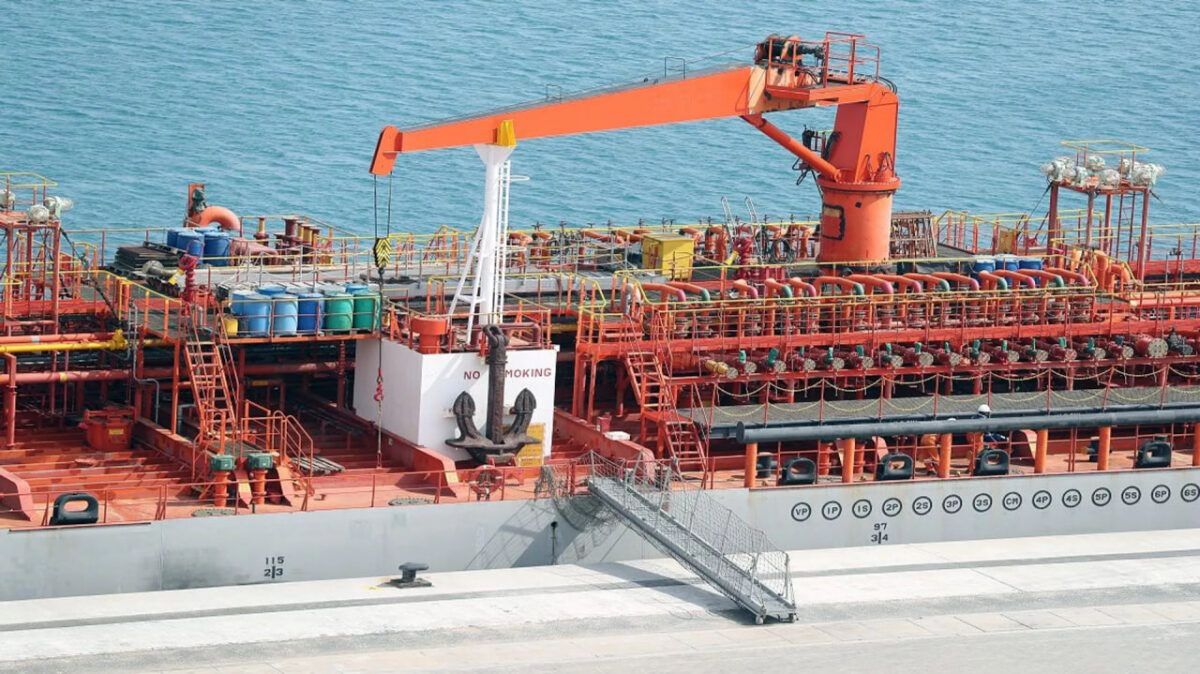
The Syrian Petroleum Corporation, long regarded as the principal steward of the country’s natural wealth, is formally responsible for nearly four-fifths of Syria’s subterranean resources. Yet recent administrative appointments reveal a deeper transformation within the institution. Figures with long-documented ties to sanctioned networks, foreign-aligned interests, and remnants of the previous political apparatus have moved into positions of influence. Their ascent raises urgent questions about the protection of the national economy and the integrity of Syria’s most strategic industry.
A series of high-level placements illustrates the scale of the shift. The elevation of Walid al-Youssef to Executive Vice President is particularly consequential. His prior leadership within the “Arfad-Qaterji” conglomerate—an entity sanctioned internationally for facilitating illicit oil transfers—places him at the center of a network where commercial activity, security patronage, and militia financing intersect. His proximity to security figures such as Issam Haider further underscores the convergence of resource management with private armed interests.
Control over joint ventures and field operations has also migrated toward individuals with long histories of coordination with Iranian-backed structures. Khaled al-Alaij, now Director of Joint Ventures, has been associated with technical arrangements that reportedly granted Iranian-aligned private security firms significant authority over fields west of the Euphrates. The decision to recall Amer Hatem from retirement to oversee the Hassakeh fields reflects a continued reliance on veterans of the “Iranian coordination” era, many of whom maintained direct links to foreign military commanders and industrial directors.
The pattern extends beyond field operations into diplomacy and human resources. The appointment of Talal Hallaq to oversee International Relations—despite allegations of financial partnerships with the former First Lady’s office—suggests a system in which political loyalty and external alignment outweigh professional merit. The placement of Alaa al-Azmeh in charge of human resources reinforces this trend. These decisions cast a shadow over the judgment of Chief Executive Yousef Qablawi, whose continued support for controversial figures has drawn scrutiny within the sector.
The implications reach far beyond internal politics. When the leadership of a sovereign economic engine becomes intertwined with foreign proxies and sanctioned networks, the foundations of corporate governance begin to erode. Sensitive geological data, confidential tenders, and financial disbursements become vulnerable to manipulation. The risk is not merely administrative decay but the gradual alienation of national assets from public oversight.
For a country that will depend heavily on its oil sector for reconstruction and economic stabilization, the current trajectory signals a perilous shift. The consolidation of power in the hands of actors aligned with external agendas threatens to entrench institutionalized corruption and weaken the state’s ability to reclaim control over its most vital resource. The erosion of sovereignty, once confined to the battlefield, now appears to be advancing through the boardrooms of the nation’s most strategic enterprise.
This article was translated and edited by The Syrian Observer. The Syrian Observer has not verified the content of this story. Responsibility for the information and views set out in this article lies entirely with the author.
The post Sovereign Erosion: The Institutional Capture of Syria’s Oil Sector first appeared on The Syrian Observer.