• While new rules weaken incentive to sell excess power to grid, consumers turn to solar energy mainly to manage electricity bills
• Smaller, need-based systems gain popularity among households
• Vendors say demand persists as citizens fear massive increase in power price
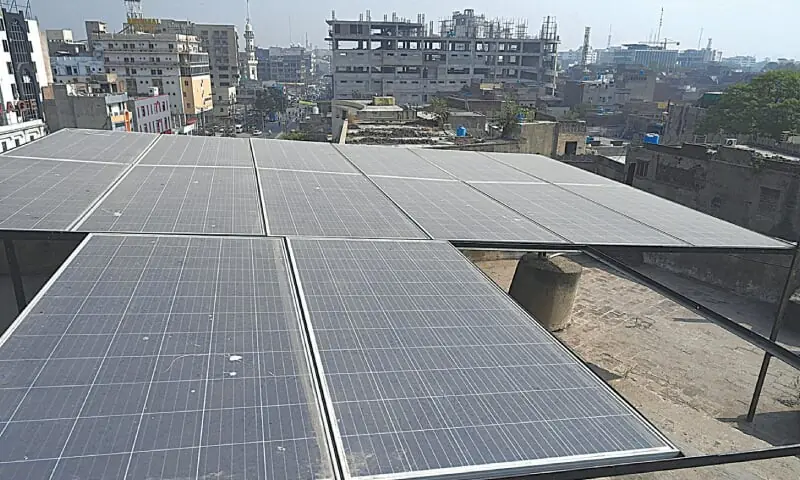
KARACHI: On a sunny afternoon in Karachi, 38-year-old Ali Hassan inspects the small display linked to the inverter in his living room. The device displays how much electricity his rooftop solar panels have produced since morning.
“We installed the system mainly to reduce our electricity bill,” he said. “Earlier, we thought we could also sell extra electricity to the grid, but now the policies are changing and the benefits seem uncertain.”
Hassan’s narrative underscores a growing concern: with shifting rules, are rooftop solar systems still financially viable for households?
According to the Alternative Energy Development Board and current market estimations, Pakistan continues to see high demand for distributed solar systems as homes and small businesses seek relief from growing electricity bills and reduced reliance on the national grid.
While solar panel prices had fallen over the previous two years, sellers claim current regional tensions and rising import-related expenses have begun to push local panel prices back up, with many imported panels now priced between Rs33 and Rs40 per watt, depending on brand and capacity.
However, recent administrative changes affecting net metering — the mechanism that allows households to sell excess electricity back to the grid — have caused uncertainty for potential buyers. For many households, the opportunity to offset or profit from extra electricity was an essential component of the financial situation.
After the unprecedented hike in prices of petroleum products, almost everyone firmly believe solar is a viable option, albeit for different reasons.
Aqib, a solar installation vendor over the past two to three years, reported that demand for rooftop solar systems remained high in the city, especially in Orangi Town, Korangi, and Naya Nazimabad.
Despite recent tariff adjustments, he claims that households continue to approach merchants in the same way they always have, with little obvious trepidation. He noted that some consumers had lately inquired about the possibility of further price increases if fuel and shipping costs continued to climb.
He stated that installation costs were determined by system size and customer requirements, and that many customers planned to repay their investment within one to three years, depending on system capacity.
According to him, both small and large systems were being erected, but the majority of clients were more concerned with
lowering monthly electricity expenses than with generating money from extra electricity.
Another vendor, Bilal Ahmed, stated that many clients now ask realistic concerns about battery backup, appliance load and daylight usage before making an installation decision. He discovered that, while some households choose smaller systems for important equipment, others continue to install larger configurations based on price and power requirements.
Shahid Mehmood, a retired banker, said his family installed solar panels last year after regular daytime electricity use began to strain household budgets.
He stated that the family’s first objective was to manage electricity expenditures during peak summer months, especially since numerous family members remained at home during the day.
According to him, the system had relieved pressure on monthly spending, albeit recent policy changes had left them unsure about future growth.
Rabia Ahmed, a school administrator, said her family switched to solar after persistent voltage fluctuations damaged their home appliances.
She noted that, in addition to lower expenditures, the family desired a more consistent daytime electricity supply, particularly for items that were regularly affected during extended periods of power fluctuation.
Meanwhile, Areeba Khan stated that her family had established a limited system to run water pumping and kitchen equipment during the daylight.
She stated that the decision became necessary when electricity costs remained high despite efforts to minimise usage, and that the family saw solar as a solution to manage vital daily requirements rather than an investment potential.
For business owners, operational continuity is also important.
Naveed Sheikh, who owns a small tailoring shop, said he started looking into solar energy since sewing machines and irons consumed more electricity during working hours.
He remarked that, while solar still remained financially viable in the long run, uncertainties surrounding surplus power compensation had made him wary about system scale.
Installing a rooftop solar system still requires a high initial cost, ranging from Rs200,000 to more than Rs500,000, depending on size.
Many homeowners are increasingly exploring smaller systems designed to power only the needed appliances rather than the entire home.
Ayesha Khan, a Karachi resident who recently constructed a tiny solar set-up, stated that they did not anticipate to gain money from selling electricity. “Our goal was simply to lessen our reliance on pricey grid electricity.”
Historically, net metering enabled homes to totally offset their electricity bills by exporting excess solar power to the grid. Under the new regulatory structure, known as net billing, homeowners receive a predetermined reduced cost (about Rs10-Rs11 per unit) for excess electricity, while power drawn from the grid is invoiced at conventional retail rates.
This means that the financial return on new installations is lower than under the previous system, although existing customers with net-metering contracts can continue to use the old regulations until their agreements expire.
Analysts believe that policy uncertainty has hindered decision-making for many potential solar users in urban Pakistan.
Despite these developments, rooftop solar remains a viable choice for homes seeking energy cost savings and partial independence from the national grid.
Ali Hassan from Karachi expressed cautious optimism. “We are still happy with our system because it reduces our electricity bill. However, anyone considering installing the system now is asking more questions and calculating payback far more thoroughly.”
The future of urban rooftop solar in Pakistan will be heavily reliant on regulatory clarity, electricity rates and the continued affordability of solar technology.
For the time being, households are adapting, carefully calculating the costs and rewards as the government finalises surplus power compensation guidelines.
Published in Dawn, April 6th, 2026