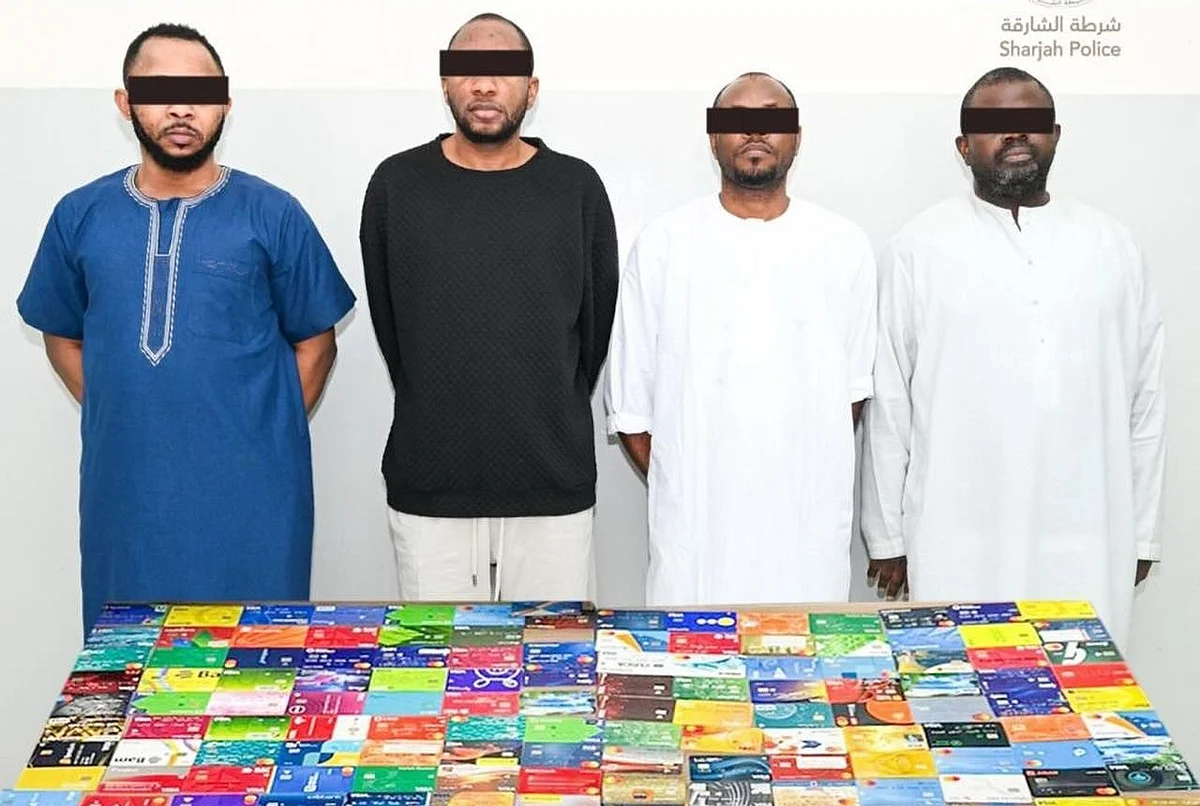
Sharjah Police arrest four in Dh3-million fake shipment, online scam case
المصدر: Khaleej Times | Source: Khaleej TimesSharjah Police busted a criminal network involved in multiple frauds using various methods to illegally obtain money from victims inside and outside the UAE. Probes revealed that the total stolen funds exceeded Dh3 million.
The authority announced on Sunday, April 26, the arrest of four Africans involved in the crime. Investigations followed after the Department received reports indicating repeated scams with a similar fraudulent pattern.
According to Colonel Dr Khalifa Al Buhair, Director of the Criminal Investigation Department, the first case involved suspects using a “fake shipment” scam. The group impersonated shipping and insurance companies, convincing victims they had parcels awaiting clearance and requesting payments under pretexts such as customs fees or insurance charges.
Investigations revealed the gang unlawfully accessed data or accounts linked to a shipping insurance company. This gave them real information that increased their scams' credibility and helped target suppliers and customers with legitimate business dealings.
Colonel Al Buhair noted the criminal activity was not limited to the UAE. Investigations revealed an international dimension, with one suspect managing operations from outside the country and directing others, while accomplices in the UAE collected funds and withdrew cash from ATMs. A specialised investigative team tracked the suspects and documented cash withdrawals in two instalments, part of the stolen funds, which were later handed over within the network according to assigned roles.
The second fraud method involved a separate scam that impersonated a woman on social media platforms. One of the suspects admitted collaborating with another individual in executing this scheme. Investigations showed that fake accounts were created using women’s names and photos to lure victims and build emotional relationships over time, with the aim of financially exploiting them.
After gaining the victims’ trust, the perpetrators fabricated financial emergencies such as travel requests, plans to meet inside the country, or urgent personal crises, and requested money transfers through untraceable methods, including prepaid cards and indirect payment channels. These schemes ultimately resulted in the theft of funds.
Colonel Al Buhair said the case reflects the growing sophistication of fraud techniques, which now combine social engineering and digital tools to deceive victims. He urged the public to remain cautious, avoid responding to unsolicited financial requests, and verify the authenticity of any message or payment request, especially those from unknown accounts or via sudden communication.
He also warned against sharing personal or banking information under any circumstances and emphasised the importance of verifying sources before making any payments.
Sharjah Police confirmed that specialised teams continue to use advanced digital analysis tools to uncover criminal networks, identify the roles of suspects, and strengthen preventive measures to protect the community from such crimes.
ملاحظة تحريرية | Editorial Note: نُشر هذا المقال في الأصل بواسطة Khaleej Times. خبر (Khabr) هي منصة إعلامية أردنية مرخّصة تعمل بالذكاء الاصطناعي. نضيف قيمة تحريرية من خلال: تحليل ذكي للأخبار، ملخصات تلقائية، رواية صوتية بالذكاء الاصطناعي، ترجمة متعددة اللغات، وتدقيق الحقائق. هدفنا جعل الأخبار أكثر وضوحاً وسهولةً للقارئ العربي.
This article was originally published by Khaleej Times. Khabr is a licensed Jordanian AI-powered news platform (Registration #82086). We add editorial value through: AI-powered news analysis, automated summaries, AI audio narration, multi-language translation (Arabic, English, French, Turkish), and AI fact-checking. Our mission is to make news more accessible and understandable for Arabic-speaking audiences worldwide.