Sabalenka threatens Grand Slam boycott over prizemoney row
•The tennis world has been rocked by a call from top stars demanding a bigger share of tournament revenues at the Grand Slams and their threat to boycott the upcoming French Open over it. Women’s...
•Without us there wouldn't be a tournament and there wouldn't be that entertainment," four-time Grand Slam winner Sabalenka told a press conference at the Italian Open on Tuesday."I feel like definitel...
•I feel like that's going to be the only way to fight for our rights."We girls can easily get together and go for this because some of the things I feel like it's really unfair to the players.
هذا الخبر من Gulf News. خبر يقدم أدوات ذكاء اصطناعي للتلخيص والترجمة والاستماع.
المصدر: Gulf News | Source: Gulf NewsThe tennis world has been rocked by a call from top stars demanding a bigger share of tournament revenues at the Grand Slams and their threat to boycott the upcoming French Open over it.
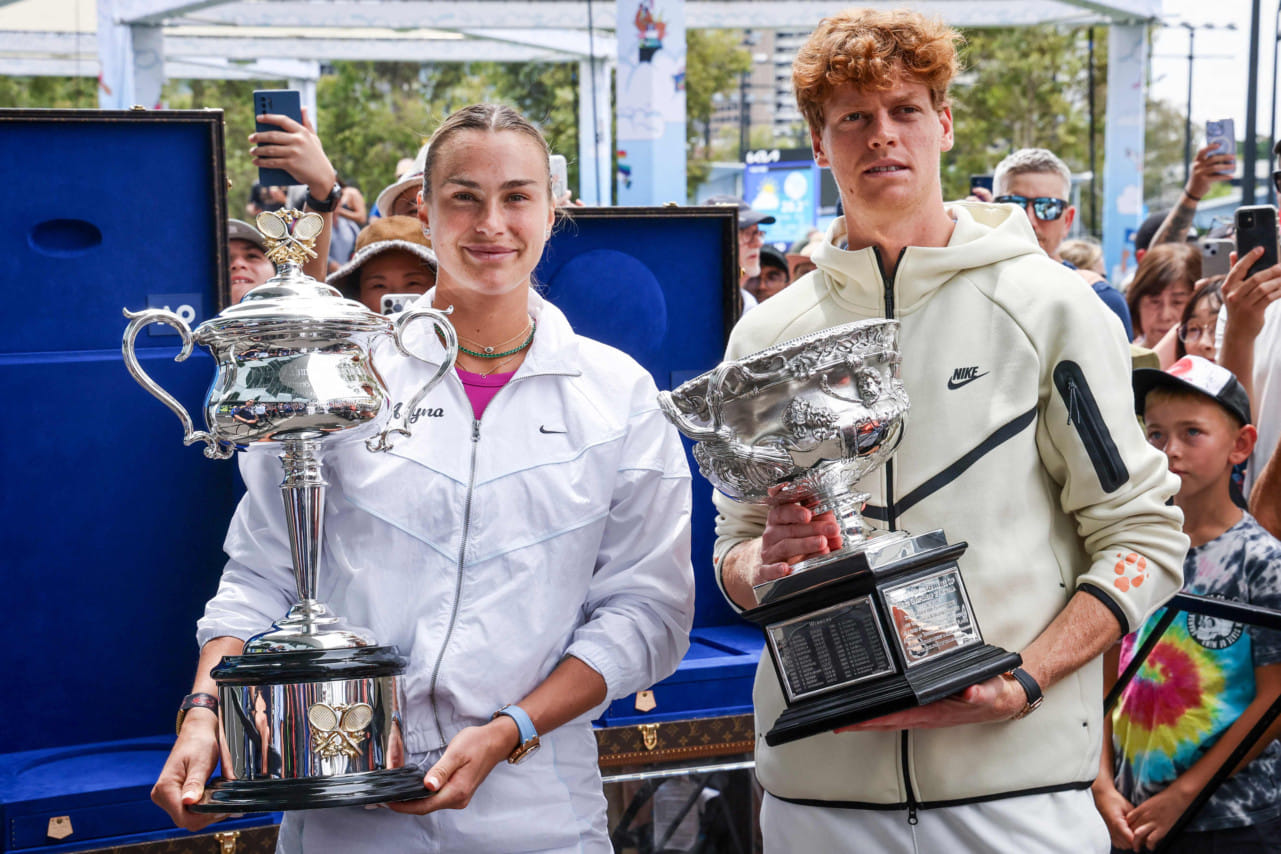
Women’s world No 1 Aryna Sabalenka and men’s No 1 Jannik Sinner were among leading players – most of them ranked in the top 10 – who issued a statement on Monday expressing "deep disappointment" over the French Open prize money.
Get updated faster and for FREE: Download the Gulf News app now - simply click here."I feel like the show is on us. Without us there wouldn't be a tournament and there wouldn't be that entertainment," four-time Grand Slam winner Sabalenka told a press conference at the Italian Open on Tuesday.
"I feel like definitely we deserve to be paid more percentage.
"I think at some point we will boycott. I feel like that's going to be the only way to fight for our rights.
"We girls can easily get together and go for this because some of the things I feel like it's really unfair to the players. I think at some point it's going to get to this."
The players are also seeking better representation, health options and pensions from the four Grand Slam tournaments: Australian Open, French Open, Wimbledon and US Open.
French Open organizers announced last month they were increasing overall prize money by about 10 per cent for an overall pot of 61.7 million euros ($72.1 million), with the total amount up 5.3 million euros from last year. But the players' statement said "the underlying figures tell a very different story," claiming they will receive a smaller share of tournament revenues.
The players claim their share of Roland Garros revenue has declined from 15.5 per cent in 2024 to 14.9 per cent projected in 2026.
Coco Gauff, the defending French Open champion, cited a landmark new WNBA collective bargaining agreement reached in March as an example of the benefit of working together.
"From the things I've seen with other sports, usually to make massive progress and things like this, it takes a union," Gauff said. "We have to become unionized in some way. ... We definitely can move more as a collective."
Regarding a boycott, Gauff said, "If everyone were to move as one and collaborate, yeah, I can 100 per cent see that."
Elena Rybakina, a two-time Grand Slam champion who won the Australian Open this year, would follow the other players. "If the majority say we are boycotting, we are not playing, then of course I'm up for it," Rybakina said. "It's not only on the Grand Slams and it's not only about raising the prize money. A lot of people are not aware that there is taxes which are big. You even make more prize money, but you giving it all to the taxes."
Jasmine Paolini, the Italian who reached the final of the French Open and Wimbledon in 2024, also believed in a boycott option. "If we're all in agreement and I think we are – the men and the women are united right now – it's something we could do," Paolini said.
However Poland's Iga Swiatek, a four-time French Open singles champion, believes boycotting tournaments "is a bit extreme".
"I think the most important thing honestly is to have proper communication and discussions with the governing bodies so we have some space to talk and maybe negotiate," said Swiatek, who has also won Wimbledon and the US Open.
"Hopefully before Roland Garros there's going to be an opportunity to have these type of meetings and we'll see how they go."
ملاحظة تحريرية | Editorial Note: نُشر هذا المقال في الأصل بواسطة Gulf News. خبر (Khabr) هي منصة إعلامية أردنية مرخّصة تعمل بالذكاء الاصطناعي. نضيف قيمة تحريرية من خلال: تحليل ذكي للأخبار، ملخصات تلقائية، رواية صوتية بالذكاء الاصطناعي، ترجمة متعددة اللغات، وتدقيق الحقائق. هدفنا جعل الأخبار أكثر وضوحاً وسهولةً للقارئ العربي.
This article was originally published by Gulf News. Khabr is a licensed Jordanian AI-powered news platform (Registration #82086). We add editorial value through: AI-powered news analysis, automated summaries, AI audio narration, multi-language translation (Arabic, English, French, Turkish), and AI fact-checking. Our mission is to make news more accessible and understandable for Arabic-speaking audiences worldwide.