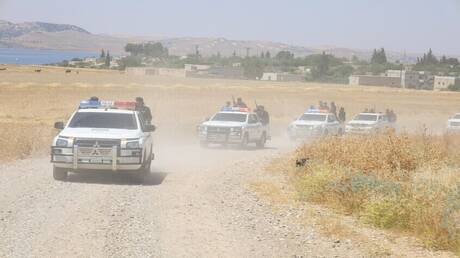
Israeli forces carried out an incursion today, Saturday, April 4, along the road linking Quneitra to the town of Beit Jinn in the western countryside of Damascus.
According to Enab Baladi’s correspondent. The correspondent said an Israeli patrol advanced between Hader, Quneitra Governorate, and Beit Jinn, Rif Dimashq Governorate, and denied reports that the Israeli army had entered Beit Jinn itself.
The correspondent said the Israeli movement takes place periodically along the al-Qanif road, which links Hader and Beit Jinn through the Harfa area. He added that no arrests were reported during the incursion.
Some media outlets had earlier circulated reports saying the Israeli army had entered the town of Beit Jinn this morning.
The town, located in the Damascus countryside near Quneitra, witnessed an Israeli military operation in November 2025 that left 13 Syrians dead and six Israeli soldiers injured.
The Israeli army also announced on February 10 that it had carried out an operation to dismantle a weapons storage facility belonging to al-Jamaa al-Islamiya, a Lebanese movement, in the same area.
In a post on X, the Israeli army said its forces had identified and dismantled various weapons at the site, including rifles, landmines, and communications equipment.
Road closures in Quneitra
Reports of the Israeli incursion came as Israel adopted new measures in Quneitra Governorate to isolate some villages by closing a number of main and secondary roads in different areas. The moves continue restrictions Israel has imposed in villages located in the buffer zone.
Enab Baladi’s correspondent in Quneitra said the Israeli army closed the road linking the villages of al-Asbah and Kudna in the southern Quneitra countryside. It also closed the Ruwayhina road leading to farmland west of the village, as well as the Umm al-Azam al-Shouli road in the western Quneitra countryside, using earth berms.
In the central countryside, several residents told Enab Baladi that anyone traveling from Rasm al-Shouli to the villages of Umm al-Azam and al-Qahtaniyah now has to cover a distance of 15 kilometers, even though the actual distance is only one kilometer.
Israeli army forces have also closed secondary agricultural roads to restrict residents’ movement and limit their mobility, especially given the presence of Israeli military bases around Umm al-Azam village.
Mobilization campaigns in southern Syria
The Israeli army had previously cut roads and set up fortifications at the same time as mobilization campaigns spread across social media in southern Syrian areas. The campaigns came in protest against a law passed by the Israeli Knesset allowing the execution of Palestinian prisoners.
Enab Baladi monitored demonstrations in many Syrian cities since the law was passed. Protesters carried signs calling for support for Palestinians, standing with them, and halting the law. They also condemned what they described as unjust decisions and ongoing violations against prisoners.
Members of the Israeli Knesset, the Israeli parliament, voted on March 30 by 62 votes to 47 to approve execution by hanging as the default punishment for residents of the West Bank convicted by military courts of committing what the law described as deadly terrorist acts.
Israel has continued to carry out almost daily incursions into Syrian territory, citing the protection of its national security, since the first hours after the fall of the former Syrian regime on December 8, 2024.
For its part, the Syrian government continues to demand the withdrawal of Israeli forces from its territory and a return to the 1974 disengagement agreement signed between the two sides.
The post Rural Damascus, What Is the Truth About an Israeli Incursion Into Beit Jinn? appeared first on Enab Baladi.