Rabat – Media coverage of the Spain-Morocco tunnel megaproject continues, highlighting the contrast between its sweeping ambition scope and challenges.
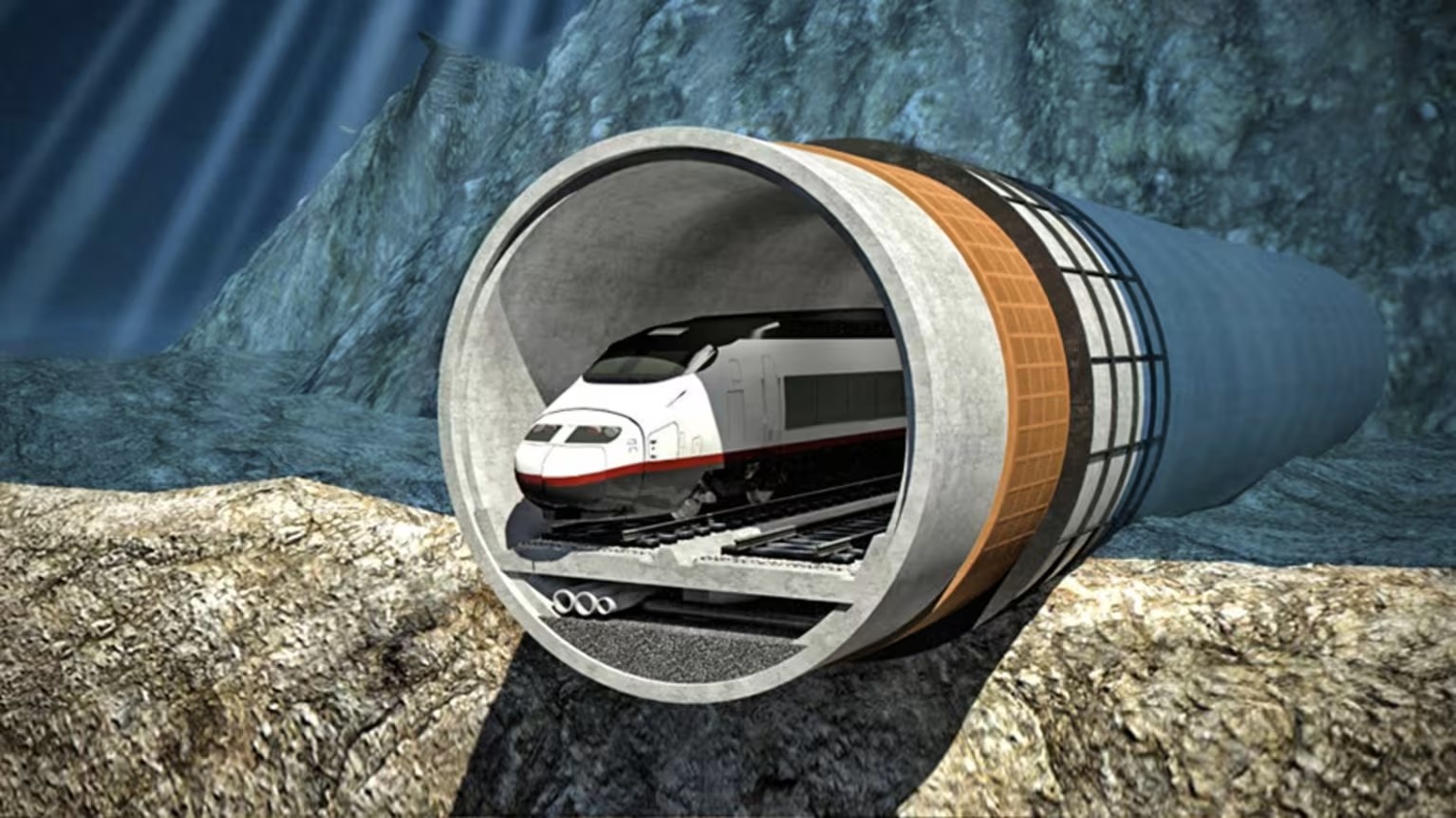
OkDiario has recalled studies that are ongoing to ensure the feasibility of the project, including a geotechnical study of the Camarinal Threshold, which reaches a maximum depth of 300 meters below the seabed. Located at the Strait of Gibraltar at roughly 280-300 meters depth, it is the shallowest submarine ridge separating the Atlantic Ocean from the Mediterranean Sea.
The public company Secegsa, which is in charge of conducting feasibility studies, received 4.7 million in funds initially in 2024, and the Spanish government approved a new investment of 1.76 million to finance the technical studies for the infrastructure in mid-March of this year.
The possibility of allowing vehicle traffic is not on the table, according to the Spanish news source, stating that it will span 42 kilometers, of which 27.7 kilometers will run underwater, and 40 will lie within Spanish territory.
The second study, ongoing as part of the feasibility phase, also includes a seismic assessment of the Strait of Gibraltar.
“Although the final budget has not been confirmed, estimates range between 15 billion and 30 billion,” the report said.
However, the challenges that the project faces are significant, including seismic activity in the region, strong marine currents in the Strait, and the need to coordinate legal and technical standards between Spain and Morocco.
The development of Morocco’s railway network also still awaits full electrification in the north.
All of the aforementioned challenges reported by OkDiario make it impossible for the tunnel to be operational before 2040.
However, the ambition of the project has been a source of interest for many reports, as it would link not only two countries but also two continents.
This week, La Razon also shed light on the challenges that the project continues to endure, including “failing to secure an insurance contract covering the civil liability of the managers overseeing this mega-project.”
“The Spanish company responsible for the project’s studies was forced to cancel the tender to ensure its executives after receiving no offers from insurers within the established deadline,” the report added.
The deal sought to provide legal and administrative protection, including to board members and executives from both the Moroccan and Spanish sides. This protection is against repercussions linked to management decisions or possible professional errors.
Feasibility studies, however, continue to dispute the challenge, the report said.
The post Reports Detail Ambition, Challenges of the Spain-Morocco Tunnel appeared first on Morocco World News.