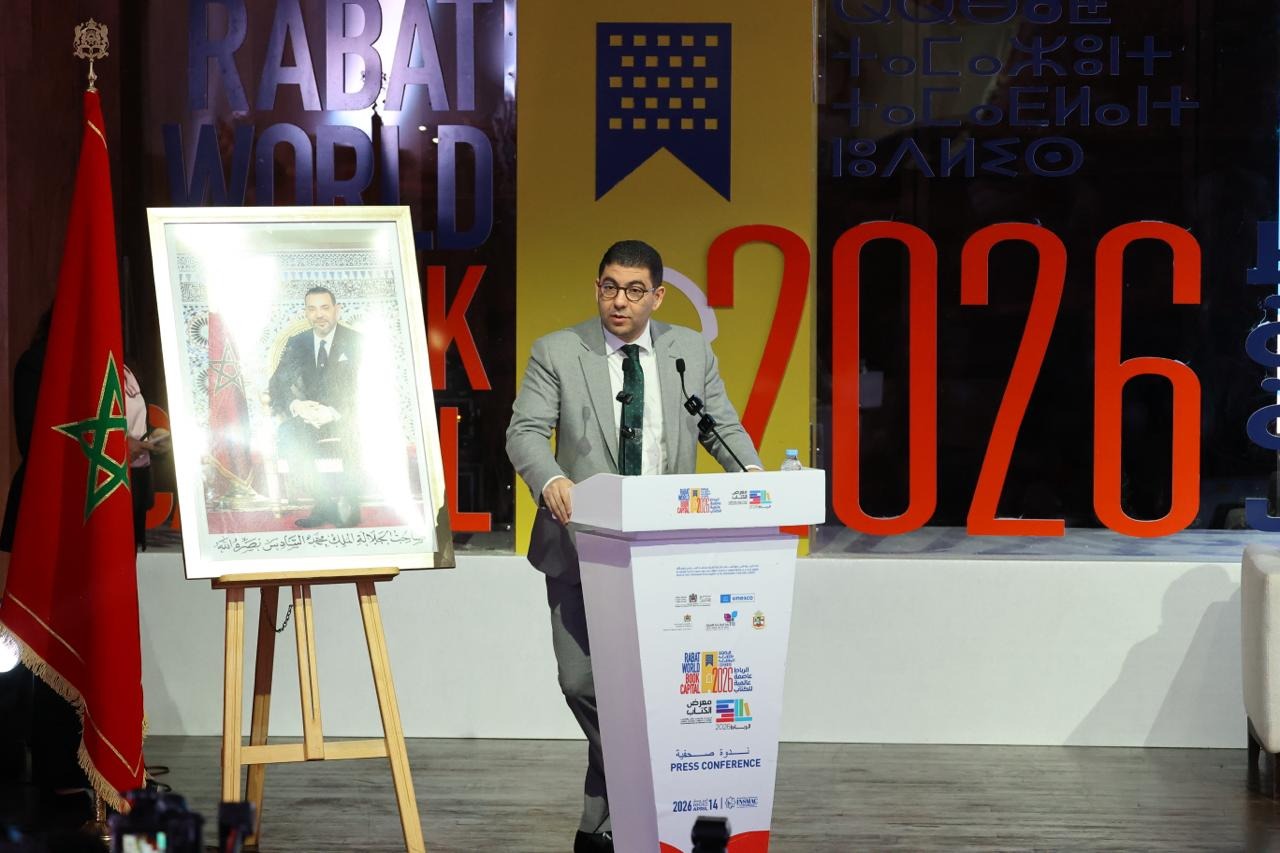
Rabat – Rabat has been officially designated as the UNESCO World Book Capital for 2026, marking a major cultural milestone for the Moroccan capital as it simultaneously prepares to host the International Publishing and Book Fair (SIEL) 2026.
The announcement was made today during a press conference led by the Minister of Youth, Culture and Communication, Mohammed Mehdi Bensaid.
The designation places Rabat at the center of global cultural exchange, reinforcing its role not only as an administrative capital, but as a historic and evolving hub of knowledge, creativity, and intellectual production.
Speaking at the press conference, Bensaid emphasized that the recognition is far more than a ceremonial title.
It represents “a victory for knowledge in the heart of the City of Light,” underlining Rabat’s long-standing cultural depth and its continued transformation into a modern creative capital.
The minister highlighted Rabat’s rich historical identity, describing it as a city where heritage and openness intersect.
From landmarks such as the Hassan Tower, the Kasbah of the Udayas, and the ancient site of Chellah, Rabat has long reflected layers of civilizational exchange and intellectual heritage.
He also noted the city’s historical role as a meeting point of cultures, shaped in part by Andalusian influences and its position as a bridge between Africa and Europe, making Rabat a “laboratory of multiple identities” within Morocco’s broader cultural fabric.
A key moment in the address was the tribute paid to second-hand booksellers, who were praised for their contribution to Morocco’s intellectual life.
These street vendors, often operating in the medina, were described as guardians of accessible knowledge who helped generations of students and readers discover literature outside formal institutions.
Rabat steps into book capital role
The minister stressed that Morocco’s cultural vision has transformed Rabat into a dynamic cultural ecosystem.
Major infrastructure developments, including theaters, museums of contemporary art, and modern media libraries, have contributed to making culture more accessible to the public.
This transformation, Bensaid explained, has turned the city into an “open workshop” where culture is no longer a privilege, but a public right.
Beyond cultural symbolism, the 2026 World Book Capital designation is also being positioned as a strategic opportunity for cultural diplomacy.
SIEL, as every year, will turn Rabat into a global platform for dialogue, exchange, and the promotion of values such as openness and moderation.
The strategy also includes expanding reading spaces into public areas such as parks, cafés, and open squares, aiming to integrate reading into everyday urban life.
In parallel, authorities are seeking to strengthen the creative industries, including publishing and digital content, positioning culture as a driver of economic growth and youth employment.
Rabat’s selection as World Book Capital shows Morocco’s ambition to project its cultural identity globally while investing in knowledge-based development.
As Minister Bensaid concluded, the city is demonstrating that “the future is written today,” calling on media professionals to help amplify this cultural momentum and share it with wider audiences.
The post Rabat Becomes UNESCO World Book Capital 2026 Amid SIEL Preparations appeared first on Morocco World News.