Power consumers to bear Rs10.6bn extra burden
المصدر: Dawn | Source: Dawn• Net impact slightly lower than March by 21 paise per unit
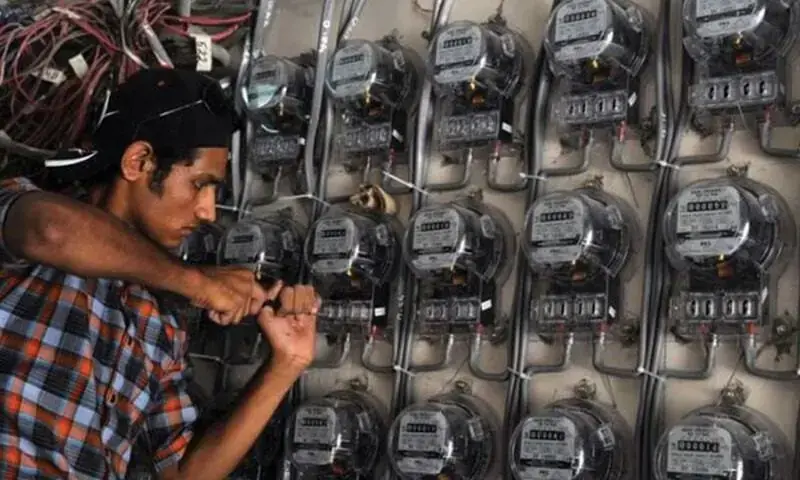
• FPCCI warns hikes threaten industrial viabilityISLAMABAD: The National Electric Power Regulatory Authority (Nepra) on Wednesday notified an additional burden of about Rs10.57 billion on electricity consumers by allowing a Rs1.42 per unit increase in fuel cost adjustment (FCA) to be reflected in April bills.
However, the net average impact will be slightly lower, as the new FCA replaces a higher Rs1.63 per unit charge applied in March, resulting in an overall decrease of 21 paise per unit.
In a notification, Nepra said the positive FCA for February 2026 — Rs1.4235 per unit — would be applicable to all consumer categories of K-Electric and ex-Wapda distribution companies (XWDISCOs), except lifeline consumers, electric vehicle charging stations (EVCS) and prepaid consumers across all categories.
The regulator said the adjustment would also apply to incremental consumption package consumers, and power distribution companies as well as K-Electric were required to reflect the FCA in April 2026 billing.
Nepra noted that additional power supply from the national grid to K-Electric had a positive impact on all consumers across the country. “In the absence of such supply, the cost of electricity for consumers would have increased by Rs1.05 per unit on account of FCA and by Rs3.03 per unit due to quarterly capacity purchase price, resulting in an overall increase of Rs4.08 per unit,” it said.
The regulator also cited concerns raised by the Federation of Pakistan Chambers of Commerce and Industry (FPCCI), whose representative Rehan Javed said the industrial sector had borne an aggregate burden of Rs564.7bn over the past three years due to cross-subsidies and Power Holding Limited surcharge. He warned that further increases would be unsustainable and detrimental to industrial viability.
The FPCCI demanded that FCA calculations be made transparent, disclosed in a timely manner and aligned with actual fuel procurement data. The FPCCI and other consumers also demanded that a reduction of Rs0.62 per unit in the base tariff, effective from Jan 1, 2026, be passed on to consumers without delay.
The Ministry of Energy’s Power Division, however, maintained that tariffs were determined in accordance with the law to reflect prudent and efficient costs of electricity supply. It said tariff projections were based on key variables such as fuel prices, exchange rates, demand patterns and generation mix.
“However, as these variables, particularly international fuel prices and supply disruptions, are largely beyond the control of the regulator, Discos and the government, accordingly, any resultant variations are duly passed through to consumers via the FCA mechanism, in accordance with the prescribed regulatory framework, to ensure alignment of tariffs with actual costs”, the division said.
It also said that in view of historically high industrial tariffs and to enhance industrial competitiveness, the government had undertaken significant measures, including the recent decision to eliminate cross-subsidy for industrial consumers, resulting in a tariff reduction of Rs4.04 per unit.
This is on top of industrial tariffs (pre-taxes) coming down from Rs49.19 per unit (18 US cents) in March 2024 to Rs34.75 per unit (12 cents) in March 2026, reflecting a substantial decrease of Rs14.44 per unit over a relatively short period.
In addition, a three-year incremental consumption package has been introduced at a concessional rate of Rs22.98 per unit to incentivise increased consumption in industrial and agricultural sectors, improve grid stability, and generate broader economic benefits such as enhanced industrial output, increased revenues, higher tax collection, rural productivity, and employment, Nepra quoted the power division in its detailed judgement.
The FCA is reviewed monthly under the prevailing tariff regime and is typically applicable for one billing cycle.
Under this mechanism, changes in fuel costs are passed on to consumers automatically, while quarterly adjustments related to power purchase price, capacity charges and system costs are incorporated into the base tariff by the federal government.
Published in Dawn, April 9th, 2026
ملاحظة تحريرية | Editorial Note: نُشر هذا المقال في الأصل بواسطة Dawn. خبر (Khabr) هي منصة إعلامية أردنية مرخّصة تعمل بالذكاء الاصطناعي. نضيف قيمة تحريرية من خلال: تحليل ذكي للأخبار، ملخصات تلقائية، رواية صوتية بالذكاء الاصطناعي، ترجمة متعددة اللغات، وتدقيق الحقائق. هدفنا جعل الأخبار أكثر وضوحاً وسهولةً للقارئ العربي.
This article was originally published by Dawn. Khabr is a licensed Jordanian AI-powered news platform (Registration #82086). We add editorial value through: AI-powered news analysis, automated summaries, AI audio narration, multi-language translation (Arabic, English, French, Turkish), and AI fact-checking. Our mission is to make news more accessible and understandable for Arabic-speaking audiences worldwide.