Post-AFCON Controversy: Retreat Into Identity Politics Is Misguided, Unserious
•Rabat – There is a point in every public debate when a response reveals more than the original criticism.
•Osasu Obayiuwana’s response to political analyst and MWN co-founder Samir Bennis’s latest article did exactly that.
•Instead of engaging the legal core of the AFCON final dispute between Morocco and Senegal, Osasus chose a different route.
هذا الخبر من Morocco World News. خبر يقدم أدوات ذكاء اصطناعي للتلخيص والترجمة والاستماع.
المصدر: Morocco World News | Source: Morocco World NewsRabat – There is a point in every public debate when a response reveals more than the original criticism. Osasu Obayiuwana’s response to political analyst and MWN co-founder Samir Bennis’s latest article did exactly that.
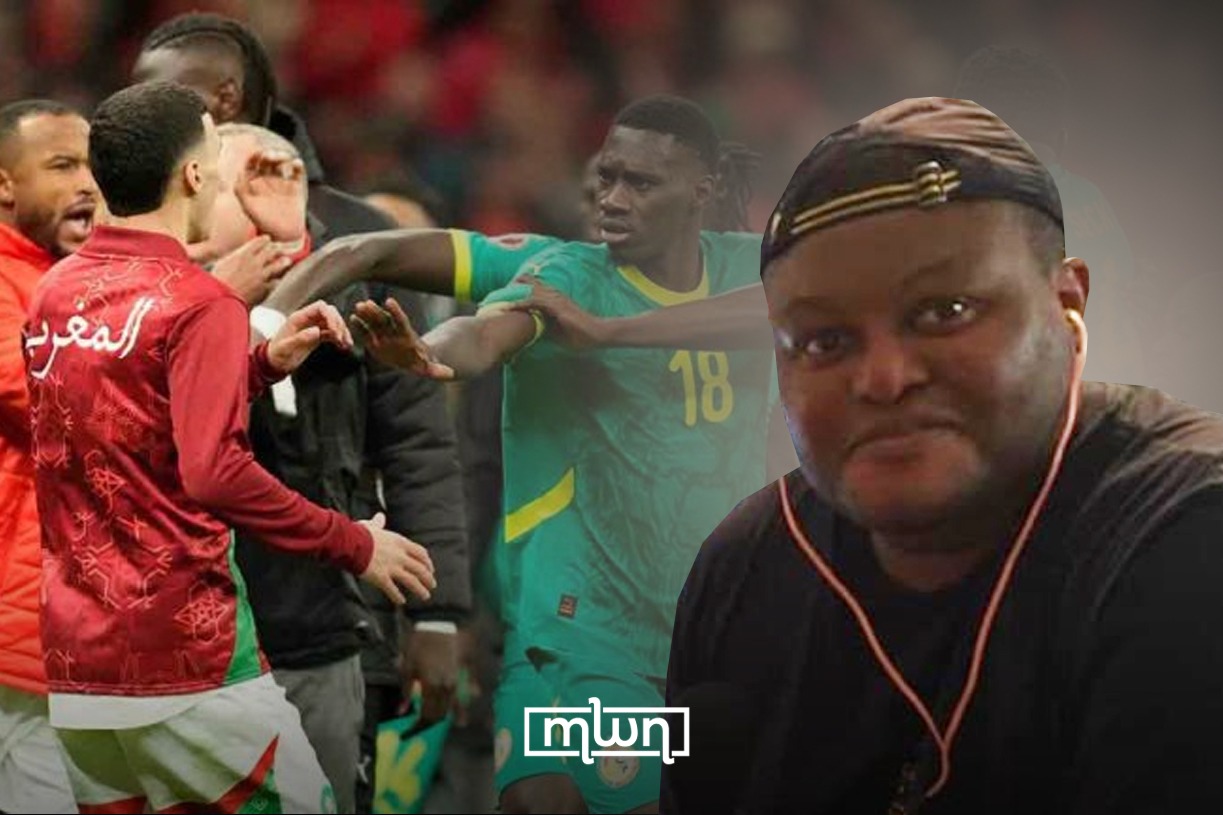
Instead of engaging the legal core of the AFCON final dispute between Morocco and Senegal, Osasus chose a different route. He spoke about his “gravitas” and his journalistic standing.
He spoke of writing “for two of the most prestigious newspapers in the world,” asking whether, being “a person of Black African origin,” he could have such access if he were “not outstanding” as a football journalist and analyst. But that was never the issue Samir raised in the first place.
In fact, no other serious critic of Osasu’s post-AFCON commentary has questioned his credentials or his right to hold an opinion.
Rather, Samir’s central argument has been that Osasu’s reading of the AFCON case has repeatedly failed to confront the actual legal framework that governs the matter. That is where the disagreement sits, and that is where it should have remained.
The real issue was always legal
CAF’s Appeal Board ruled that Senegal forfeited the AFCON final after its players left the field without the referee’s authorization.
Morocco was then awarded a 3-0 win by forfeit. Senegal challenged that ruling, and the matter moved to the Court of Arbitration for Sport.
From the beginning, the central legal question has been straightforward: what do CAF’s rules say about a team that leaves the pitch during a match?
In his repeated, meticulously argued critique of what he sees as biased and misleading analyses on the ongoing post-AFCON controversy, Samir has essentially challenged Osasu and others on exactly that point.
I have repeatedly challenged @osasuo to engage with my arguments and present a well-grounded, well-reasoned defense of his position in favor of Senegal. Yet he has chosen to avoid doing so. Instead, he chose to engage what appears to be a desperate attempt at agenda-setting.…
— Samir Bennis (@SamirBennis) April 5, 2026
His argument always focused on the legal terrain, never doubting his opponents’ credentials and bringing their backgrounds into the picture. More specifically, one of Samir’s central arguments has been that Article 82 of the CAF rulebook is explicit and leaves little room for creative reinterpretation.
Another central point of Samir’s position is that the available footage of the AFCON final and official reports of that match support CAF’s conclusion that Senegal’s conduct amounted to a withdrawal from the field of play rather than a simple protest.
A reply built on identity, not substance
Instead of engaging with that line of argument, Osasu has chosen to respond by not responding, all the while claiming in his non-response that Samir had called into question his qualifications to write or speak about the matter at hand.
What made his response weak was not its tone alone. It was the way it moved away from the subject. Instead of addressing the legal critique at the heart of Samir’s position, he reframed the discussion around his own status, his career, and his racial identity.
It is pointless for me to engage in any exchange in which civility and respect, for the person you’re talking to, which is me in this case, is not the grundnorm.
My gravitas, and the quality of my analysis, is not dependent on a decision to engage you in a conversation. It… https://t.co/YWWGr5UBOf
— Osasu Obayiuwana (@osasuo) April 6, 2026
That move solves nothing. In fact, it makes his position look more fragile.
To say, in effect, “I am a Black African person working for major newspapers, therefore my analysis deserves deference” is both desperately evasive and tellingly self-congratulatory.
It does not answer the criticism that his legal reading of the case is thin. And it does not answer the criticism that he has narrowed the scope of the CAF rulebook’s Article 82 in a way that does not fit its wording.
And it certainly does not answer the criticism that his treatment of the post-AFCON case has often relied more on outrage and atmosphere than on regulation and evidence.
The weakness in the argument has already been exposed
Rather than casting doubt on Osasu’s qualifications or engaging him on the slippery ground of identity politics, Samir has principally taken issue with his manifest tendency to repeatedly shift from the specific legal question to a much broader narrative about institutional crisis in African football.
In other words, Samir has argued that CAF’s evident governance crisis, which Osasu poignantly brought up in his latest articles, does not in any way invalidate the CAF Appeal Board’s application of the AFCON regulations on the unprecedented incident that took place in Rabat on January 18.
For Samir, the leap from CAF’s institutional crisis to the supposed invalidity of the Appeal Board’s verdict is weak and uncalled for a simple reason. A bad institution can still apply a clear rule correctly in a particular case.
And here, the pertinent rule is emphatically unambiguous: Article 82 states that if a team leaves the field before the end of the match without the referee’s authorization, it shall be considered the loser.
While Samir does make some other points to refute Osasu’s “biased” and legally tenuous narrative, the core of his position remains the robustness of the legal reasoning that led to the CAF verdict.
So when Osaus – whose online biography indicates that he is a trained lawyer – avoids that judicial terrain and retreats into biography, he is tacitly dodging legitimate criticism because he does not have a convincing answer ready.
Beyond ethnicity in intra-African debates
There is another reason the identity argument falls flat. It assumes that criticism from an African voice against another African voice must somehow carry an ethnic or racial motive. That does not hold here.
Samir was direct on this point: “I am as African as you.” His criticism was never about Blackness. It was about the legal vacuousness of the other side’s position.
Mr. Osasuo,I expected better from a football commentator, analyst of your standing, who also happens to have a legal background. As a lawyer that I surely respect, you should engage with the core legal issue at hand, not take the easy route by resorting to the “I am Black”… https://t.co/qC4G6Fov4s
— Samir Bennis (@SamirBennis) April 6, 2026
That is why Osasu’s response sounded misplaced and confusing. It brought up Blackness to implicitly – and falsely – gesture toward racial motive in Samir’s argument, given the notorious, long-standing African authenticity debate between sub-Saharan Africans and North Africans.
It suggested that professional rank and identity should soften scrutiny.
But public analysis does not work that way. The more prestigious one’s platform, the stronger one’s duty to remain rigorous.
You do not get to publish bold claims on a major continental controversy, only to then refuse legal scrutiny by invoking the prestige of your employer and the historical salience of your ethnic background.
Facts still matter
The core of Samir’s argument is that the available facts and the legal framework both support Morocco’s position.
Available footage of the AFCON final, the referee’s report, the match commissioner’s report, and the broader sequence of events all point in the same direction: Senegal’s team left the field, the withdrawal was deliberate, and CAF’s rules attach consequences to that act.
This is why Osasu’s refusal to engage is revealing. If the legal case against Morocco were really as weak as he suggests, he would have found it easy to cite which elements of the CAF rulebook suggests warrants such a conclusion, or he should have at the very least been able to explain why and why CAF misapplied its own rules, as well as show why Senegal’s walk-off cannot legally be construed as a forfeit.
Argument, not posture
No one is obliged to answer every critic. But once a public commentator chooses to answer, the quality of that answer matters. In this case, the answer did not strengthen Osasu’s position. It laid bare its fundamental lack of both substance and sound legal interpretation of the CAF regulations.
The AFCON final case remains controversial. CAF itself is far from a model institution. And Senegal, like Morocco, has every right to defend its position before CAS. None of that is in dispute.
What is in dispute is whether public commentary on this case has remained faithful to the legal question at its center.
On that front, the problem with Osasu’s reply is now difficult to ignore. He was asked to defend an interpretation, but he chose instead to defend himself by invoking his “gravitas.” That choice says everything.
Read also: Narrative Over Facts: The Case Against Osasu Obayiuwana’s AFCON Commentary
The post Post-AFCON Controversy: Retreat Into Identity Politics Is Misguided, Unserious appeared first on Morocco World News.
ملاحظة تحريرية | Editorial Note: نُشر هذا المقال في الأصل بواسطة Morocco World News. خبر (Khabr) هي منصة إعلامية أردنية مرخّصة تعمل بالذكاء الاصطناعي. نضيف قيمة تحريرية من خلال: تحليل ذكي للأخبار، ملخصات تلقائية، رواية صوتية بالذكاء الاصطناعي، ترجمة متعددة اللغات، وتدقيق الحقائق. هدفنا جعل الأخبار أكثر وضوحاً وسهولةً للقارئ العربي.
This article was originally published by Morocco World News. Khabr is a licensed Jordanian AI-powered news platform (Registration #82086). We add editorial value through: AI-powered news analysis, automated summaries, AI audio narration, multi-language translation (Arabic, English, French, Turkish), and AI fact-checking. Our mission is to make news more accessible and understandable for Arabic-speaking audiences worldwide.